Innovations Shaping the Industrial Automation Industry Today
Innovations Shaping the Industrial Automation Industry Today
Key Highlights
- Industrial automation uses connected automation technology to run industrial processes with less manual oversight.
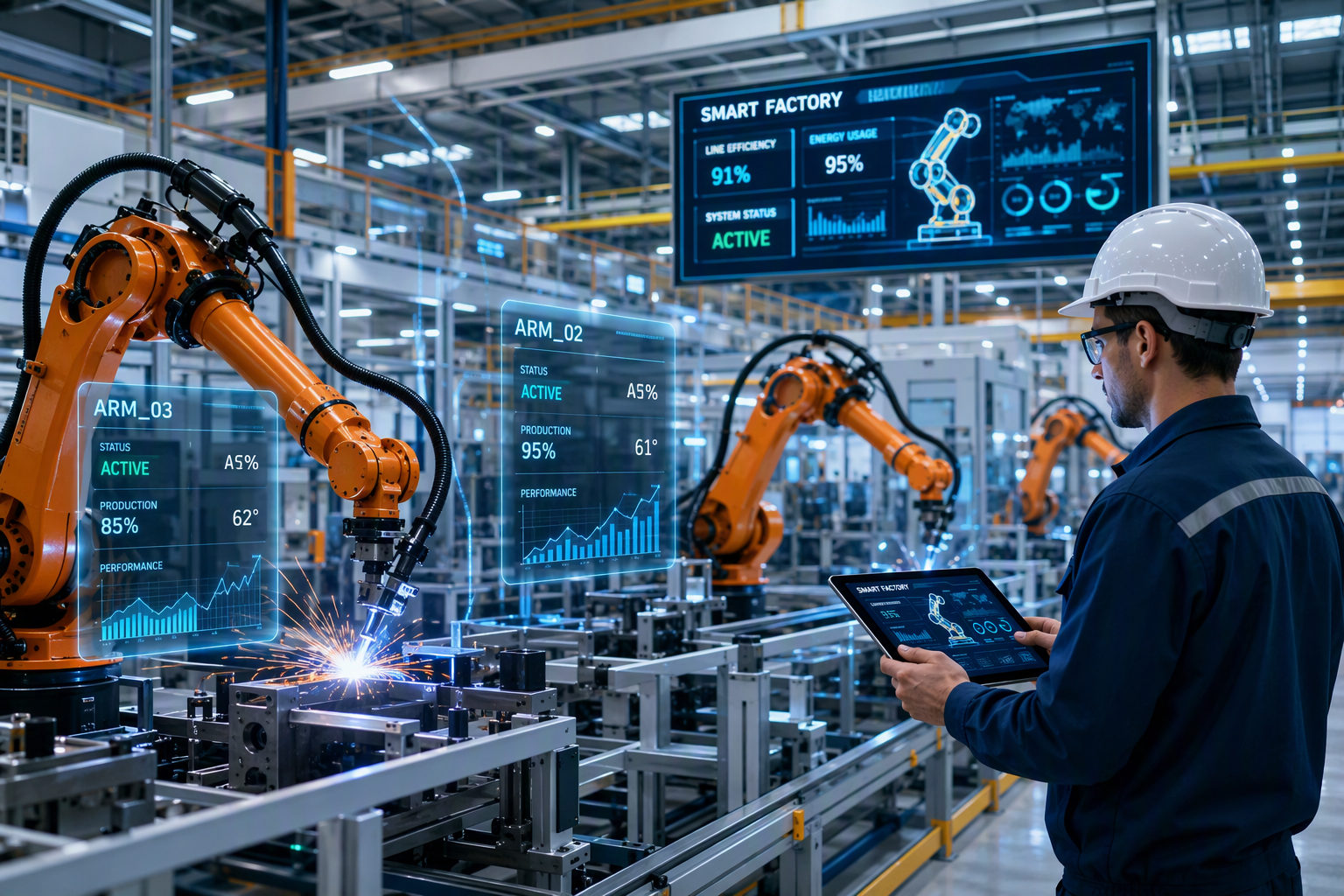
- Smart factories rely on sensors, software, and industrial robots to improve speed and consistency.
- Machine learning is helping teams improve quality control and support predictive maintenance.
- The main system types include fixed, programmable, flexible, and integrated automation.
- Process optimization is driving adoption across manufacturing, utilities, food, and electronics.
- Growth is tied to efficiency needs, labor pressures, and better connected automation tools.
Introduction
Industrial automation is changing how factories and plants operate every day. Instead of relying on constant human intervention, companies now use automation systems, software, and connected equipment to control production with greater speed and consistency. That shift matters because you need reliable output, better quality, and safer operations. From assembly lines to process control environments, industrial automation helps businesses do more with fewer delays. To understand its impact, it helps to start with what it means today.
Defining Industrial Automation Industry in the Modern Era
At its core, industrial automation is the use of machines, software, and control systems to run industrial processes with minimal human intervention. It moves work from constant manual operation to guided, system-based execution.
In modern manufacturing, automation works through a feedback loop. Sensors detect conditions, controllers process signals, and actuators or robotics carry out actions in real time. People still guide strategy and supervision, but the system handles routine execution with speed and consistency.
Overview of Industrial Automation Systems
Industrial automation systems combine hardware and software to monitor, control, and improve industrial work. These automation systems often include sensors, controllers, networks, HMIs, and machines that coordinate actions across a plant. Their goal is simple: keep operations running accurately with less direct manual input.
In practice, control systems receive data from field devices, compare that data to programmed targets, and trigger a response. That response may adjust speed, temperature, motion control, or material flow. This is the backbone of process automation in both continuous operations and discrete production lines.
You will see these systems used in mass manufacturing, utilities, warehouse movement, and batch production. Some are built for one repeated task, while others can be reprogrammed for new products. The main categories include fixed, programmable, flexible, and integrated setups.

Historical Milestones in Industrial Automation
Industrial automation did not appear overnight. Its roots go back to early mechanized production, when the industrial revolution pushed factories toward repeatable machine-driven work. That period created the foundation for replacing hand-driven steps with controlled mechanical systems.
A major milestone came in 1785, when Oliver Evans developed an automatic flour mill. It is widely recognized as the first fully automated industrial process with continuous production and no direct human intervention during operation. Later, Ford helped popularize the concept of production-line mechanization.
The term automation was introduced in 1946 by D.S. Harder at Ford. By 1948, early autonomous robots also emerged. From there, automation technology expanded from mechanical systems to computer control, robots, PLCs, and the connected digital tools now shaping smart factories.
Current Role in Manufacturing and Production
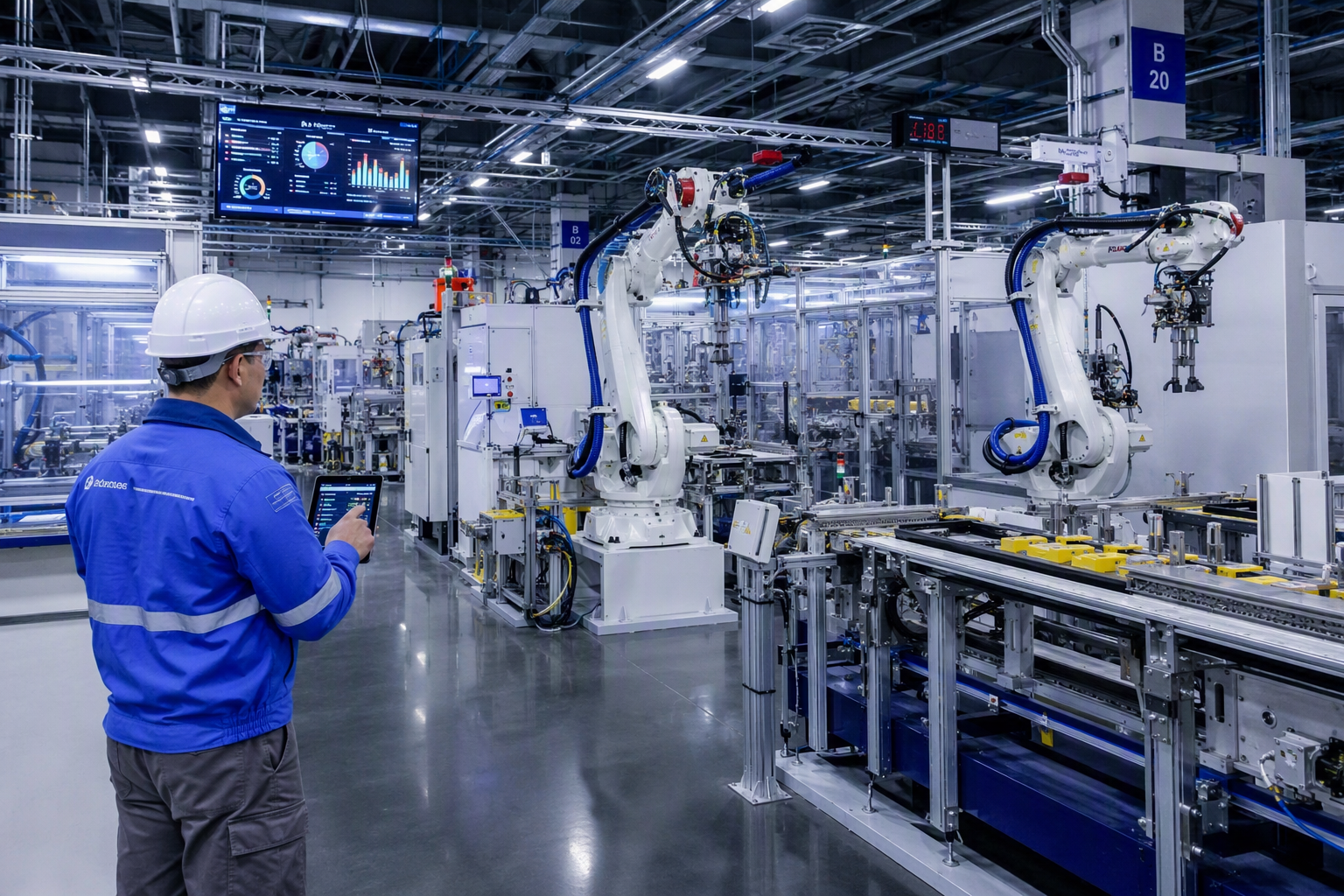
Today, automation systems sit at the center of the manufacturing process. They help companies run production lines longer, reduce inconsistency, and improve process control. Instead of relying on constant manual adjustments, plants use connected devices and software to respond faster to changing conditions.
On a production line, sensors monitor machine status, controllers make decisions, and motors, valves, or robotic arms complete the physical work. That closed-loop approach keeps industrial operations stable and supports real time corrections when something moves outside the target range.
You can see the impact in automotive assembly, electronics production, beverage processing, and warehouse flow. Automation does not remove people from the picture entirely. It reduces repetitive manual effort and lets teams focus on supervision, maintenance, quality checks, and continuous improvement.

Evolution of Automation Technologies
Automation technologies have advanced from simple mechanical actions to connected digital systems. Early setups handled one repeated motion with limited flexibility. Modern systems now coordinate machine tools, sensors, software, and industrial networks across entire facilities.
That shift changed how process automation works. Instead of isolated machines following fixed commands, current platforms use control logic to react to incoming data and adjust output automatically. PLCs, numerical control equipment, HMIs, and integrated communication tools made that possible.
The latest phase adds artificial intelligence, industrial internet of things connectivity, and predictive maintenance. These tools do not replace the basics of automation. They build on them. As a result, companies can collect better production data, reduce downtime, and move closer to smart factories with faster decision-making.
Types of Industrial Automation Systems
The main types of automation are designed for different production goals. When businesses compare industrial automation systems, they usually focus on how much product variety they need, how often changeovers happen, and how much output is required.
Most discussions center on four main types: fixed, programmable automation, flexible automation, and integrated automation. Some operations also use robotic process automation for rule-based digital tasks. The following sections explain where each approach fits and why the right choice depends on your manufacturing process.
Fixed (Hard) Automation
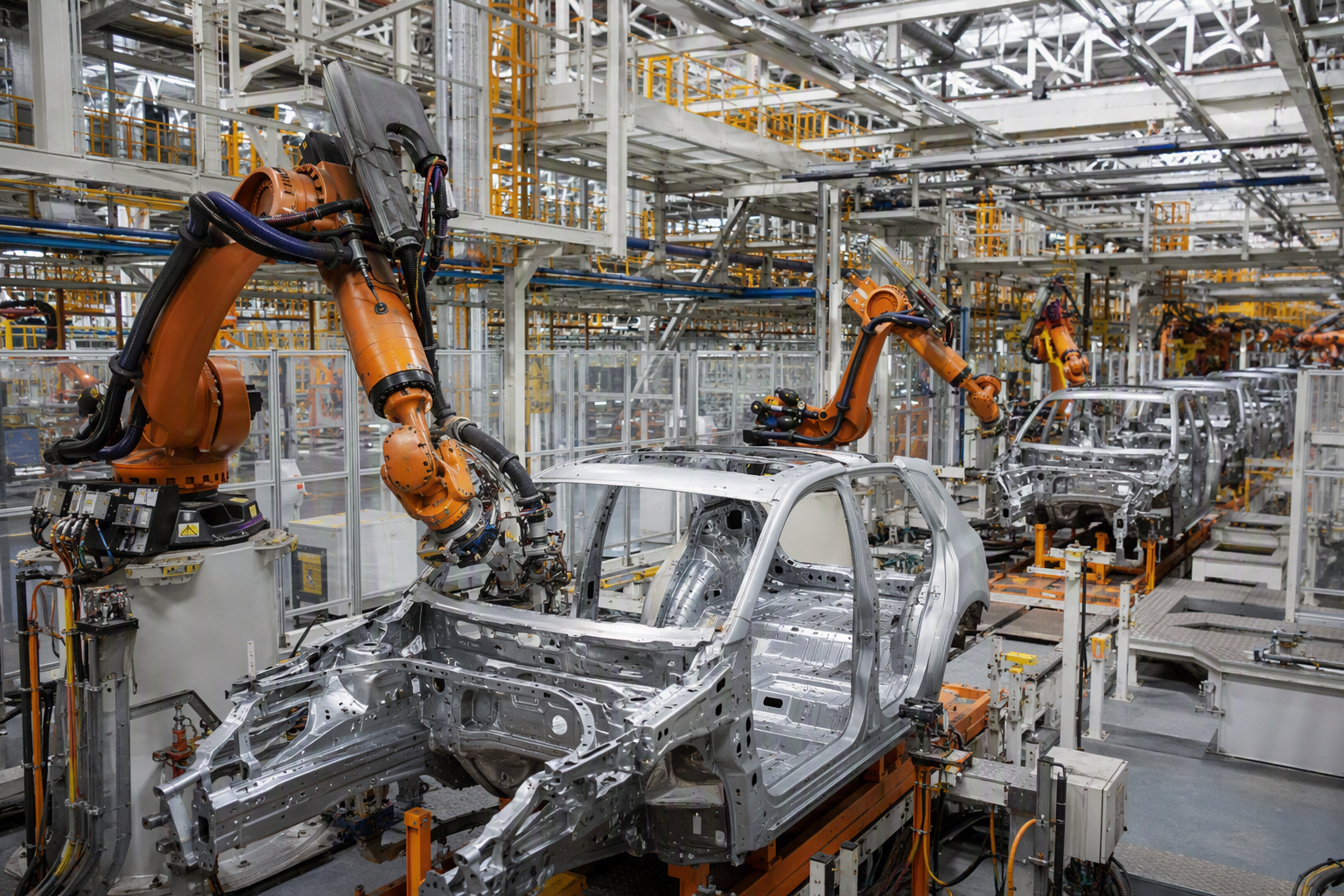
Fixed automation, also called hard automation, is built for high-volume production where the same product is made again and again. The equipment is designed for a specific job, so it performs repetitive tasks with very little variation. That makes it a strong fit for predictable demand.
You will often find fixed automation on an assembly line, especially in automotive manufacturing and continuous production environments. Once the system is installed, it runs with high speed and stable cycle times. The sequence is usually simple and highly optimized for output.
The tradeoff is flexibility. Because the equipment is specialized, changing the process can be difficult and expensive. Still, when the product design remains stable, fixed automation offers strong efficiency, consistent quality, and a low cost per unit over time.
Programmable Automation
Programmable automation is designed for operations that make products in batches rather than one unchanging stream. In this setup, machines follow coded instructions and can be reprogrammed when a new product version or production run begins. That gives you more flexibility than hard automation.
This approach works well for batch production with moderate volume and periodic design changes. Electronics manufacturers, for example, may use programmable equipment to produce different models in separate runs. Numerical control machine tools are a common example of this method in action.
The strength of programmable automation is adaptability. You can change the task by updating the program instead of replacing the whole system. The drawback is changeover time. Reprogramming and setup can pause production, so it is best suited for planned transitions rather than constant switching.
Flexible (Soft) Automation
Flexible automation gives manufacturers the ability to switch between products with very little downtime. Unlike systems that need lengthy reprogramming between runs, flexible setups are built to handle variation quickly. That makes them useful when product demand changes often.
These automation systems rely on robots, sensors, and smart software to adjust the manufacturing process with speed. They are especially valuable in environments where customization, shorter runs, or rapid product changeovers matter. Consumer goods and small-batch operations often benefit from this model.
From a process optimization standpoint, flexible automation helps you stay responsive without giving up control or efficiency. The cost per unit may be higher than fixed systems, and the machinery can be expensive. Even so, the ability to adapt fast is a major operational advantage.
Integrated Automation
Integrated automation connects machines, software, sensors, and control platforms into one coordinated environment. Instead of separate stations working alone, the full system shares data and responds as one unit. This is a major step toward modern smart factories.
With this model, process control becomes more unified. Robots on the line, monitoring tools, and industrial control platforms all communicate through a central framework. That improves synchronization, reduces downtime, and supports better consistency across the plant.
For companies looking at long-term automation solutions, integrated automation offers strong value. It can scale operations more efficiently and improve visibility across production. The challenge is implementation. It usually requires significant upfront investment, technical expertise, and careful planning to get the full benefit.
Robotic Process Automation (RPA)
Robotic process automation, or RPA, focuses on software-based tasks rather than physical machine motion. It uses software robots to follow rules, capture information, process transactions, and move data between digital systems. In simple terms, it automates repetitive tasks that people often perform on screens.
RPA is useful when companies want minimal human intervention in structured workflows such as scheduling, onboarding, data transfer, or form handling. It is often used with legacy systems that may not have strong database access or modern interfaces. That makes it practical in many business environments.
It is important to separate RPA from artificial intelligence. RPA follows predefined rules and structured logic. It does not think or learn on its own. Still, it supports efficiency, lowers manual error, and helps organizations speed up digital work with consistency.
The Core Components of Industrial Automation
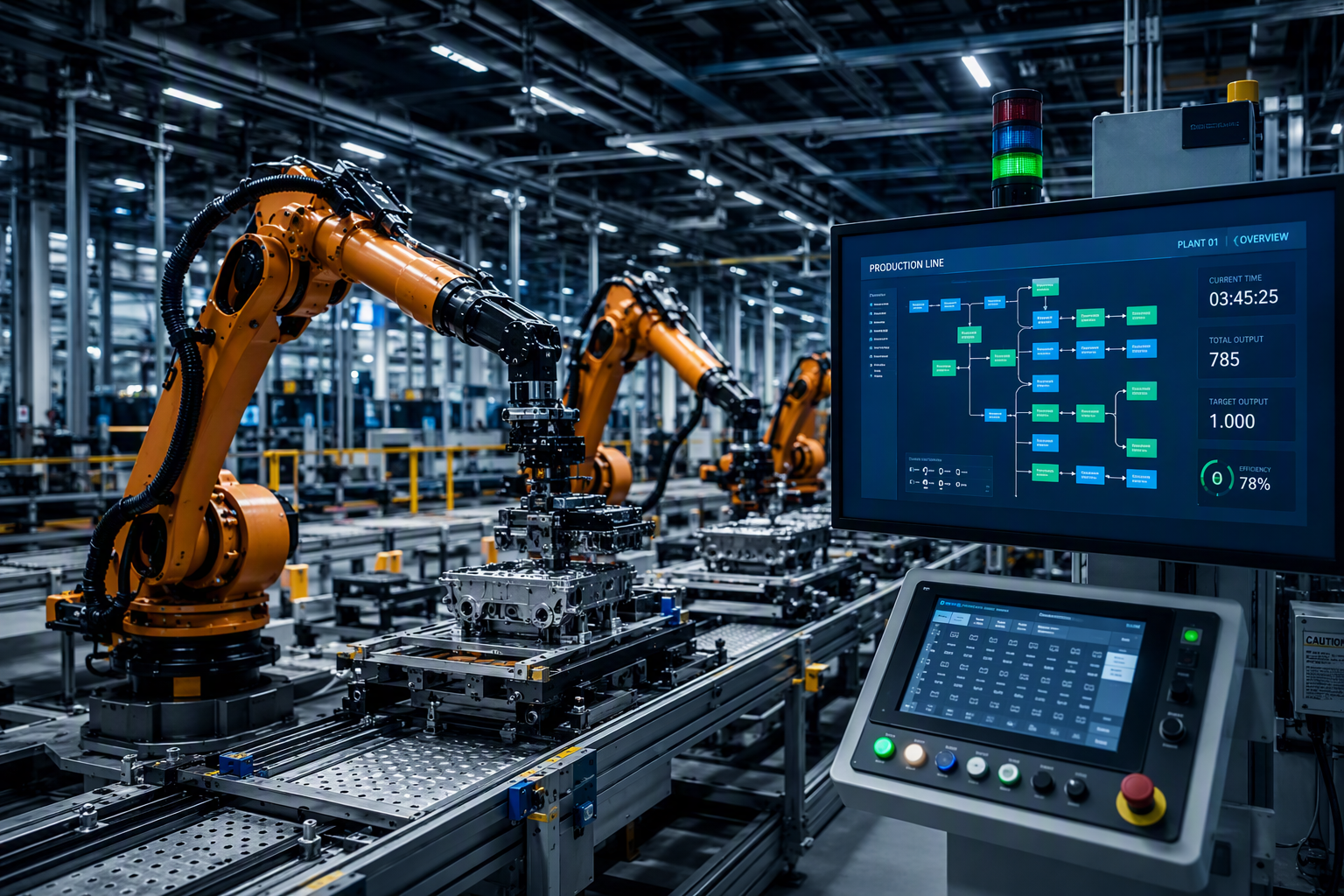
Every automated operation depends on a set of core components working together. Automation systems do not rely on one machine alone. They need sensing, decision-making, communication, and operator visibility to keep process control stable and useful.
At the ground level, field devices collect inputs and carry out actions. Controllers interpret signals, networks move information, and software supports data acquisition and supervision. When these parts are connected well, you gain better reliability, stronger quality control, and clearer operational insight. The next sections break down each piece.
Sensors and Actuators
Sensors and actuators are the frontline field devices in industrial automation. Sensors detect what is happening in the process, such as position, temperature, pressure, or motion. Actuators then turn control decisions into physical action, moving valves, motors, or mechanical parts.
This relationship is central to process control. A sensor reports a condition, the controller evaluates it, and the actuator responds to keep the process within the desired range. Without this feedback loop, automation solutions cannot react effectively to real operating conditions.
If you think of automation as a conversation, sensors are the ears and actuators are the hands. Together, they help reduce manual checks, improve repeatability, and support safer operations. Their accuracy also affects product quality, making them essential to both performance and consistency.
Programmable Logic Controllers (PLCs)
Programmable logic controllers, or PLCs, are one of the most important parts of industrial automation. These rugged computers receive signals from sensors, apply control logic, and send commands to machines or devices on the plant floor. They are designed to operate reliably in industrial settings.
In many automation systems, PLCs act as the real-time decision center. They help control conveyor belts, machine tools, robotic arms, and other equipment across the manufacturing process. Because they respond quickly and consistently, they are widely used for repetitive and time-sensitive operations.
You can think of PLCs as the system brain at the control level. They support stable performance, reduce human error, and make it easier to repeat tasks with precision. Their flexibility also makes them useful in both simple machine control and more complex coordinated processes.
SCADA Systems (Supervisory Control and Data Acquisition)
SCADA systems stand for Supervisory Control and Data Acquisition. They are used to monitor, supervise, and manage industrial control operations across larger systems. While PLCs handle direct machine actions, SCADA systems give operators a broader view of performance and status.
At the supervisory control level, SCADA platforms collect information from equipment, display it in a usable form, and support alarms, archiving, and system oversight. This helps teams track trends, respond to issues, and coordinate start or shutdown functions with better visibility.
Because data acquisition is built into SCADA systems, they also support smarter decision-making. Operators can see what is happening across multiple areas rather than one machine at a time. That makes SCADA valuable in utilities, process plants, and any operation that needs centralized monitoring.
Industrial Communication Protocols
Industrial communication protocols allow machines, controllers, sensors, and software to exchange information reliably. Without strong industrial communication, automated equipment would act like isolated islands. Connected production depends on common rules for sharing signals, status updates, and commands.
This matters even more as industrial iot adoption grows. More devices are now collecting production data, sending alerts, and supporting data acquisition across an operation. That only works when networks keep communication organized, timely, and consistent from the field level to supervisory systems.
For process automation, communication protocols are what turn separate devices into one coordinated system. They support visibility, faster response times, and better integration across machines and software. As factories become more connected, strong communication infrastructure becomes just as important as the equipment itself.
Human-Machine Interface (HMI) Panels
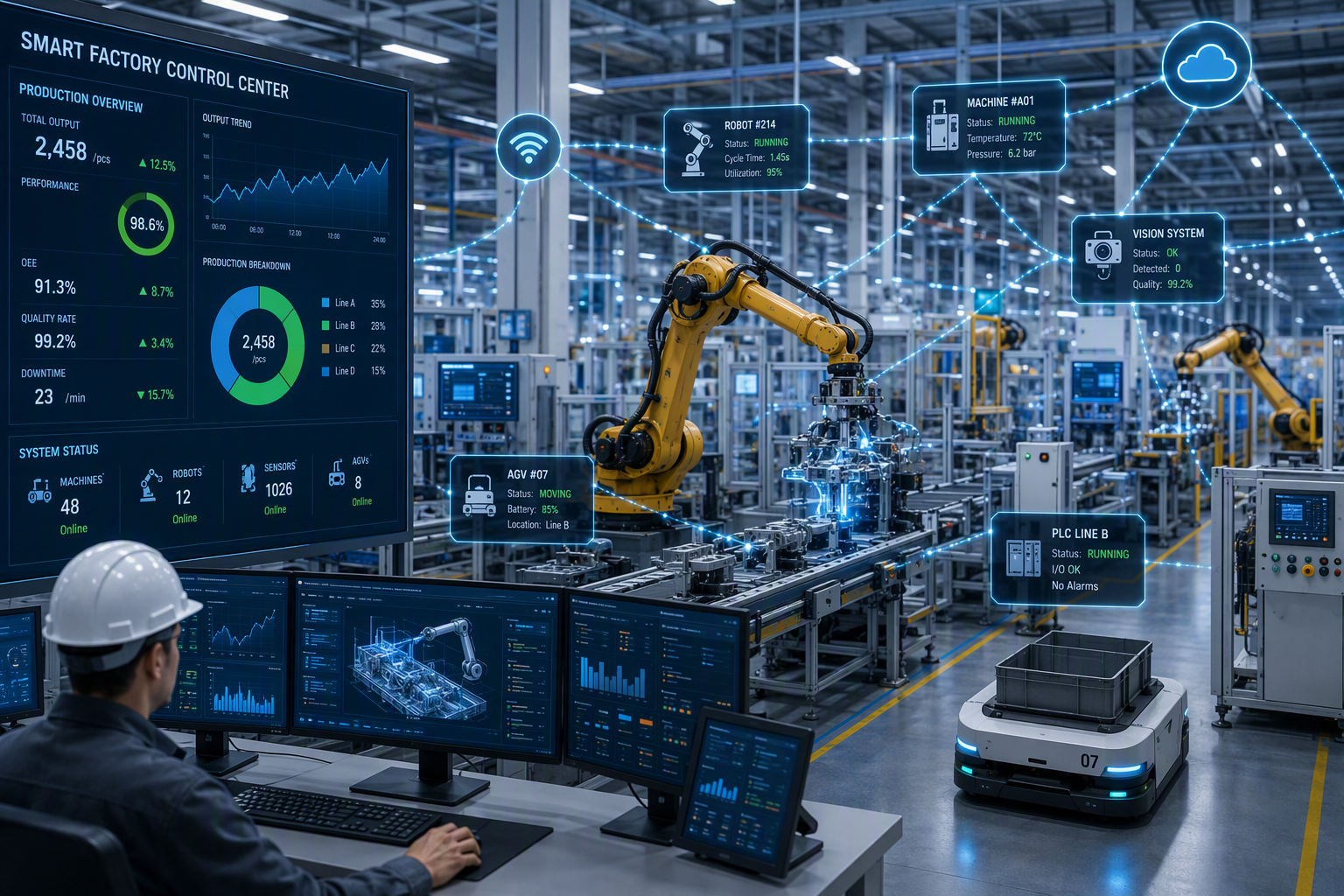
A human-machine interface, or HMI, is the screen or panel that lets operators interact with automated equipment. It provides a clear view of machine status, alarms, settings, and performance data. In short, the HMI makes complex control systems easier to understand and manage.
Good process visualization matters because operators need to see what is happening in real time. An HMI can show trends, machine states, production targets, and alerts in one place. That reduces guesswork and supports faster decisions when something needs attention.
You still need people in automated facilities, but their role changes. With a well-designed HMI, operators spend less time making manual adjustments and more time supervising performance. That leads to better control, fewer errors, and a more informed response to production issues.
Key Technologies Transforming Automation
Industrial automation is evolving because newer digital tools are building on proven control systems. The biggest changes are not replacing automation technology. They are making it more connected, faster, and more responsive to plant conditions.
Today, trends such as the industrial internet of things, machine learning, edge computing, cloud platforms, and digital twins are helping create smarter operations. These technologies support better visibility, stronger maintenance planning, and more adaptive decision-making. Together, they are pushing facilities closer to truly connected smart factories.
Artificial Intelligence and Machine Learning
Artificial intelligence and machine learning are expanding what automated systems can do with production data. Instead of only following fixed rules, some automation solutions now identify patterns, flag irregular behavior, and support faster operational decisions. This is one reason AI is becoming a major trend in industrial automation.
In practical terms, these tools are helping manufacturers improve uptime and consistency. They are especially useful in predictive maintenance and quality control, where small signals can reveal larger issues before they become expensive problems.
- Machine learning can spot performance changes that suggest equipment wear.
- Artificial intelligence can support quality control by identifying process variation faster.
- Data-driven automation solutions can reduce unplanned shutdowns and waste.
The result is not fully independent production. It is smarter support for people and systems already running industrial operations.
Industrial Internet of Things (IIoT)
The industrial internet of things, or IIoT, connects machines, sensors, and software so they can share information across a facility. This added connectivity gives you better visibility into performance, condition, and output without depending on disconnected manual checks.
In smart factories, IIoT supports continuous data acquisition from equipment throughout the line. Managers and operators can then use that information to identify bottlenecks, monitor process health, and improve maintenance planning. The value comes from turning machine activity into useful operational insight.
IIoT also supports process optimization. When systems are connected, it becomes easier to track waste, improve throughput, and respond faster to change. That is why IIoT is now a core part of modern automation strategies, especially in facilities focused on efficiency and real-time awareness.
Edge Computing
Edge computing brings data processing closer to the machines and devices generating information. Instead of sending everything away before acting, systems can process key signals near the source. That helps industrial operations respond faster when timing matters.
This matters because many automation tasks depend on real time decisions. If a machine condition changes suddenly, acting immediately can protect equipment, reduce waste, and support smoother flow. Edge tools help keep production data useful at the moment it is created.
- Faster local processing can support quicker equipment response.
- Real time handling of production data can reduce delays in decision-making.
- Industrial operations gain better control when urgent signals stay close to the source.
Edge computing fits well with connected automation because it strengthens speed without replacing broader plant-level systems.
Digital Twins
Digital twins are virtual representations of physical equipment or processes. They help teams study how automation systems behave without making immediate changes on the plant floor. This creates a safer and more informed way to evaluate performance and plan improvements.
Because digital twins rely on data acquisition from real equipment, they can reflect current operating conditions rather than just static design assumptions. That gives engineers and operators a practical way to compare expected behavior with actual production results over time.
A major benefit is process simulation. Before adjusting equipment, teams can review how changes may affect output, timing, or consistency. In a busy operation, that reduces guesswork and supports better decisions. As automation grows more connected, digital twins are becoming a useful planning and optimization tool.
Cloud Integration in Automation
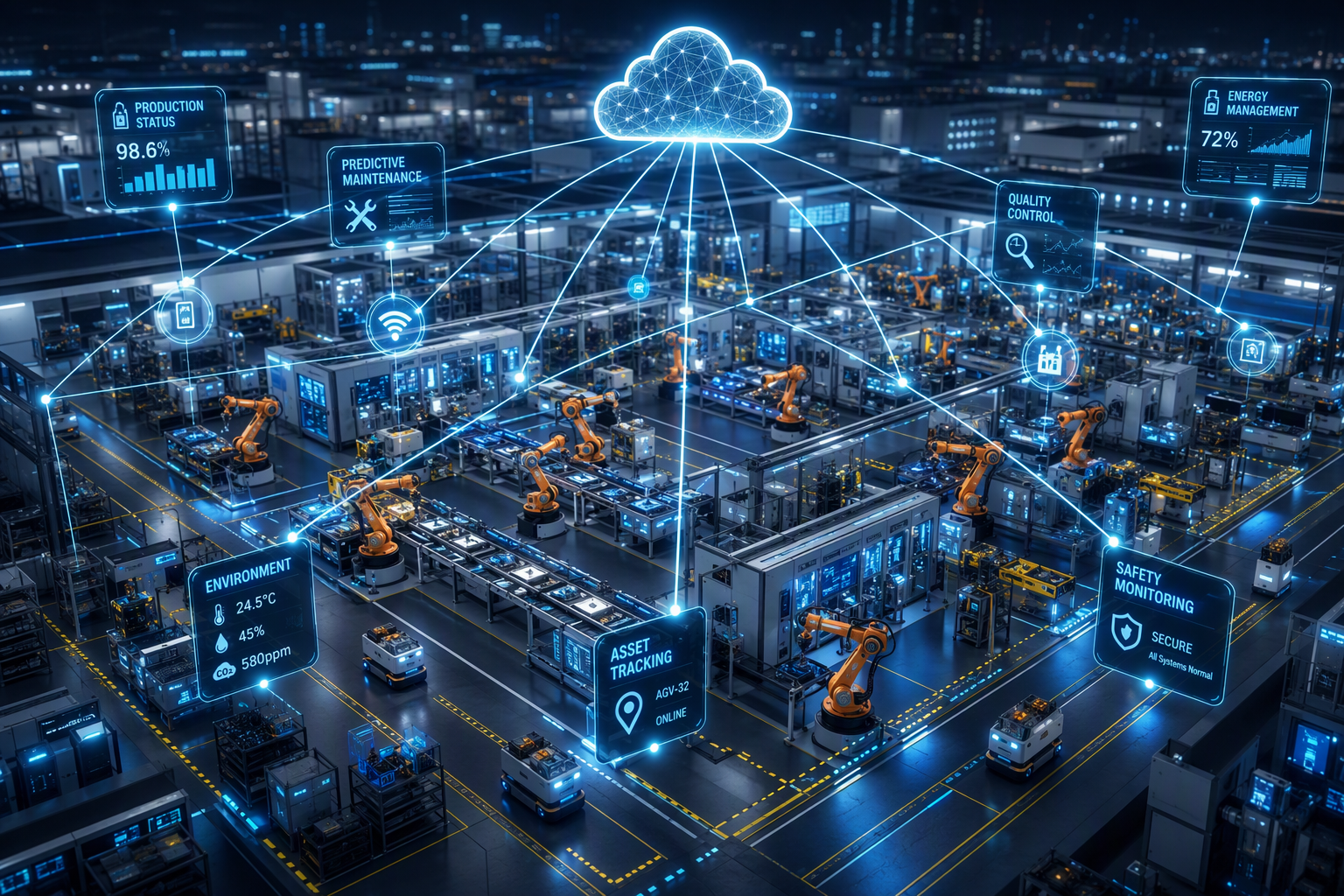
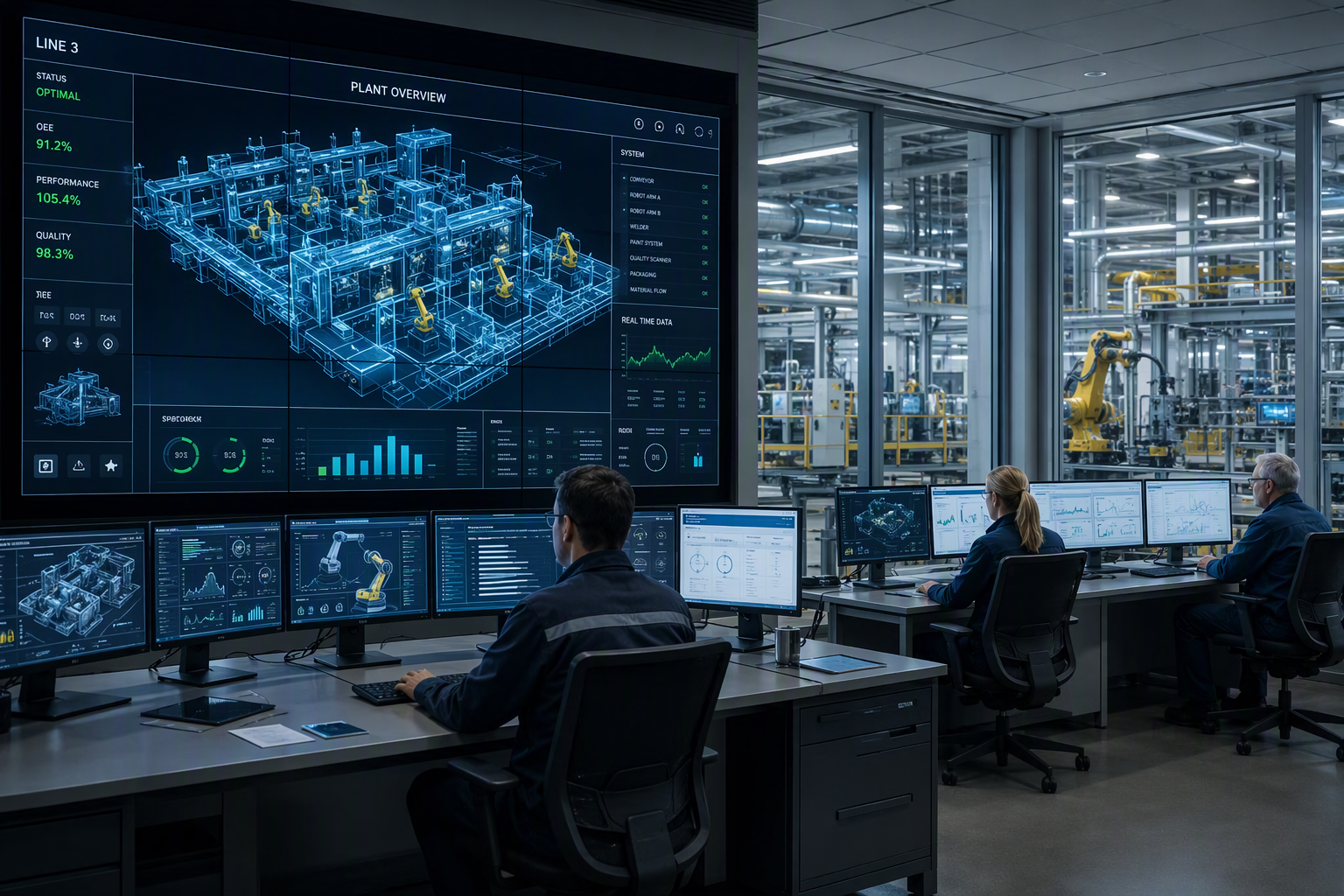
Cloud integration allows automation systems to store, organize, and share process data across a broader digital environment. Instead of keeping information trapped in one machine or one local station, connected platforms can support visibility across departments or locations.
For smart factories, this creates a stronger information flow. Teams can review trends, compare production performance, and make decisions using a wider set of operational data. Cloud integration also supports centralized access to history, reports, and plant metrics when those records need to be reviewed.
The value is not just storage. It is coordination. When process data is easier to access and organize, plants can respond with better planning and stronger oversight. Cloud tools work best when paired with secure, well-structured automation strategies rather than treated as standalone solutions.
Benefits of Industrial Automation
Businesses invest in industrial automation because it solves real operating problems. It can raise output, improve quality control, reduce downtime, and limit the need for constant human intervention in repetitive or hazardous tasks.
The result is broader than speed alone. Companies also see productivity improvements, stronger consistency, better safety, and long-term cost reduction. These benefits explain why automation systems continue to spread across manufacturing and process industries. The next sections look at the biggest gains in more detail.
Productivity Improvements
One of the clearest gains from automation is higher output. Automated equipment can run longer hours, respond consistently, and keep the manufacturing process moving with fewer interruptions. That leads to strong productivity improvements, especially where companies once relied on multiple shifts of manual labor.
Plants also benefit from better process optimization. When machines follow the same programmed sequence, work becomes more predictable. That helps shorten cycle times, reduce stoppages, and support more stable throughput across the line.
- Automated systems can operate 24/7 with minimal human intervention.
- Faster cycle times help increase throughput without adding extra labor.
- Better process optimization reduces bottlenecks and routine delays.
For many facilities, that combination improves operational stability as much as it improves volume. More output is useful, but steadier output is just as valuable.
Enhanced Product Quality
Automation improves product quality by reducing the variation that often comes with manual work. Machines do not tire, skip steps, or lose focus during repetitive tasks. That consistency is a major reason manufacturers use automation in high-precision environments.
Quality control also becomes more reliable when automated inspection systems are added to the process. These systems can check output in a repeatable way and catch defects sooner. In some operations, machine vision helps identify flaws that would be difficult to spot consistently by eye.
A useful example comes from the car industry. Installing pistons by hand once produced an error rate around 1 to 1.5 percent. Automated machinery reduced that rate to about 0.00001 percent. That kind of improvement shows how powerful automation can be when accuracy matters.
Cost Reduction
Automation often requires a high upfront investment, but the long-term financial case can be strong. One major reason is cost reduction through lower ongoing labor expenses. Automated systems do not require wages, paid leave, healthcare, pensions, or other employee-related benefits tied to routine production roles.
There are also savings in maintenance and downtime. Industrial machinery used in automation solutions often runs reliably for long periods, and when issues happen, repairs are usually handled by technical staff rather than large production teams. Fewer unplanned shutdowns also protect output and revenue.
Energy use can improve as well when processes become more controlled and less wasteful. While human labor remains important for oversight and technical work, automation reduces dependence on manual effort for repetitive production. Over time, that balance can support lower operating costs and better profitability.
Increased Flexibility and Scalability
Automation is no longer only about making large volumes of one product. Many companies now need flexibility so they can respond to shifting demand, shorter runs, and more product variation. This is where flexible automation becomes especially useful.
With adaptable systems, a plant can change tasks, switch product types, and support batch production with less disruption. That matters when market needs move quickly or when customers want different configurations. You do not want long downtime every time your output mix changes.
Scalability is just as important. As demand rises, automation helps increase output without expanding manual labor at the same rate. It can also support smoother coordination across the supply chain by making production more predictable. For businesses planning growth, that combination of responsiveness and capacity is a major advantage.
Safety Enhancements for Workers
Safety is one of the most practical reasons to adopt automation technology. In many facilities, machines can handle tasks that expose people to heat, pressure, toxic materials, heavy force, or fast-moving equipment. That change lowers risk without slowing production.
These safety enhancements matter most in places where extreme temperatures or hazardous motions are part of normal operations. By assigning dangerous work to automated systems, companies reduce the chance of injury and also limit human error during high-risk tasks.
Minimal human intervention does not mean workers disappear. It means people spend less time in unsafe positions and more time supervising, maintaining, and improving equipment. That shift can create a safer production line while also supporting better consistency and stronger operational control.
Industry Adoption and Leading Sectors
Industry adoption of industrial automation is broad, but some sectors have moved faster because their operations demand high precision, repeatability, or around-the-clock performance. These leading sectors often face strict quality, speed, and safety requirements.
You can see strong use cases in automotive manufacturing, food and beverage production, utilities, pharmaceuticals, electronics, and warehousing. Each sector uses automation in a slightly different way, depending on product complexity, regulation, and throughput needs. The following examples show how that plays out in practice.
Automotive Manufacturing
Automotive manufacturing is one of the most visible examples of automation at scale. Car plants depend on high-speed coordination, repeatable movement, and strong process consistency, which makes them a natural fit for machine-driven production.
On a typical production line, robotic arms handle welding, painting, and installing parts with a level of precision that would be difficult to sustain manually. These systems help reduce errors, speed up final assembly, and support stable output across long shifts.
Automation also strengthens quality checks in this sector. Because vehicles involve many tightly fitted components, small mistakes can create bigger issues later. Automated inspection, controlled motion, and repeatable assembly steps help manufacturers maintain high standards while keeping production fast and efficient.
Food and Beverage Industry
The food and beverage industry relies heavily on automation technology because consistency and speed are essential. Facilities often need to mix, fill, cap, package, and move products at high volume while keeping process steps stable from batch to batch.
In beverage processing, automated filling systems can handle thousands of bottles or cans with uniform accuracy. Sensors and control platforms help maintain process control, which supports product consistency and helps reduce waste during packaging and handling.
This sector also benefits from dependable timing and coordinated equipment flow. Whether the plant is processing liquids, food variants, or packaged goods, automation helps companies meet demand while keeping operations organized. For businesses that need repeatability and efficient throughput, this industry remains a clear leader in adoption.
Oil, Gas, Water, and Utilities
Oil, gas, water, and utilities are strong automation users because they depend on continuous operations and close system oversight. These sectors often manage large, distributed assets where process stability is critical and interruptions can be costly.
Process automation helps operators monitor conditions, respond to changes, and keep services running with fewer manual checks. Control systems and supervisory platforms are especially valuable here because they provide broad visibility across equipment, flow conditions, and plant performance.
Another reason these sectors adopt automation is safety. Many activities involve pressure, chemicals, or remote infrastructure that benefit from lower direct exposure. By combining monitoring, centralized control, and automated response, utilities and energy operations can improve reliability while reducing operational risk.
Pharmaceutical and Life Sciences
Pharmaceutical and life sciences companies depend on consistency, traceability, and disciplined execution. That makes automation systems highly valuable, especially in environments where output quality must remain stable across repeated production runs.
Many operations in this space use batch production, which fits well with programmable and integrated automation approaches. Equipment can be set up for one product run, then adjusted for another while still maintaining controlled sequences and reliable documentation.
Quality control is especially important in pharmaceutical manufacturing. Automated monitoring and precise equipment handling reduce variation and support repeatable processing. When your products must meet strict expectations every time, automation helps create the stable, measurable environment needed for dependable production.
Electronics and Semiconductors
Electronics and semiconductors require extremely precise production, which is why automation plays such a large role in these industries. Components are often small, delicate, and sensitive to variation, so manual work alone is rarely enough for dependable high-volume output.
Automation solutions such as pick-and-place systems, robotic handling, and specialized machine tools help manufacturers place components accurately and repeat tasks at high speed. This level of precision supports both productivity and consistency in complex assembly environments.
Strong process control also matters because small deviations can affect performance or yield. Automated systems help manufacturers hold tighter tolerances, reduce errors, and handle repeated tasks more efficiently. For electronics and semiconductors, automation is not just useful. It is often essential.
Market Growth and Drivers
The industrial automation market is growing because companies across sectors are under pressure to produce more with better consistency. As competition rises, businesses are turning to automation technology to improve uptime, reduce waste, and stay efficient.
Growth is also tied to practical advances in robotics, connected devices, software, and predictive tools. These changes have made industrial automation more capable and more attractive to a wider range of operations. The drivers behind that expansion are easier to see when you break them down one by one.
Demand for Efficiency and Precision
A major driver of automation demand is the need for greater efficiency. Companies want faster production, fewer interruptions, and more stable operations without adding unnecessary cost. Automation technology helps meet those goals by reducing variation and keeping processes moving.
Precision matters just as much. In many industries, even small errors can affect output quality, scrap rates, or delivery performance. Automated equipment supports tighter control over repeated actions, which improves quality control and makes production more dependable.
Process optimization sits at the center of both needs. When machines monitor conditions, follow programmed sequences, and respond consistently, it becomes easier to remove bottlenecks and reduce waste. That is why businesses looking for both accuracy and stronger throughput continue to invest in automation.
Labor Trends and Workforce Optimization
Labor trends are another reason automation adoption keeps rising. Many facilities face shortages, high turnover, or difficulty staffing repetitive positions across multiple shifts. When those issues grow, automation systems become a practical way to stabilize output.
Workforce optimization does not mean removing all people from operations. In many cases, it means shifting human labor away from repetitive line work and toward maintenance, programming, supervision, and system support. That can improve plant performance while creating more technical roles.
This balance matters because automated production still needs skilled teams. Machines handle routine execution, but people guide strategy, solve problems, and manage change. As labor pressures continue, companies are using automation not only to replace repetitive tasks but also to improve how their workforce is used.
Regulatory Compliance and Industry Standards
Regulatory compliance and industry standards push companies toward more controlled and traceable operations. When production needs to be monitored closely, automation systems help create the repeatability and visibility required for consistent execution. This is especially useful in sectors with tight process expectations.
Data acquisition supports that effort by giving operators and managers reliable production information. Better records, clearer monitoring, and controlled workflows make it easier to supervise output and respond when performance drifts away from expected conditions.
| Compliance Need | How Automation Helps |
|---|---|
| Consistent execution | Automation systems repeat programmed tasks with less variation |
| Better oversight | Supervisory tools improve visibility across machines and processes |
| Traceable production data | Data acquisition supports monitoring, archiving, and review |
| Controlled process changes | Programmable systems make updates more structured and repeatable |
As standards rise, automation becomes a practical tool for maintaining discipline in day-to-day operations.
Sustainability and Green Manufacturing
Industrial automation supports sustainability by helping companies use resources more efficiently. When processes are better controlled, there is often less waste, fewer defects, and more stable use of materials. Those gains matter for both cost and environmental performance.
Green manufacturing also depends on reducing unnecessary energy consumption. Automated systems can improve timing, reduce idle equipment, and keep processes operating closer to target conditions. That helps avoid waste caused by inconsistent manual operation or repeated rework.
The connection is practical rather than abstract. Industrial automation helps plants gather accurate data, identify losses, and make better operating decisions. As more companies focus on sustainability goals, automation is becoming a useful way to improve output while reducing waste and unnecessary energy use.
Technological Advancements Accelerating Adoption
Technological advancements are making automation more attractive to more industries. Better software, connected sensors, improved control platforms, and wider access to industrial robots have expanded what companies can automate and how effectively they can do it.
These changes are also moving facilities toward smart factories. Instead of isolated equipment, businesses now want systems that share data, support real time decisions, and coordinate performance across the operation. That kind of visibility was harder to achieve in older setups.
As industrial automation becomes more connected and easier to scale, adoption naturally increases. Companies see that newer tools can reduce downtime, improve consistency, and support future growth. For many, the decision is no longer whether automation matters. It is how quickly they can implement it well.
Challenges in Implementing Automation
Industrial automation brings clear value, but implementation is not always simple. Companies often face challenges tied to cost, system complexity, planning, and the need to connect new tools with older equipment.
Three issues show up often: legacy systems that are hard to integrate, cybersecurity risks in connected environments, and workforce training needs as roles shift. Understanding these barriers helps you plan more effectively and avoid frustration during rollout. The next sections cover the most common obstacles in detail.
Integration with Legacy Systems
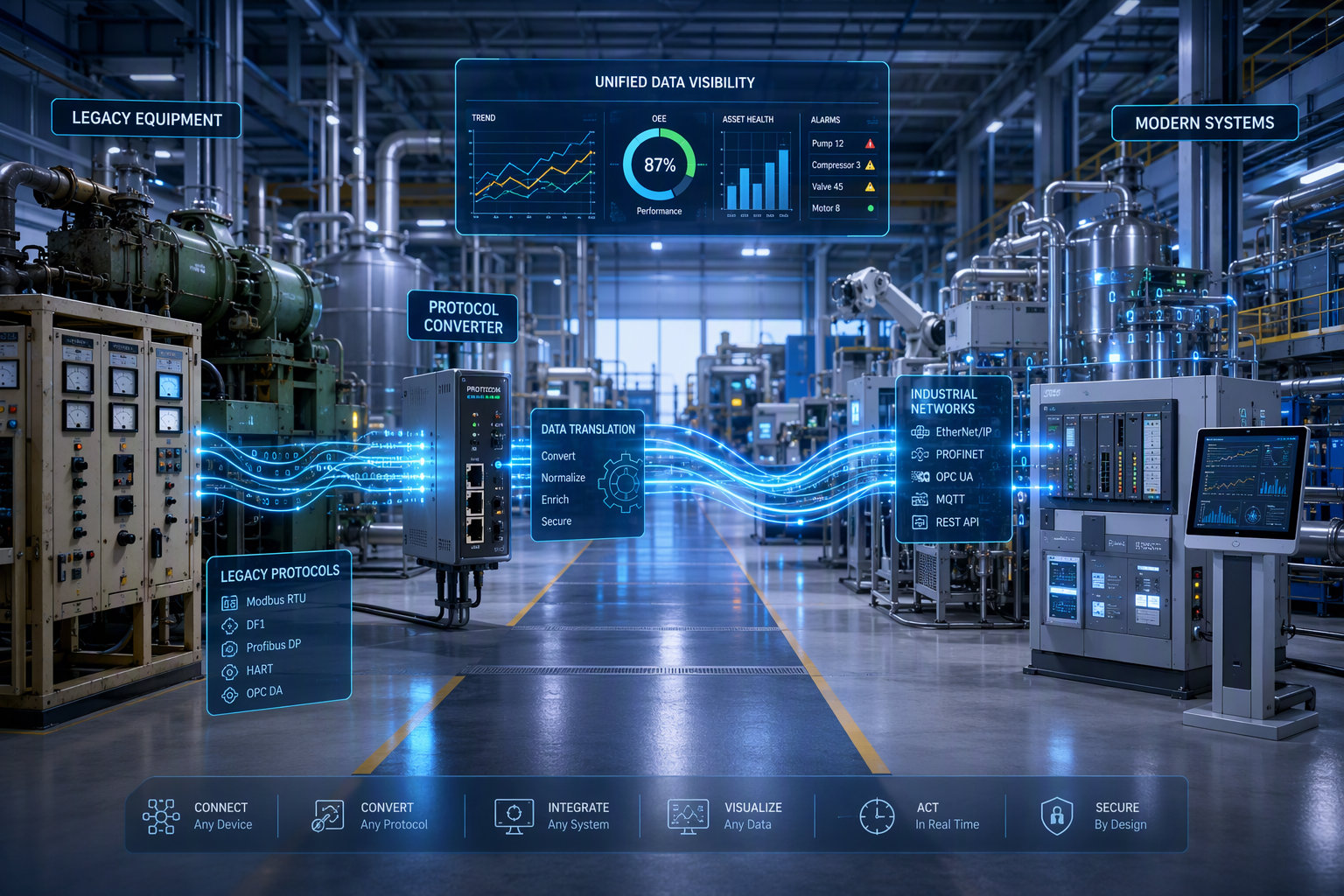
One of the biggest automation hurdles is integration with legacy systems. Many plants still rely on older machines that were not built for today’s connected industrial automation systems. That can make upgrades slower, more expensive, and more technically demanding.
The issue is not always replacing old equipment. In many cases, companies need new tools to work alongside existing process control assets without disrupting production. That requires careful planning, skilled engineering, and a realistic view of what the current setup can support.
- Older machines may not communicate easily with modern platforms.
- Integration work can increase project cost and complexity.
- Plants may need phased upgrades instead of full replacement.
The good news is that companies do not always need a complete reset. With the right approach, mixed environments can still move toward stronger automation over time.
Cybersecurity and Data Protection
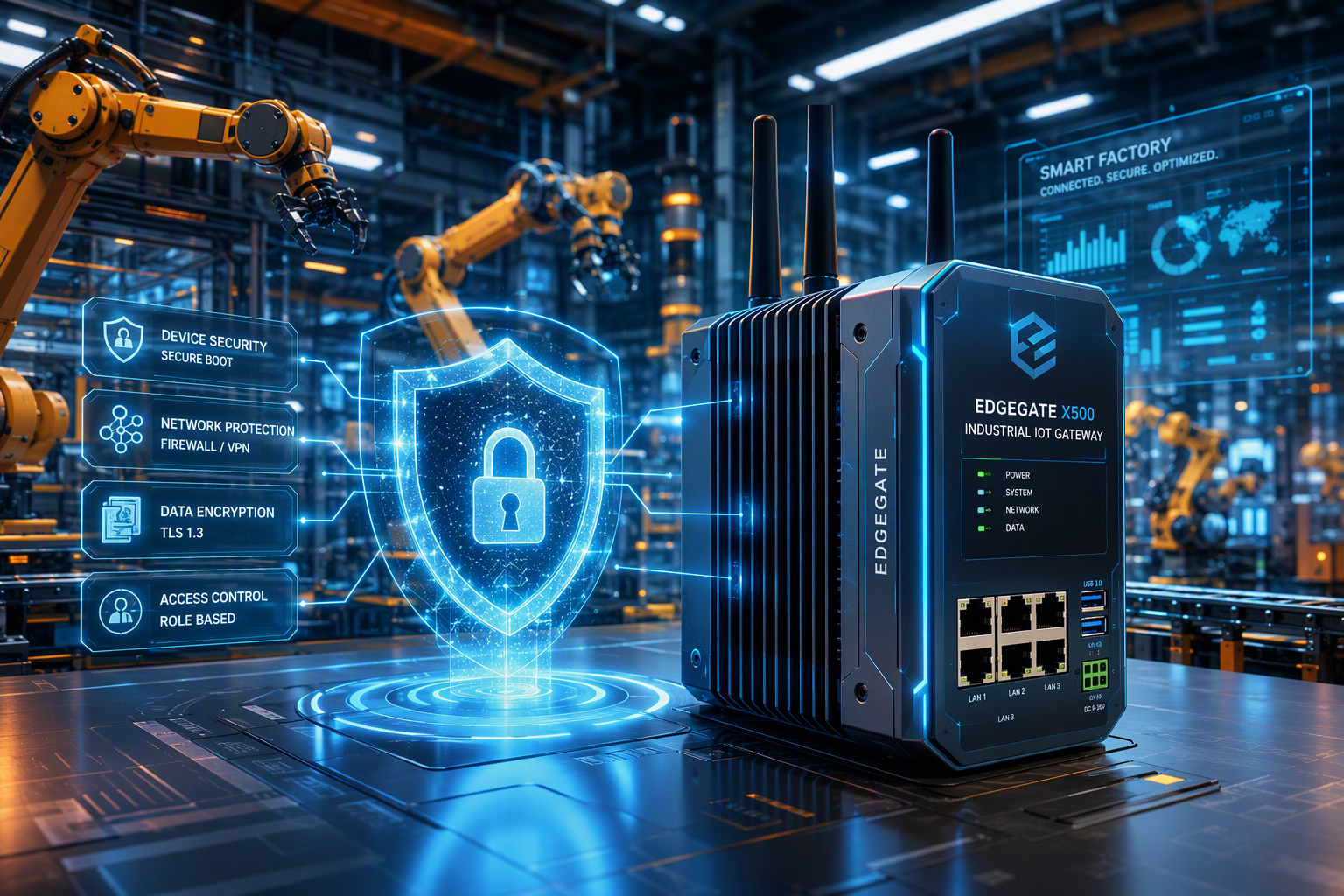
As industrial automation becomes more connected, cybersecurity becomes harder to ignore. Systems that share data across machines, networks, and software platforms can be vulnerable if they are not protected properly. That risk grows as industrial iot devices are added to operations.
Data protection matters because automation now depends on accurate information and reliable control signals. If systems are disrupted, production can slow, stop, or behave unpredictably. That creates operational risk, not just IT risk.
For that reason, companies need security to be part of automation planning from the start. Connected systems offer major benefits, but only when they are implemented responsibly. Strong cybersecurity helps protect uptime, preserve trust in production data, and support safer digital operations across the plant.
Change Management and Workforce Training
Technology is only part of automation success. Change management is just as important because people need to understand how new systems affect their work. If that transition is handled poorly, resistance and confusion can slow the project down.
Workforce training is a big piece of that process. As automation systems take over repetitive tasks, employees often move toward maintenance, programming, supervision, or system support. That shift can create opportunity, but only if teams are given the skills to succeed in new roles.
Human intervention does not disappear in automated operations. It changes. Workers still monitor performance, solve exceptions, and improve processes. Companies that invest in training and communication are more likely to see strong results because their teams are prepared to work with automation instead of around it.
Conclusion
In conclusion, the innovations shaping the industrial automation industry are not just transforming production processes, but also redefining how businesses operate in a competitive landscape. From advanced robotics to AI and IoT, these technologies offer significant benefits such as enhanced productivity, better quality, and improved safety. While challenges like integration and cybersecurity remain, the ongoing evolution of automation presents immense opportunities for industries to thrive. As you navigate this exciting landscape, consider how these advancements can help streamline your operations and drive your business forward. If you're looking to explore how these innovations can be tailored to your specific needs, don't hesitate to reach out for a free consultation!
Frequently Asked Questions
How is artificial intelligence impacting industrial automation?
Artificial intelligence and machine learning are helping automation systems use production data more effectively. In practice, this improves predictive maintenance, supports faster quality decisions, and strengthens automation technology without replacing existing control systems. The main benefit is better insight, not fully independent production.
What industries are leading in adopting automation technologies?
Leading adopters of automation technologies include automotive manufacturing, electronics, food and beverage, utilities, and pharmaceutical production. These sectors use industrial automation because they need repeatability, speed, process control, and reliable quality across high-volume or highly precise production environments.
How does industrial automation contribute to sustainability?
Industrial automation supports sustainability by improving process optimization, reducing waste, and lowering unnecessary energy consumption. In green manufacturing, better control helps plants run more efficiently, make fewer defective products, and use resources more carefully, which supports both environmental goals and operating performance.
You might also like