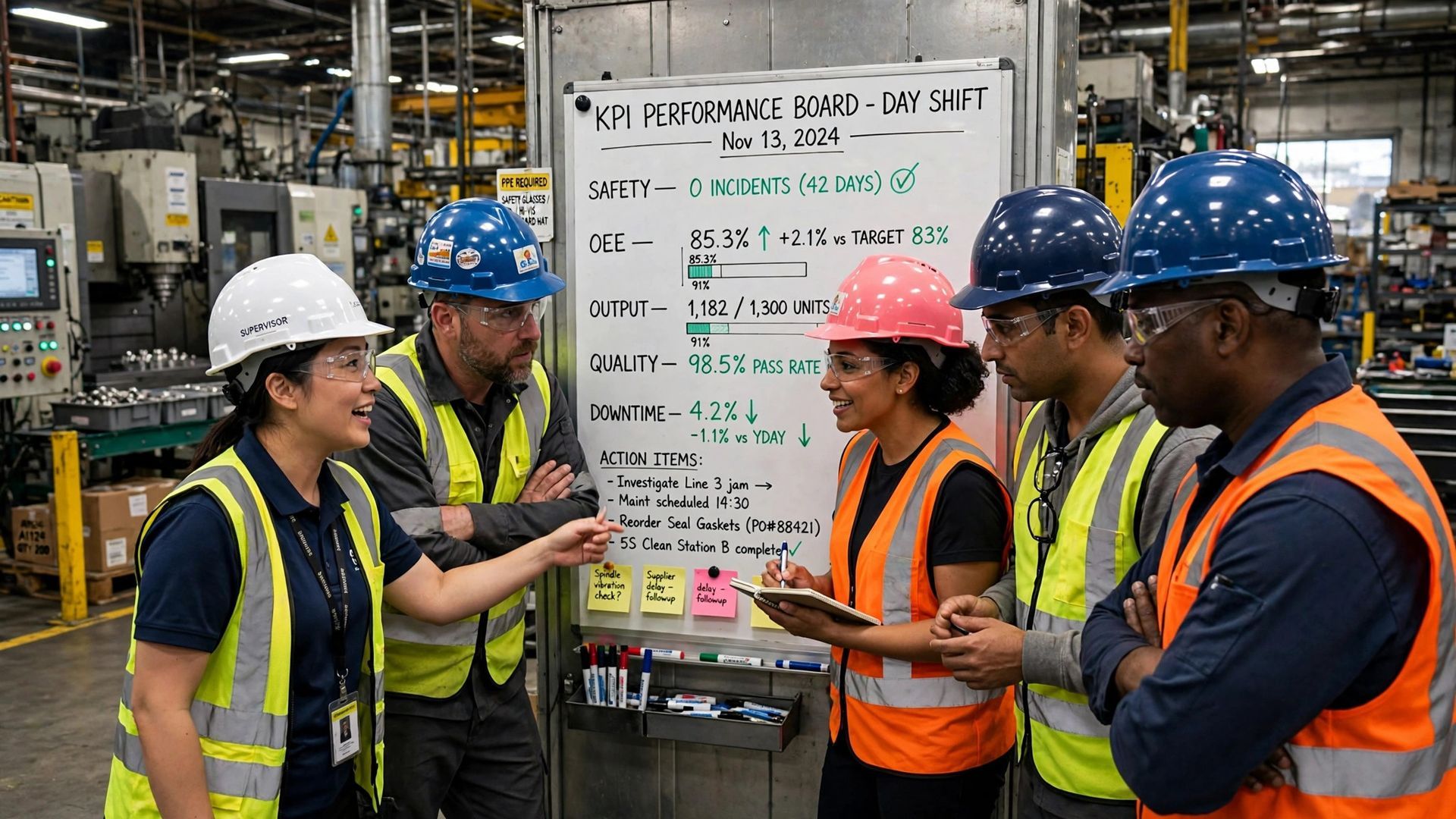
Reducing Changeover Time to Raise Availability
Key Highlights
- Changeover time runs from the last good part to the first good part of the next run.
- Reducing setup time raises availability inside overall equipment effectiveness and supports lean manufacturing goals.
- Faster changeovers make smaller batch sizes more practical and can lower inventory levels.
- SMED gives teams a clear path to separate internal and external work.
- Good measurement uses direct observation, data collection, and video analysis.
- Continuous improvement helps sustain gains and keeps changeover performance moving in the right direction.
Introduction
In many plants, changeover time is one of the clearest hidden drains on output. It sits between runs, eats into available hours, and quietly limits production efficiency. For manufacturing managers and engineers, this is not just a scheduling issue. It is a direct operations issue tied to core manufacturing principles. When you shorten the gap between products, you free up more time to make sellable parts, respond to changing demand, and run the line with less waste.
Understanding Changeover Time in Manufacturing
Changeover time is the full gap between one product run and the next. In manufacturing, that means more than setup time alone. It includes cleanup, adjustments, quality checks, and the steps needed to get the line back to stable output.
Why does that matter? Because production processes only create value when they are making good parts. If a line spends too much time stopped between runs, you lose productive hours, strain schedules, and make it harder to improve flow. That sets up the need to define the term more precisely.
Definition of Changeover Time and Its Significance
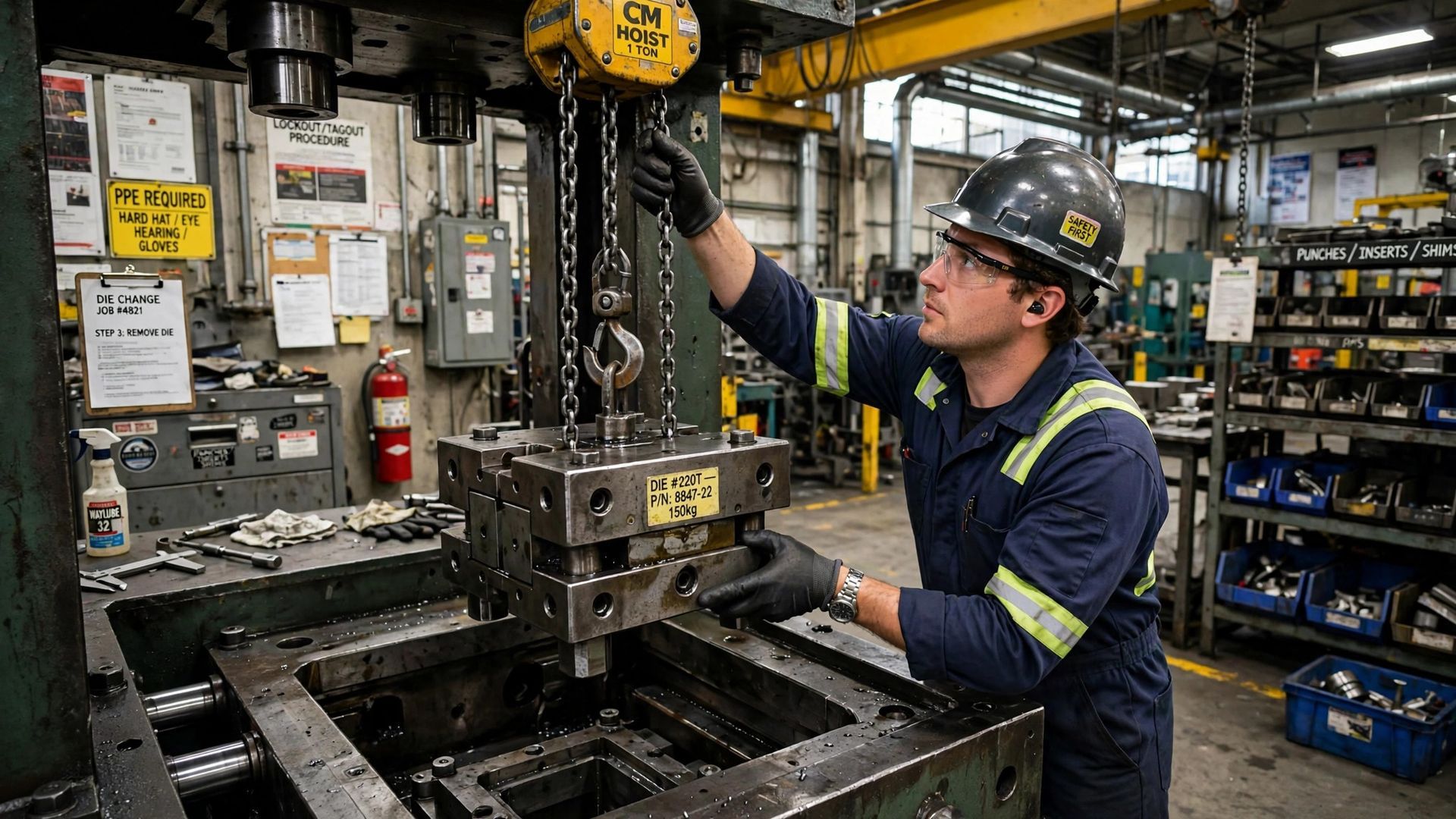
Put simply, changeover time is the period from the last good part of one production run to the first good part of the next. That definition matters because it captures the entire process, not just wrench time at the machine. It also includes cleanup, setup, adjustments, and required quality checks.
In practice, many teams focus only on the obvious mechanical steps. That misses delays that happen before startup or after restart. If your clock starts too late or stops too early, your data will look better than reality and the biggest losses stay hidden.
This is why reducing changeover time matters so much. Every minute between the last good part and the first good part is a minute not producing saleable output. Cutting that gap improves production flexibility, supports smaller runs, and creates room for steadier daily operations.
Impact on OEE and the Availability Factor
Changeovers have a direct effect on overall equipment effectiveness because they reduce the time a machine is available to run. Inside OEE, that loss shows up in the availability factor. If a line is scheduled but stopped for a product switch, that time is not productive time.
Here is a simple worked example. Suppose a line has 480 minutes of scheduled production time in a shift. If total changeover time is 60 minutes, available running time is 420 minutes. Availability is 420 divided by 480, or 87.5 percent. Cut changeover time to 30 minutes, and availability becomes 450 divided by 480, or 93.75 percent.
That 6.25-point gain comes without buying new equipment. You simply reclaim lost production time. If you want a broader view of how availability fits into overall equipment effectiveness, see the OEE pillar page here: https://www.empoweredautomation.com/oee. From there, it becomes easier to see why teams target changeovers first.
Changeover Time vs. Setup Time—Key Differences
Many people use setup time and changeover time as if they mean the same thing. They do not. Setup time is one part of broader changeover processes. Changeover covers the full interval around a production run change, from the end of one product to qualified output on the next.
A practical way to separate them is this:
- Setup time is the time spent preparing equipment for the next production run.
- Changeover time includes cleanup, setup time, adjustments, and quality checks.
- Setup often focuses on machine preparation; changeover includes the full operating interruption.
- Changeover ends at the first good part, not when tools are simply installed.
That difference matters when you improve the process. If you only shrink setup time, you may still lose large blocks of availability after restart. To raise OEE, you need to reduce the complete stop-to-good-part window.
Why Reducing Changeover Time Matters
Changeover time reduction matters because it turns stopped time into production time. That improves flow, helps you react faster to schedule changes, and supports lean manufacturing principles that aim to remove non-value-added work.
There is also a planning benefit. Shorter changeovers make smaller batch sizes more realistic, so you do not have to rely on large batch sizes just to protect uptime. That can reduce inventory and improve responsiveness. The next sections show how those gains appear in throughput, availability, and day-to-day results.
Effects on Production Efficiency and Throughput
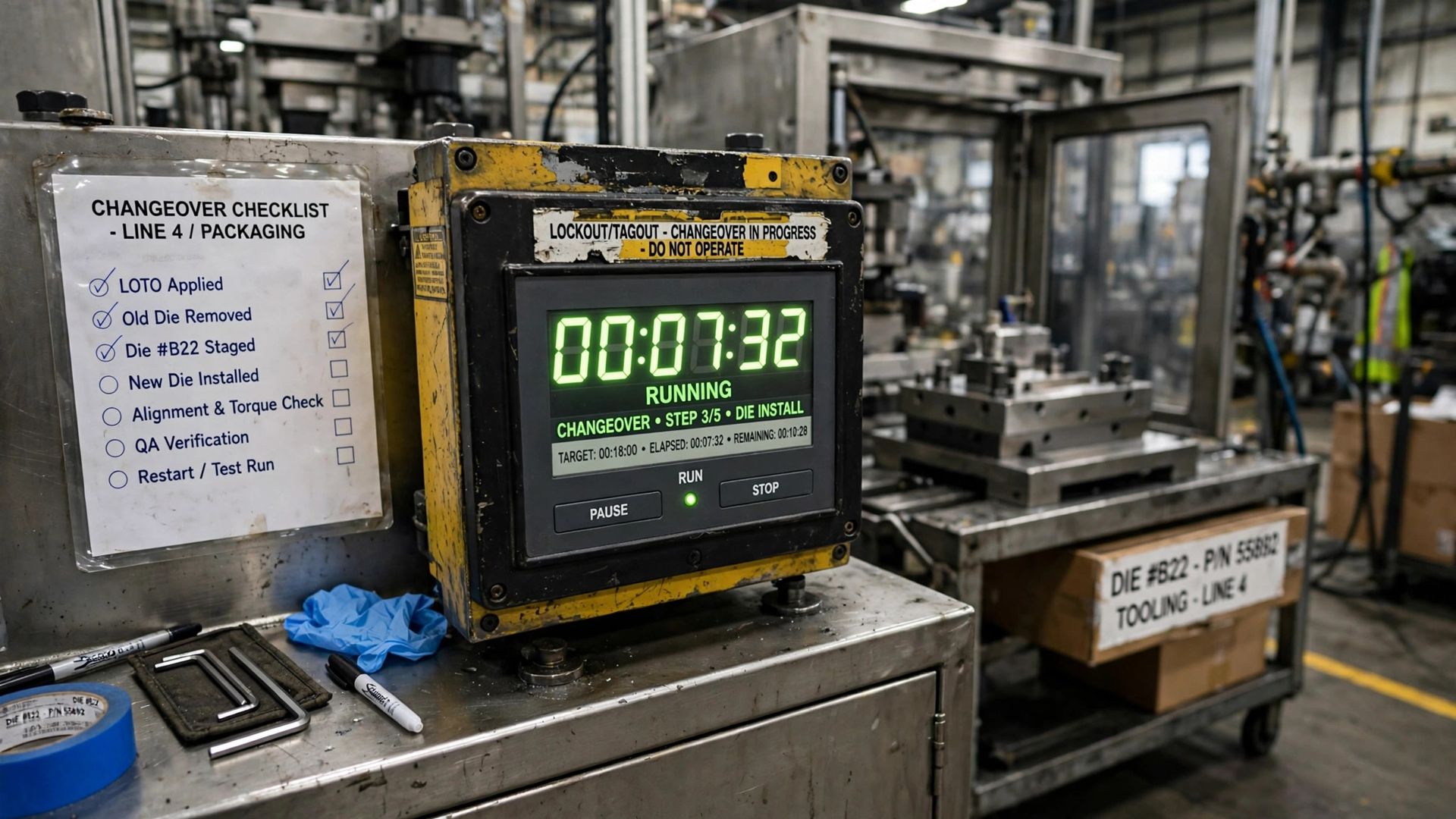
When a line spends less time between products, it spends more time making parts. That is the simplest link between faster changeovers and production efficiency. You are not adding labor hours or equipment investment. You are recovering time that was already on the schedule.
Throughput improves because more of the shift is available for actual production. Even small reductions add up over a week. A repeated 10- or 15-minute savings across multiple product switches can create meaningful extra capacity and reduce pressure on overtime.
There is also a system effect. Shorter interruptions help keep upstream and downstream processes aligned. That improves flow across manufacturing processes, cuts waiting, and makes planning easier. For managers and engineers, this is why changeover work should be treated as a core operational priority, not a side project.
Role in Improving Machine Availability
Machine availability improves when you reduce the amount of time equipment sits idle during product switches. That is why changeover time has such a strong effect on OEE. Every minute trimmed from the changeover gives a minute back to productive time.
For a production team, that means more usable hours without extending the shift. It also gives schedulers more room to handle variation in customer demand. Instead of losing capacity to long transitions, the line returns to stable running sooner.
This matters even more in operations with frequent product changes. The more often you switch, the bigger the availability penalty becomes. In those settings, reducing changeover time is one of the fastest ways to lift machine availability, increase operational efficiency, and create greater flexibility from the same assets.
Real-World Examples of Successful Changeover Reduction
You do not need a complex theory to see the value of changeover time reduction. The compiled guidance points to several common results manufacturers achieve when they improve these transitions in a disciplined way. The gains are practical and often visible quickly on the shop floor.
Typical results include:
- More production capacity because less scheduled time is lost during switches.
- Lower inventory levels as smaller runs become easier to support.
- Better production flexibility, which can create a competitive advantage.
- Improved response to customer demand, which supports customer satisfaction.
These examples matter because they connect changeover work to business outcomes. Faster, more consistent product switches help a plant move with the market instead of buffering every problem with excess stock and long lead times.
Common Challenges and Bottlenecks During Changeovers
Long changeovers rarely come from one big issue. More often, they come from several small bottlenecks spread across the process. A missing tool, an unclear sequence, or extra adjustment time can quietly add minutes until the whole event runs long.
That is one reason plants often protect themselves with larger batch sizes. But that only hides the problem. To make changeovers shorter, you need to see where time is really being lost. The next sections break down common sources tied to process, people, and equipment.
Typical Sources of Delay and Lost Availability
Most lost availability during changeovers comes from routine issues that have become normal. Teams get used to searching, waiting, rechecking, or making repeated adjustments, so the delay stops standing out. That is why direct observation is so useful.
Common sources of delay include:
- Unnecessary steps built into the production line over time.
- Cleanup, tool gathering, or material staging that starts only after the machine stops.
- Extended adjustments and quality checks before stable output is reached.
- Poor visibility into who does what next, which causes waiting and overlap gaps.
None of these issues are dramatic on their own. Together, they stretch total time and keep the line from returning to production quickly. Once you identify them clearly, they become much easier to remove, simplify, or shift outside the downtime window.
Human Factors and Training Gaps
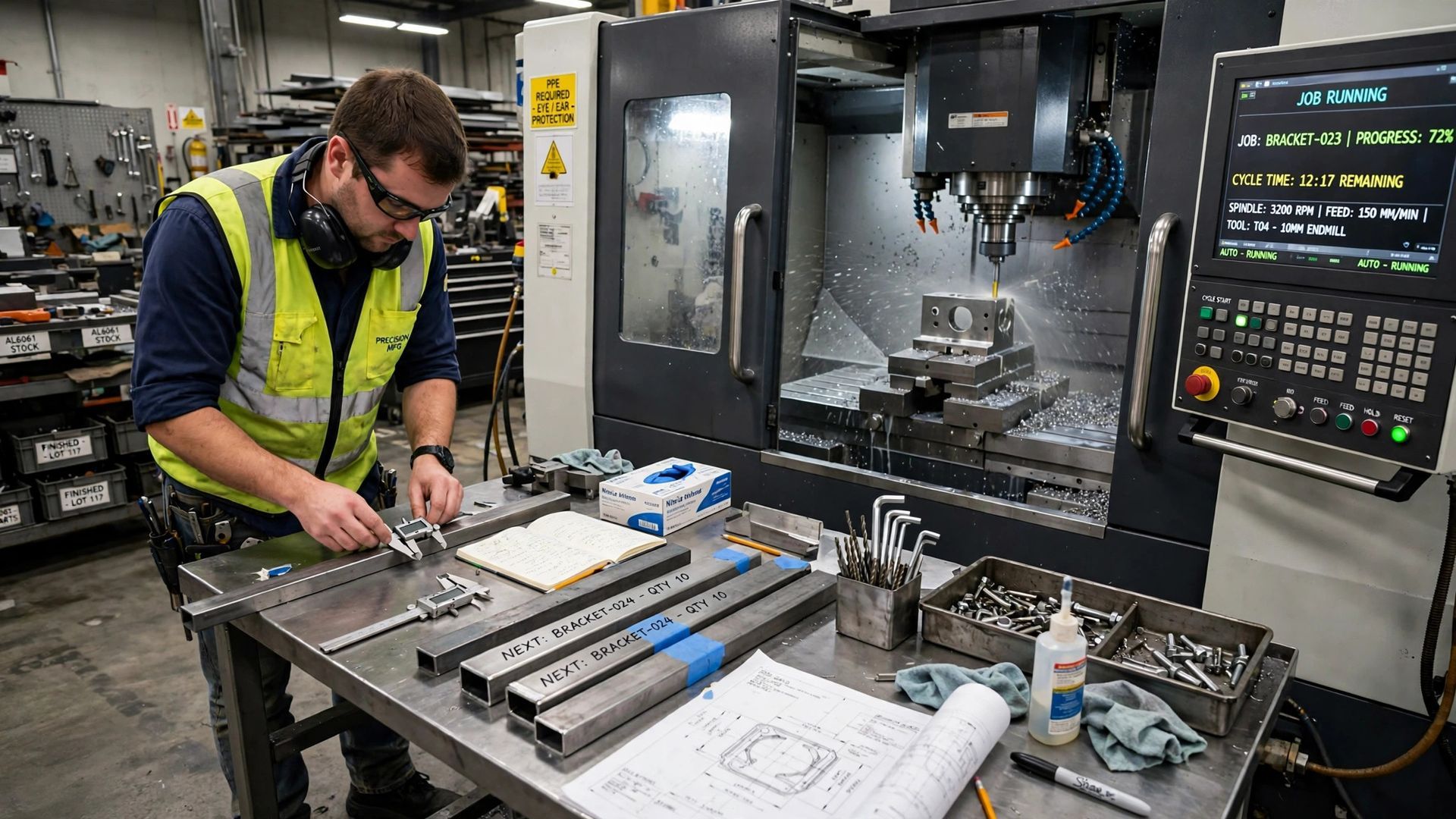
Human factors play a major role in changeover performance. Even a well-designed process will slow down if team members do not follow the same sequence, interpret standards differently, or wait for direction during a run change. Variation between operators often creates variation in time.
Training gaps make that worse. When people learn by memory or by watching others, the process can drift. Steps get skipped, duplicated, or performed in the wrong order. The result is extra motion, avoidable checks, and slower restarts.
A stronger approach is regular training tied to clear standards and feedback loops. When team members know the target method and understand why each step matters, the changeover becomes more repeatable. That consistency is what reduces delay and supports continuous improvement over time.
Equipment Design and Accessibility Issues
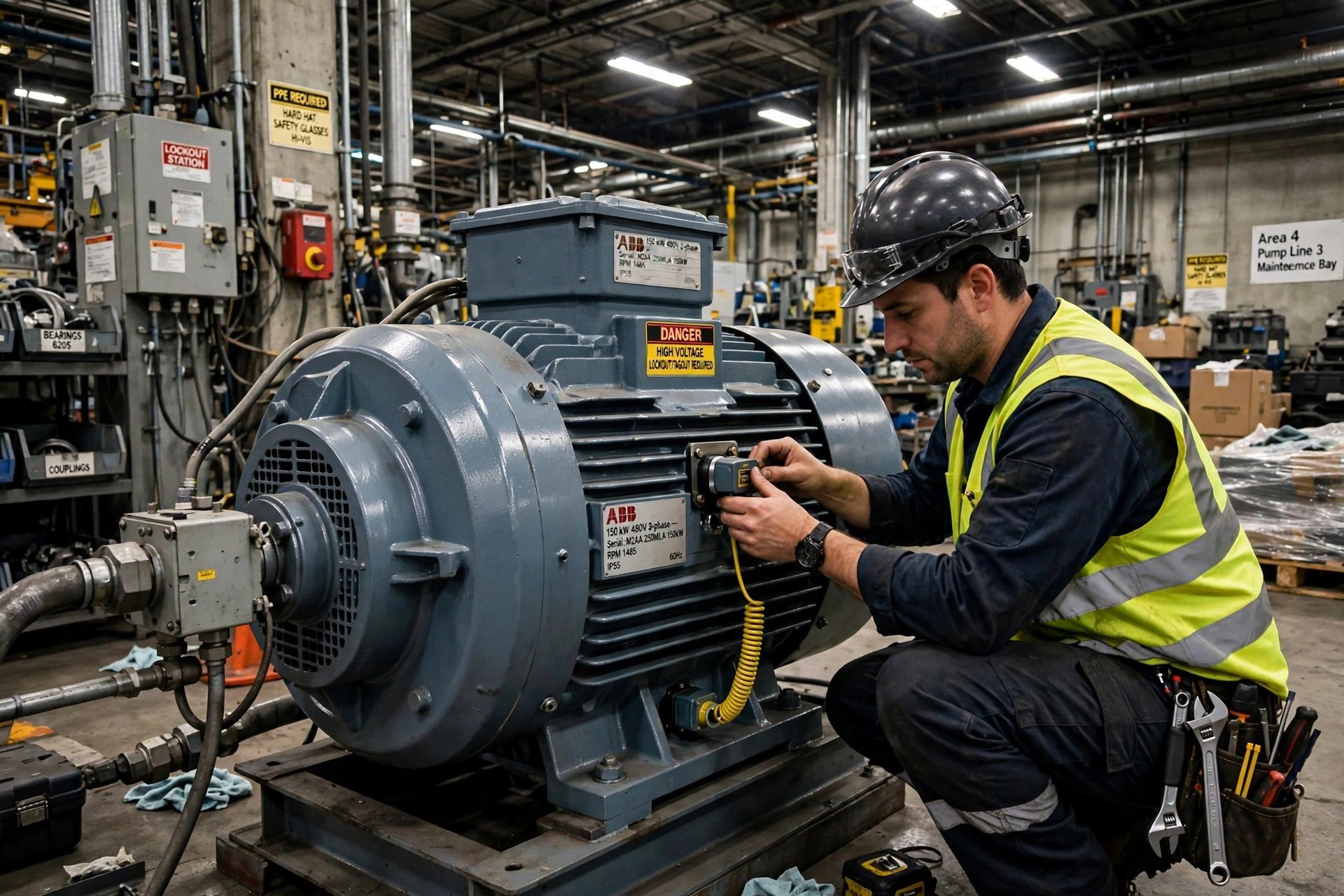
Sometimes the process is not the only problem. Equipment design can make changeovers harder than they need to be. If fasteners are difficult to reach, settings are hard to read, or parts are awkward to handle, time is lost before the line can restart.
Accessibility issues create more motion, more waiting, and more chances for error. A task that looks simple on paper may take much longer in practice if operators must work around guards, tight spaces, or poorly placed components. That added effort grows during every product switch.
Manual adjustments can be another major source of delay. The more fine tuning required after setup, the longer it takes to reach the first good piece. This is why quick changeover techniques often focus on simpler access, clearer settings, and more foolproof methods that reduce trial-and-error work.
Tools and Methods for Measuring Changeover Time
You cannot improve what you do not measure clearly. Changeover time measurement starts with defining the event correctly, then capturing the full stop-to-good-part window with reliable data collection. That gives teams a common baseline instead of opinions.
Several tools can help. Direct observation, digital timers, machine data, and video analysis each show different parts of the picture. Used together, they make it easier to break the job into steps, see where time is lost, and choose the next step for improvement.
Using Digital Tools and Machine Data for Tracking
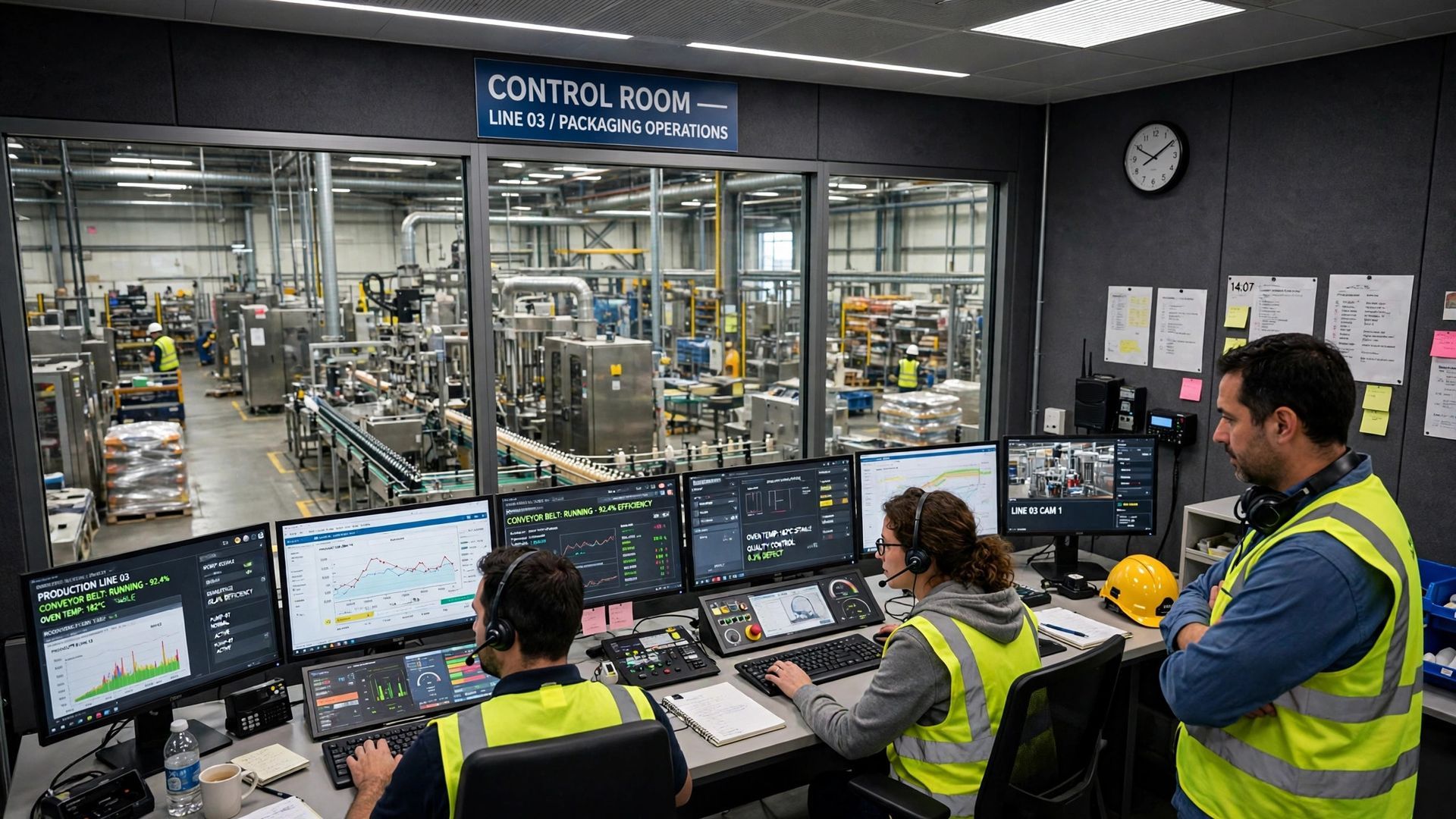
Digital tools can make changeover tracking much more precise. Instead of relying only on handwritten notes, teams can use machine data to capture state changes and production events in real time. That helps calculate average changeover time across shifts, products, or lines.
These tools are especially useful when a plant wants more than a single stopwatch result. They show patterns, not just one event. That makes it easier to compare actual performance with standards and spot recurring delays that reduce availability.
Here is a simple text table showing common options:
Tool type
What it helps track
Digital timers
Start and stop points for total changeover time
Machine state tracking
Downtime windows, run status, and restart timing
Production data systems
First good part timing and changeover performance trends
Video review tools
Step-by-step motion, waiting, and sequence losses
Capturing Baseline Data for Continuous Improvement
Baseline data is the starting point for any serious improvement effort. Without it, teams may know changeovers feel slow, but they cannot say how slow, where the time goes, or whether changes actually worked. Good data collection solves that problem.
Start by measuring the complete event the same way every time, from the last good piece to the first good piece. Then break the work into discrete steps. This lets you see which tasks consume the most time and where delays repeat across similar product changes.
That baseline supports continuous improvement because it turns ideas into testable actions. Once the current state is visible, you can set practical targets, run improvement efforts, and verify gains. It also helps keep the team aligned, since everyone is working from the same facts instead of assumptions.
Identifying High-Impact Opportunities with Analytics
Analytics help teams find high-impact opportunities that are easy to miss during a busy shift. A single long changeover may get attention, but trend data often shows the real losses happen in repeated small delays across many events on the shop floor.
Useful analytics can highlight:
- Which product families create the highest average changeover time.
- Which steps inside the process consume the most total time.
- Which shifts or teams show the greatest variation in execution.
- Which delays occur often enough to justify targeted action first.
This matters because not every problem deserves equal effort. Good analytics help you focus on the few issues that will return the most productive time. That improves prioritization, supports faster decisions, and keeps changeover work tied to measurable plant results.
SMED: Single-Minute Exchange of Die Explained
One of the best-known methods for changeover reduction is the SMED methodology. Developed by Shigeo Shingo, it was built to support quick changeover by removing wasted time from equipment transitions.
The name comes from Single-Minute Exchange of Die, with the goal of reducing changeovers to less than 10 minutes. Even if your process does not reach that mark, the method is still useful. It gives teams a structured way to study the work, separate tasks, and shorten downtime.
The Fundamentals of SMED Methodology
At its core, the SMED methodology asks a simple question: what work truly requires the machine to be stopped, and what work can happen before or after that stop? That question helps teams attack downtime directly instead of treating all changeover work the same.
The method starts by breaking the event into discrete steps. Once the work is visible, the team separates internal tasks from external setup. Internal work can only happen when the machine is stopped. External setup can happen while the machine is still running.
From there, the goal is to move as much work as possible out of downtime, then simplify what remains. That structure is what makes SMED so effective. It turns a broad problem into a series of specific actions that can be measured, tested, standardized, and improved over time.
Internal vs. External Setup Activities in Practice
The internal versus external split is where many quick wins appear. Internal activities require the machine to be stopped. External activities can be completed while it is still running. Moving work from one category to the other is often the fastest path to shorter changeovers.
In practice, the difference looks like this:
- Internal activities: removing a die or changing components that cannot be touched while running.
- Internal activities: final connections or steps that must wait for a safe stop.
- External activities: staging tools, materials, and documents before shutdown.
- External activities: pre-checking settings, kits, or hardware needed for the next job.
This approach improves production flexibility because it shrinks the time when the line is unavailable. The less work left inside the stop window, the easier it becomes to switch products without sacrificing throughput or schedule responsiveness.
Typical SMED Steps to Streamline Changeovers
The smed process is practical and structured. It is not about rushing operators. It is about redesigning the sequence so less time is wasted. The first step is always to observe the current method closely and document what really happens.
Typical SMED steps include:
- Separate internal and external tasks across the entire process.
- Convert internal work to external where possible.
- Streamline remaining tasks with simpler methods and fewer delays.
- Document and standardize the improved method, including quality checks.
Those steps matter because they turn improvement into a repeatable system. Teams can review the current state, remove avoidable downtime, and lock in the better method with standard work. That is how faster changeovers become stable performance rather than a one-time event.
Practical Strategies to Reduce Changeover Time and Raise Availability
Once measurement and SMED have exposed the losses, the next move is execution. Practical changeover time reduction comes from applying simple controls consistently across the production line, not from relying on heroic effort.
The strongest improvements usually combine clear work instructions, visual tools, training, and follow-up. Together, those elements reduce variation and help teams reach the first good part sooner. The next sections focus on three areas that often produce lasting gains in availability.
Standardized Work Instructions and Visual Aids
Standardized work instructions help remove guesswork from changeovers. When the sequence, timing, and responsibilities are clear, teams spend less time deciding what to do next. That alone can cut waiting and reduce errors during product switches.
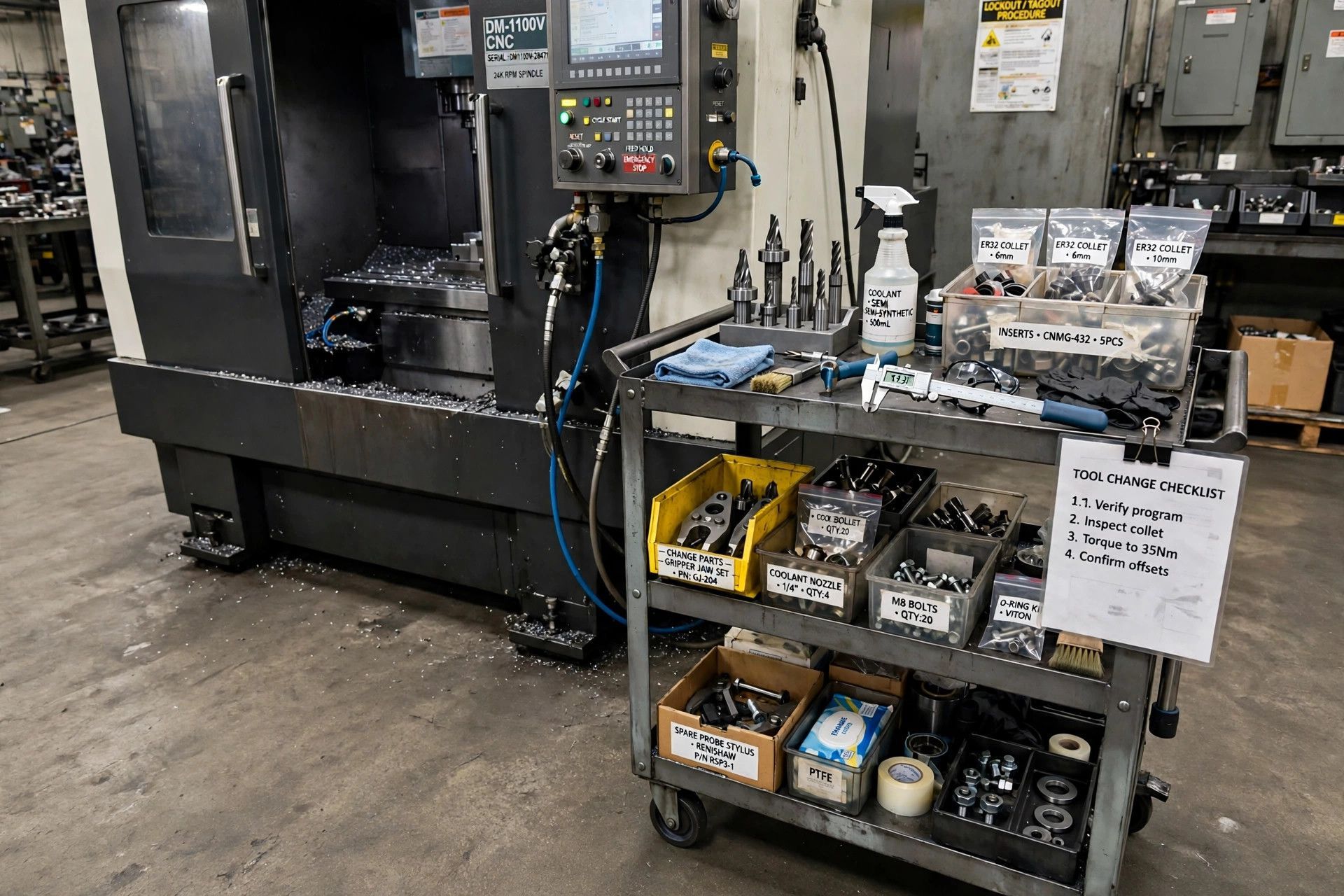
Visual management makes the standard easier to follow under real shop conditions. Instead of depending on memory, operators can see the expected method, tool location, and machine status at a glance. That is especially useful during busy daily operations.
Helpful tools often include:
- Step-by-step work instructions posted at the machine.
- Visual management signals for machine state or next task.
- Shadow boards so tools are easy to find and return.
- Clearly marked settings or reference points to reduce adjustment time.
These controls support repeatability, which is one of the fastest ways to raise availability.
Empowering Teams with Targeted Training
Targeted training helps teams execute the improved method the same way every time. That matters because even a strong process can break down if people learn it differently or fill gaps with habits. Consistency is what turns a good idea into daily performance.
Training works best when it is tied to the actual job, not abstract theory. Operators should practice the sequence, understand the timing goals, and know how the changeover affects OEE and availability. Digital work instructions can make that support easier to access during the shift.
Feedback loops keep the learning current. If a step creates confusion or repeated delay, teams should update the standard and train to the new method. That cycle helps reduce variation, strengthens ownership on the floor, and keeps gains from slipping back over time.
Applying Continuous Improvement for Lasting Gains
Continuous improvement is what keeps changeover gains from fading after the first project ends. A better method must be reviewed, measured, and adjusted as products, staffing, and schedules change. Otherwise, old habits quietly return and time losses grow again.
A practical cycle starts with regular observation and performance checks. Measure from the last good piece to the first qualified output, compare results with the standard, and look for recurring delay patterns. Small kaizen-style actions can then target the next loss without waiting for a major event.
The payoff goes beyond the machine itself. Better changeovers support shorter lead times, lower inventory, and smoother response to customer demand. Over time, that creates a stronger operating system built on repeatability, learning, and steady improvement instead of periodic firefighting.
Conclusion
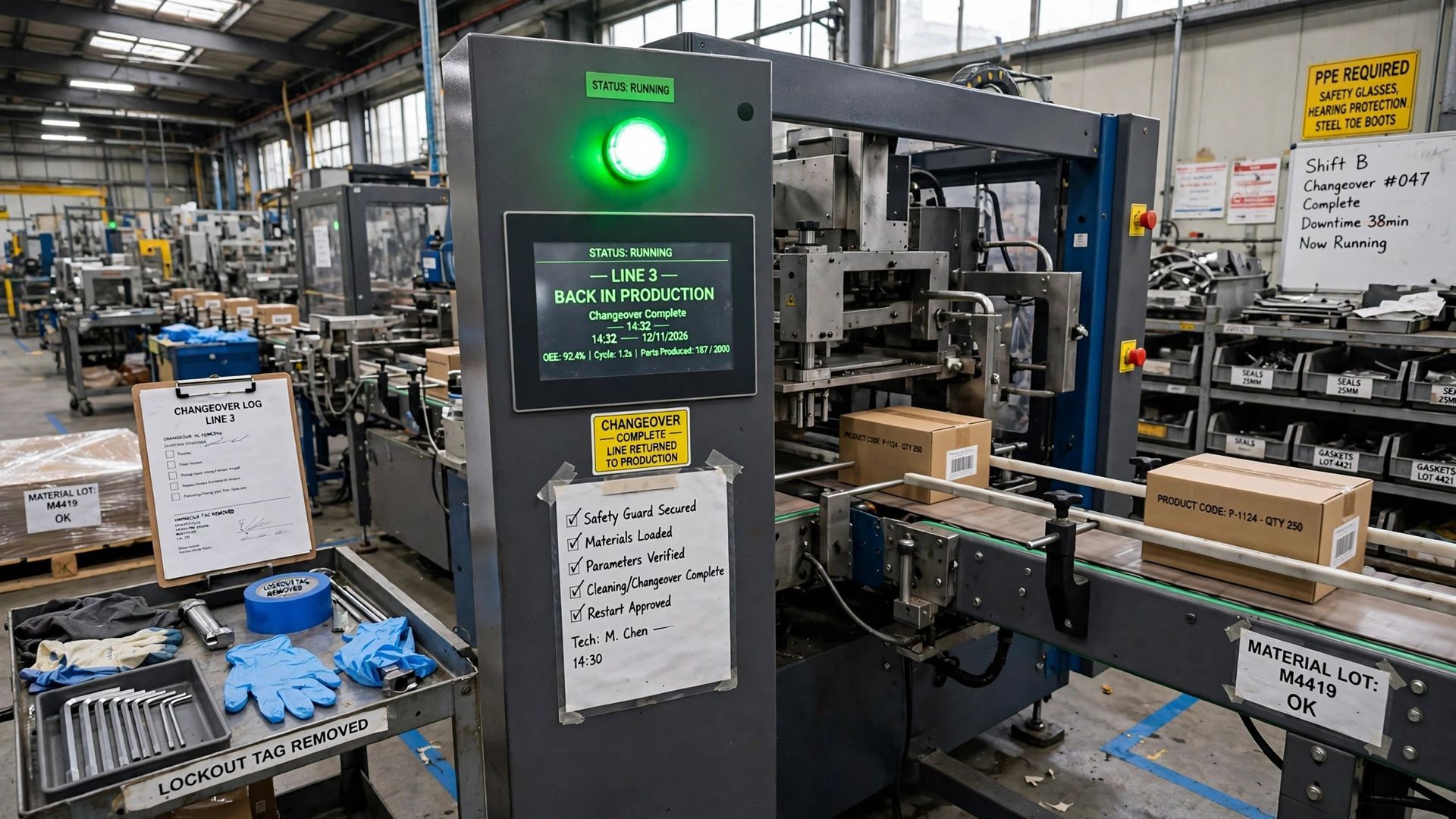
In conclusion, reducing changeover time is a crucial strategy for enhancing the availability factor in Overall Equipment Effectiveness (OEE). By implementing SMED principles and focusing on standardized processes, you can significantly improve production efficiency and machine uptime. The key lies in understanding both internal and external setup activities and addressing common bottlenecks that hinder quick transitions. With proper training and the use of digital tools for measurement, your team can create a streamlined environment that fosters continuous improvement. For a deeper dive into OEE and practical resources, make sure to visit our OEE pillar page at Empowered Automation. Start optimizing your operations today!
You might also like