Key Benefits of Implementing Industrial Automation Solutions
Key Benefits of Implementing Industrial Automation Solutions
Key Highlights
- Industrial automation helps you speed up the manufacturing process and improve operational efficiency.
- Smart automation solutions reduce repetitive tasks and lower the risk of human error.
- Robotics supports safer production by taking over dangerous or physically demanding work.
- Automated systems help maintain stronger product quality and more reliable output.
- Real-time monitoring gives you better control over production and maintenance needs.
- Businesses that adopt industrial automation often gain cost savings and a stronger competitive edge.
Introduction
Industrial automation is changing how the manufacturing industry handles production, quality, and daily operations. If you want faster output, fewer mistakes, and better use of resources, automation solutions can help. They support continuous production, improve worker safety, and make it easier to meet quality standards. For many businesses, the main benefits are clear: stronger productivity, lower costs, better consistency, and improved decision-making. To see why, it helps to first understand how these systems actually work.
Industrial Automation Solutions: Benefits for Your Industry
Understanding Industrial Automation Solutions
At its core, industrial automation uses an automation system to manage production tasks with less human intervention. It brings together control systems, software, sensors, and industrial robots to keep work moving with speed and accuracy.
In a factory setting, these tools monitor equipment, guide machine actions, and support process control in real time. That means your team can reduce manual effort, improve consistency, and respond faster when the manufacturing process needs adjustment. Examples of successful industrial automation projects include automotive assembly lines that use robotics for precision welding, food processing plants equipped with automated packaging and sorting systems, and electronics manufacturers optimizing quality assurance through real-time data monitoring. The next sections break this down in a practical way.
What Are Industrial Automation Solutions?
Industrial automation refers to the use of technology to run industrial processes with less reliance on manual work. These automation solutions are built to improve speed, precision, and reliability across a production process. You will often see them used where businesses need better output, fewer defects, and lower operating strain.
At a practical level, these systems combine control systems with equipment such as sensors, robotics, and software. Together, they monitor conditions, send instructions, and keep machines working in a coordinated way. This helps factories standardize operations and reduce variation from one run to the next.
For you, that means easier handling of repetitive tasks, stronger quality control, and better support for changing production demands. Industrial automation is not just about replacing effort. It is about building a smarter, more dependable way to run manufacturing.
How Do Industrial Automation Systems Work in Manufacturing?
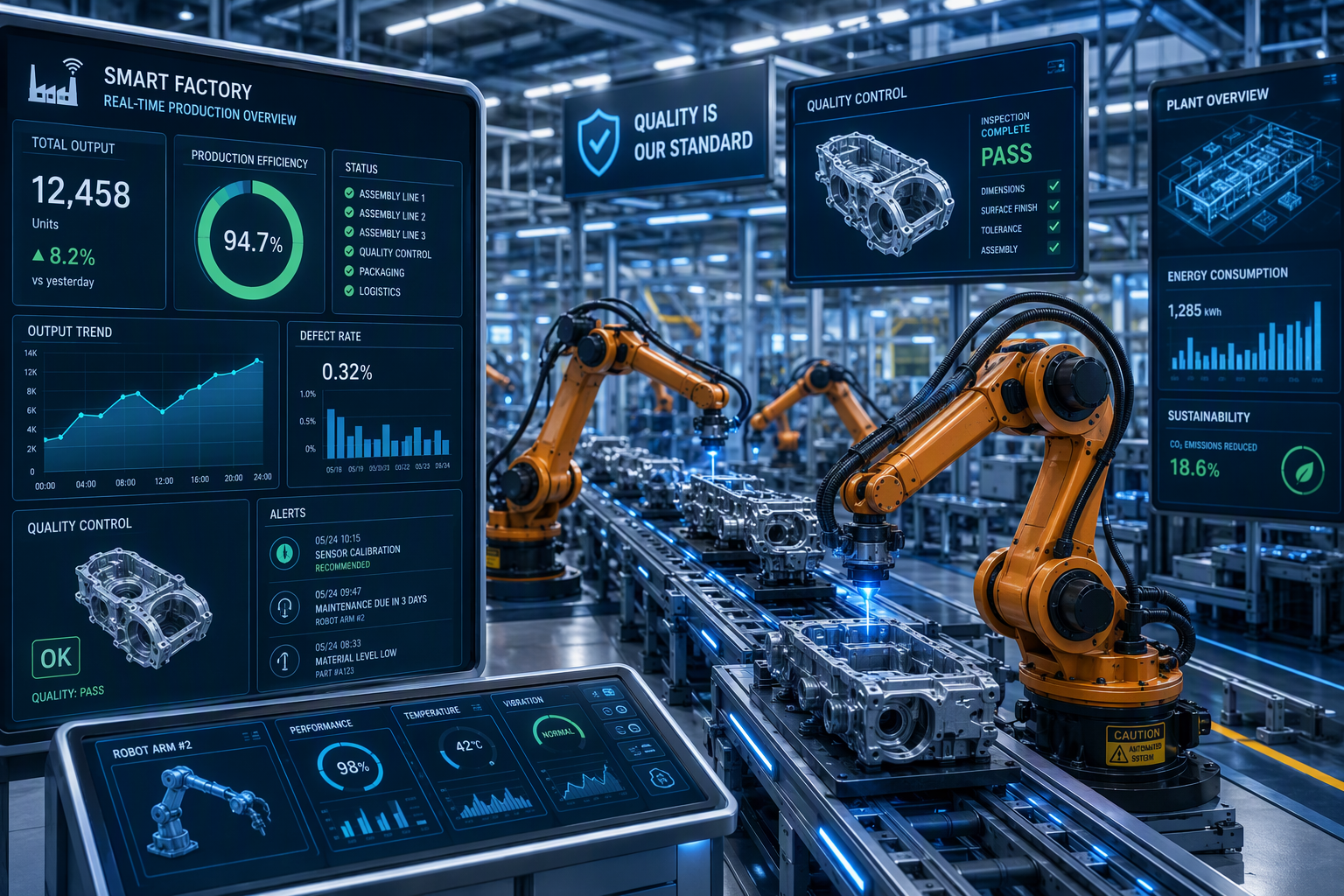
An automation system works by connecting machines, software, and control devices so they can respond to production needs in real time. In manufacturing, this allows process automation to handle routine actions faster and with more consistency than manual methods. The result is smoother flow across the manufacturing process.
You might see industrial robots handling material handling, welding, packaging, or inspection while controllers track performance. Data from equipment helps managers spot issues early and make quicker decisions, even when away from the control center.
Typical functions include:
- Monitoring machine conditions and production status in real time
- Running repetitive tasks with industrial robots and programmed controls
- Supporting predictive maintenance to reduce downtime and extend equipment life
This setup improves throughput, reduces errors, and keeps operations more stable under pressure.
Types of Industrial Automation Solutions
Not every factory needs the same setup, which is why automation solutions come in different forms. Some are built for high-volume, repeat production, while others are designed to adapt to product changes. The right automation technology depends on your output goals, product mix, and budget.
Many businesses rely on systems powered by programmable logic controllers, robotics, and reprogrammable equipment. Fixed setups support steady production lines, while flexible automation helps manufacturers switch between tasks or new products with less delay. Here is how those main types compare.
Fixed Automation Systems
Fixed automation is best suited to tasks that stay the same for long periods. You will often find it in assembly lines and conveyor systems where the production line repeats the same motions at high speed. This makes it useful for large volumes and steady demand.
The tradeoff is flexibility. A fixed automation setup usually requires a higher initial investment and is less suited to frequent product changes. Still, when output is predictable, it can deliver excellent efficiency and reliable performance.
| Feature | Fixed Automation Systems |
|---|---|
| Best use | High-volume, repeat production |
| Common setup | Assembly lines, conveyor systems |
| Main strength | Fast, consistent output |
| Limitation | Harder to adapt to product changes |
| Cost profile | Higher initial investment |
If your operation runs the same product repeatedly, fixed automation can be a strong fit.
Flexible and Programmable Automation Systems
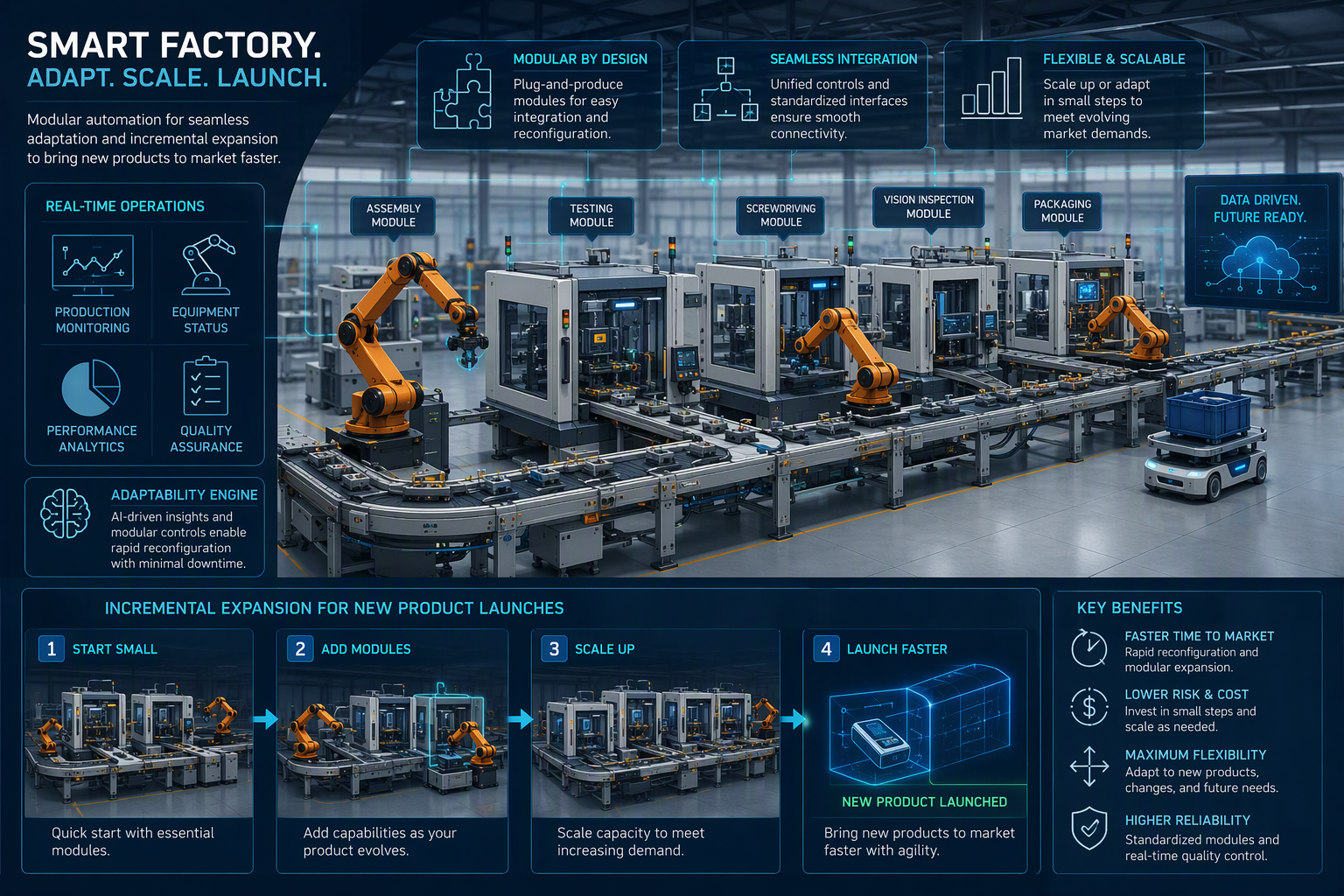
Flexible automation is designed for manufacturers that need to adjust quickly. If your facility produces different items or updates product lines often, this approach gives you more room to change settings without long stoppages. That is why it is often seen as the future of manufacturing.
A big advantage comes from programmable logic controllers and reprogrammable machines. This automation technology allows equipment to switch tasks with less manual rework. In one example from manufacturing, a bakery changed between product varieties by selecting stored programs instead of rebuilding the setup each time.
For businesses introducing new products, this kind of system supports faster changeovers and better responsiveness to demand. It also helps you expand in stages, adding capabilities over time instead of rebuilding the entire production environment at once.
Key Components of Industrial Automation Solutions
Every industrial automation setup depends on several core parts working together. An automation system usually includes sensors, controllers, software, robots, and other industrial equipment that collect data and carry out instructions on the factory floor.
The internet of things adds another layer by connecting devices and sharing real-time information across operations. That gives you better visibility into machine status, output, and maintenance needs. Once these pieces are integrated properly, your system can support faster decisions, stronger control, and more dependable production.
Sensors, Controllers, and Robots
Sensors, controllers, and robots form the backbone of many automated environments. Sensors gather information from machines and production lines, such as position, movement, or operating conditions. That information is then sent to controllers, which act like the decision-making center of the system.
From there, control systems guide equipment actions and maintain process control. This is what allows machines to respond quickly and accurately without waiting for constant operator input. In practical terms, it helps reduce mistakes, stabilize production, and improve timing across tasks.
Robots then carry out the physical work. They may handle welding, packaging, inspection, or material movement. When paired with machine vision, robots can also identify damage, detect defects, and support precision alignment. For you, that means better quality inspection, safer operations, and stronger consistency in daily output.
Integration of Software and Network Technologies
Software and network technologies connect all the moving parts of an automated facility. Without that integration, even strong automation products cannot share data effectively or support fast decisions. Good software helps you monitor performance, manage updates, and keep production aligned with business goals.
The internet of things strengthens this by linking machines and devices into one connected system. Real-time data can then support predictive maintenance, remote monitoring, and improved planning. Artificial intelligence and machine learning add even more value by helping businesses spot patterns and respond before issues grow.
Common benefits of this integration include:
- Better visibility into equipment performance and downtime risks
- Faster response through connected network technologies and live data
- Smarter maintenance planning using software, artificial intelligence, and machine learning
When systems communicate well, your operation becomes easier to manage and improve.
Core Benefits of Industrial Automation for Businesses
The value of industrial automation goes well beyond replacing manual effort. It helps businesses improve operational efficiency, reduce waste, and keep production running with more control. In competitive markets, that kind of stability matters.
You also gain cost savings through lower error rates, better resource use, and less downtime. Automated systems can work longer, handle repeat tasks more reliably, and support safer operations. Together, these gains give your business a stronger competitive edge and a clearer path to long-term improvement.
Improved Productivity and Efficiency
One of the biggest benefits of automation is higher productivity. Machine automation can run faster than manual processes and continue working for longer periods with fewer interruptions. For factories under pressure to meet demand, that directly supports stronger operational efficiency.
Another gain comes from how automation handles repetitive tasks. Instead of tying up employees in constant, repeated motions, machines take on those duties while people move into monitoring, inspection, or problem-solving roles. That shift can also improve job satisfaction and reduce factory operating strain.
You will often see improvements such as:
- Shorter cycle times across assembly and packaging
- Smoother output during busy production schedules
- More efficient use of labor by reducing repetitive tasks
When a system is well planned, the result is faster throughput, lower delays, and a more manageable daily workload.
Enhanced Product Quality and Consistency
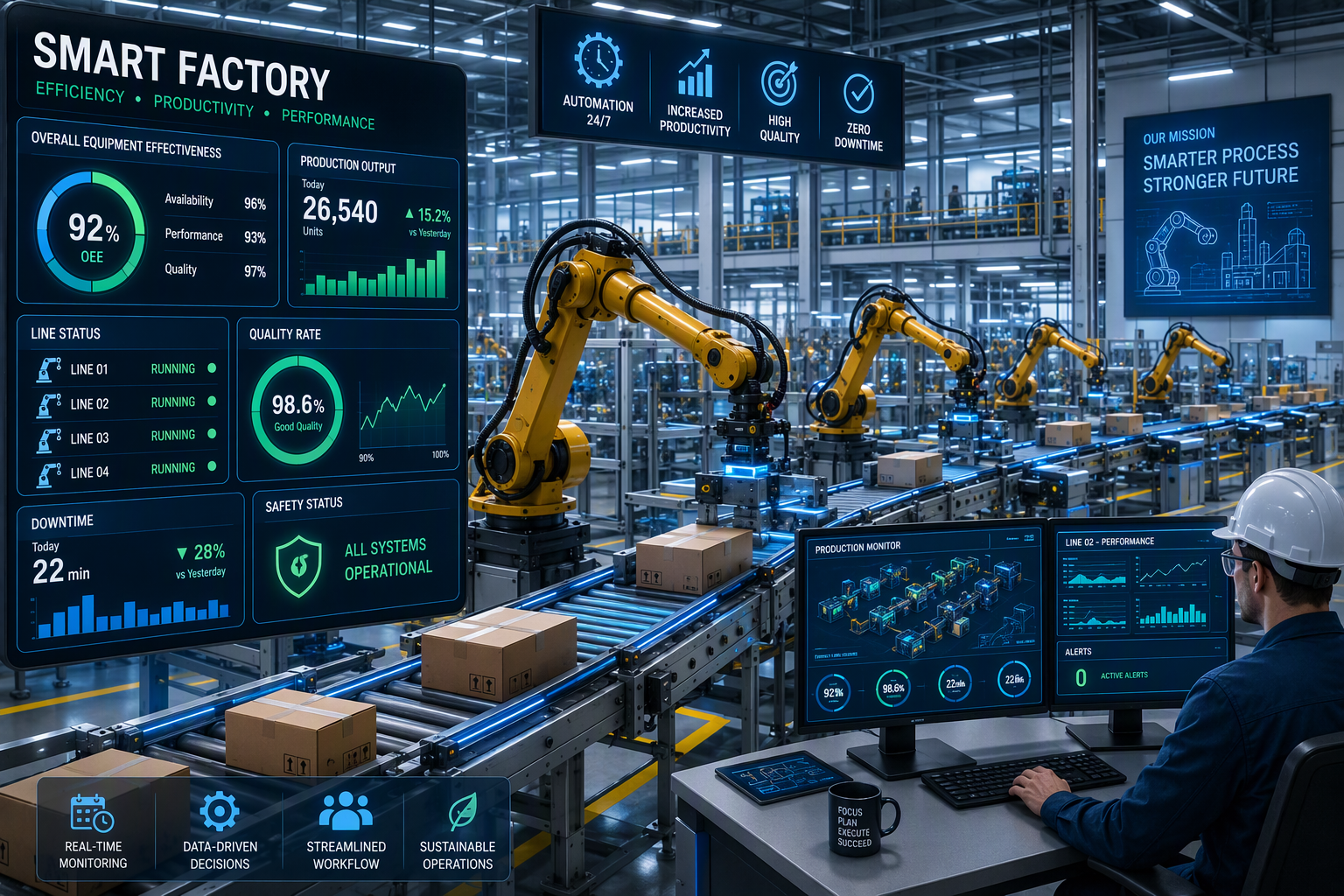
Quality is another major reason businesses invest in automation. Automated equipment performs the same task in the same way each time, which helps support product quality and tighter quality standards. That matters most when even small variations can affect performance or customer expectations.
Instead of depending fully on manual checks, manufacturers can use machine vision and automated quality control to inspect products during production. These tools can detect defects, identify damaged packaging, and support more precise alignment. This reduces the risk of flawed output moving further down the line.
Over time, that creates more consistent quality and stronger customer satisfaction. It also helps businesses reduce waste tied to errors, poor handling, or unreliable procedures. If your goal is dependable output and fewer defects, automation gives you a practical way to achieve it.
Conclusion
In conclusion, implementing industrial automation solutions can revolutionize your business operations. By enhancing productivity and efficiency, these systems enable you to streamline processes, reduce human error, and maintain high-quality standards consistently. Additionally, the integration of advanced technologies like sensors, controllers, and software solutions not only improves output but also fosters a more sustainable manufacturing environment. As industries continue to evolve, embracing automation can position your business for long-term success in a competitive landscape. If you’re ready to explore how industrial automation can benefit your operations, don’t hesitate to reach out for a consultation.
Frequently Asked Questions
Which industries benefit the most from industrial automation solutions?
Industrial automation supports many sectors, but the biggest gains often appear in manufacturing, food and beverage, pharmaceuticals, logistics, energy, aerospace, and defense industries. Businesses producing consumer goods also benefit because automation solutions improve the manufacturing process, boost consistency, and reduce risk in high-volume operations.
What should businesses look for when choosing an automation provider?
When comparing automation companies, focus on whether the automation provider can design, integrate, and support systems that match your goals. Strong industrial automation companies typically offer engineering services, control systems expertise, robotics support, software integration, maintenance, and automation products suited to your production environment.
Can industrial automation improve sustainability in manufacturing?
Yes. Industrial automation can support sustainability by reducing waste, improving energy efficiency, and lowering unnecessary energy consumption. It also helps through predictive maintenance, which keeps equipment running properly and avoids inefficient operation. For manufacturers, that means cleaner processes and better alignment with practical environmental goals.