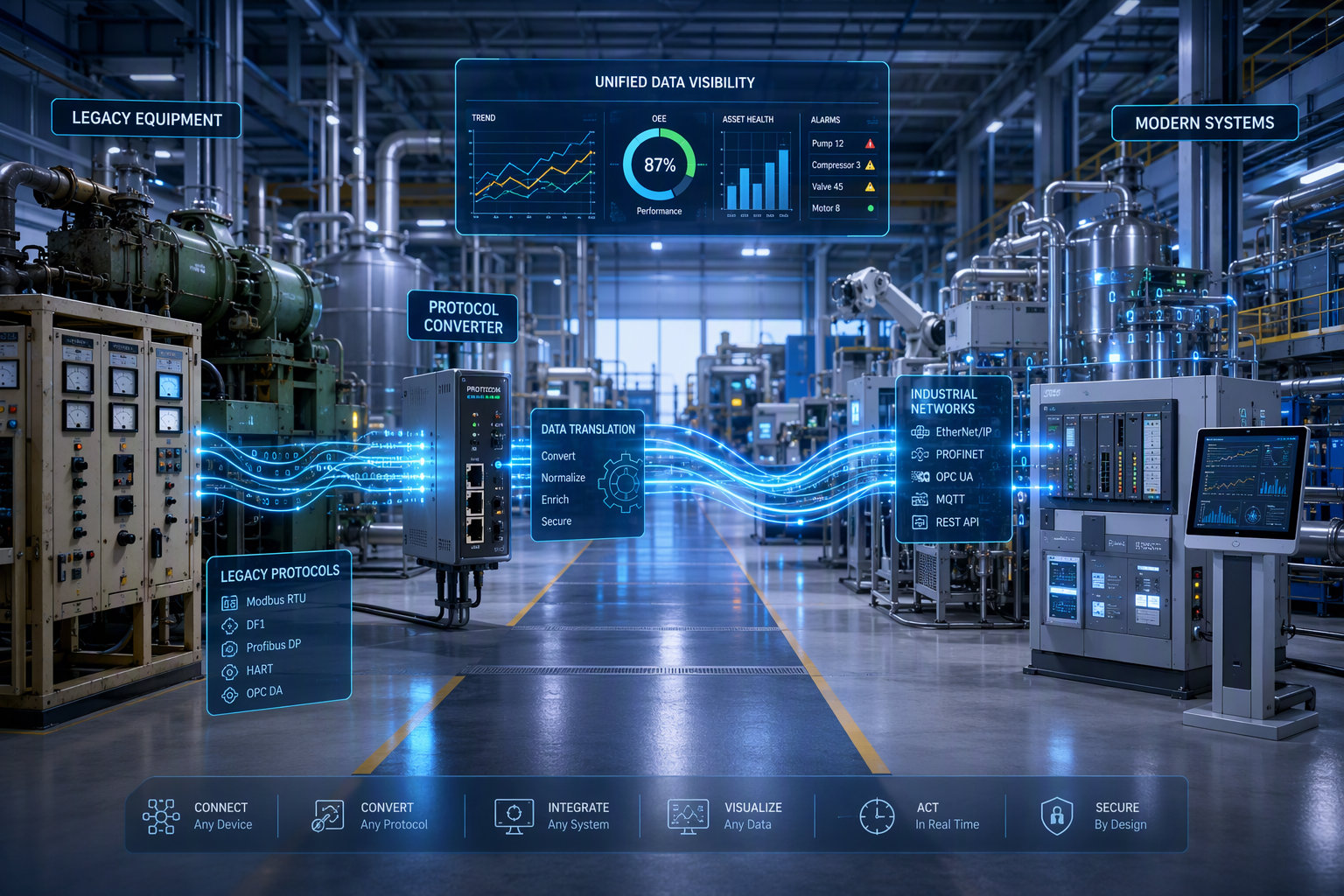
What Is a Unified Namespace (UNS) in Manufacturing?
What Is a Unified Namespace (UNS) in Manufacturing?

Key Highlights
- A unified namespace gives you one shared view of manufacturing data across the plant and the business.
- It supports Industry 4.0 by improving data integration between machines, applications, and teams.
- On the plant floor, a unified namespace reduces fragile point connections and cuts data silos.
- It helps smart manufacturing efforts by making real time data easier to publish and reuse.
- Common building blocks include an MQTT broker, topic structure, data model, and clear naming standards.
- A practical rollout starts small, aligns IT and operational technology, and scales over time.
Introduction
If you work in manufacturing, you already know the problem: manufacturing data is everywhere, but it rarely shows up in one useful place. A unified namespace gives you a practical way to organize that information so systems can share it in real time through one common structure. Instead of chasing disconnected tags, reports, and spreadsheets, you get a clearer path to digital transformation. For controls engineers and plant managers, that means faster decisions, less rework, and better visibility.
Unified Namespace Explained for the Plant Floor
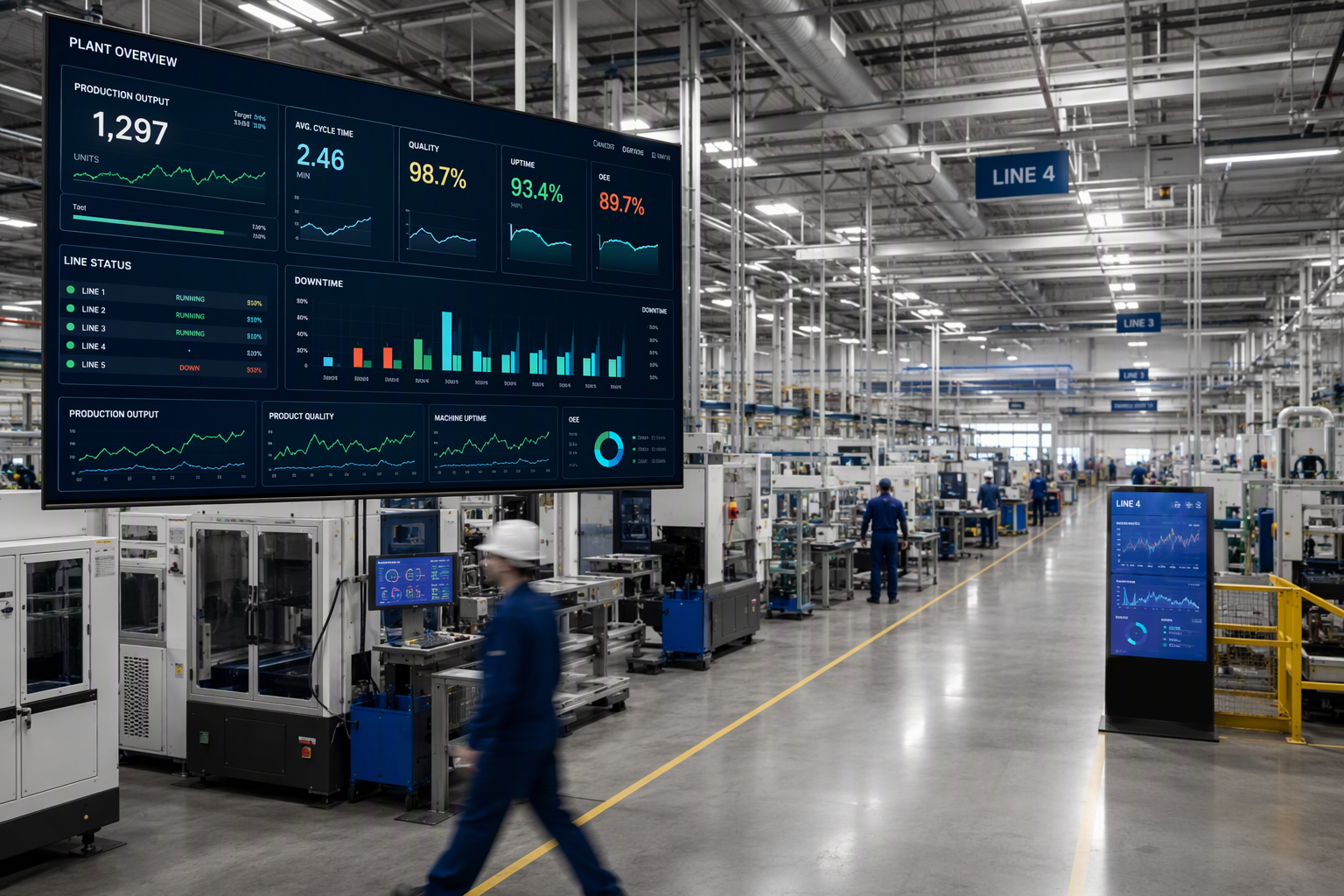
In simple terms, a unified namespace is a shared, real time data architecture for your plant floor. Machines, sensors, and software publish updates into one organized structure, and any approved system can subscribe to the data it needs. You are not building a direct link between every pair of applications.
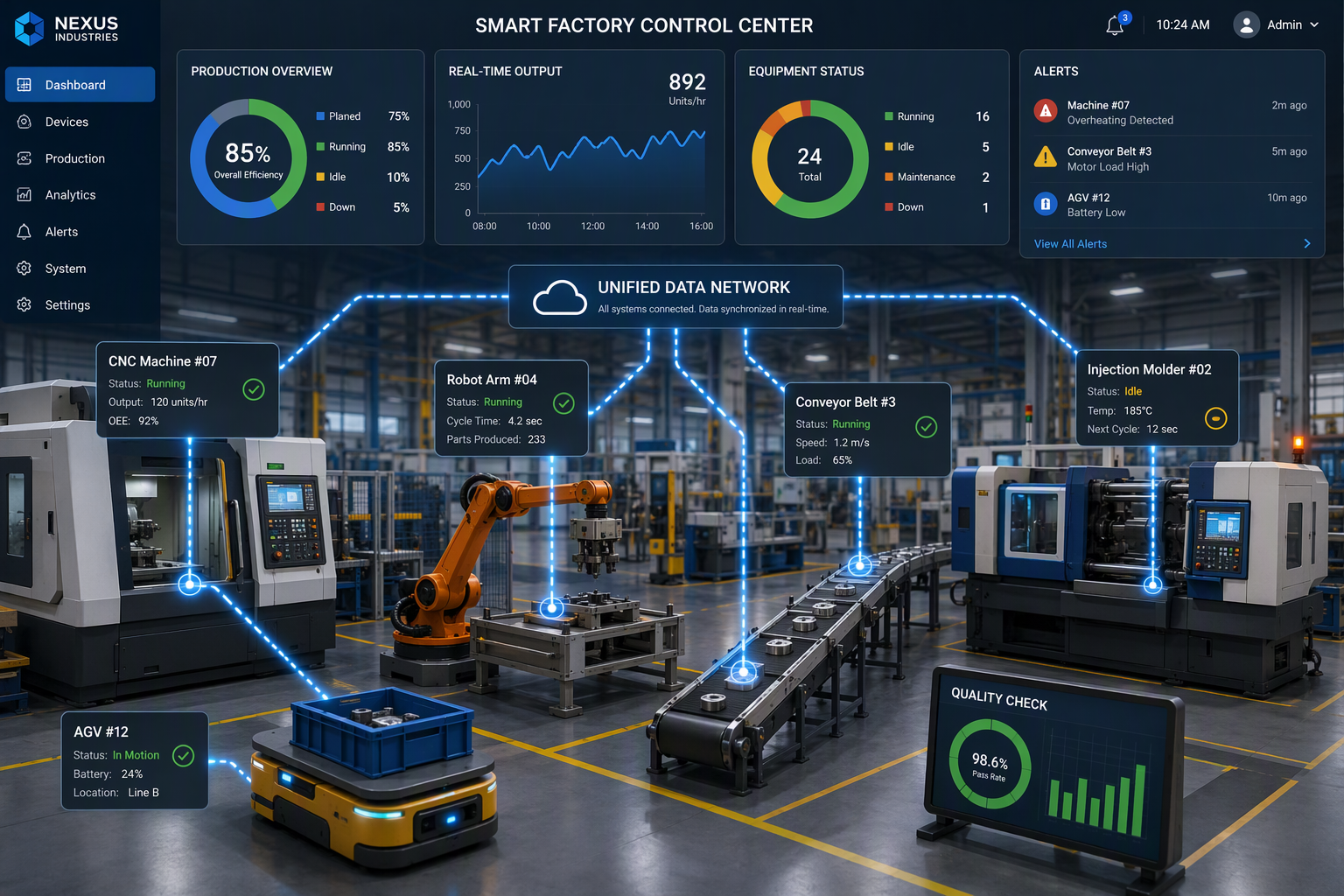
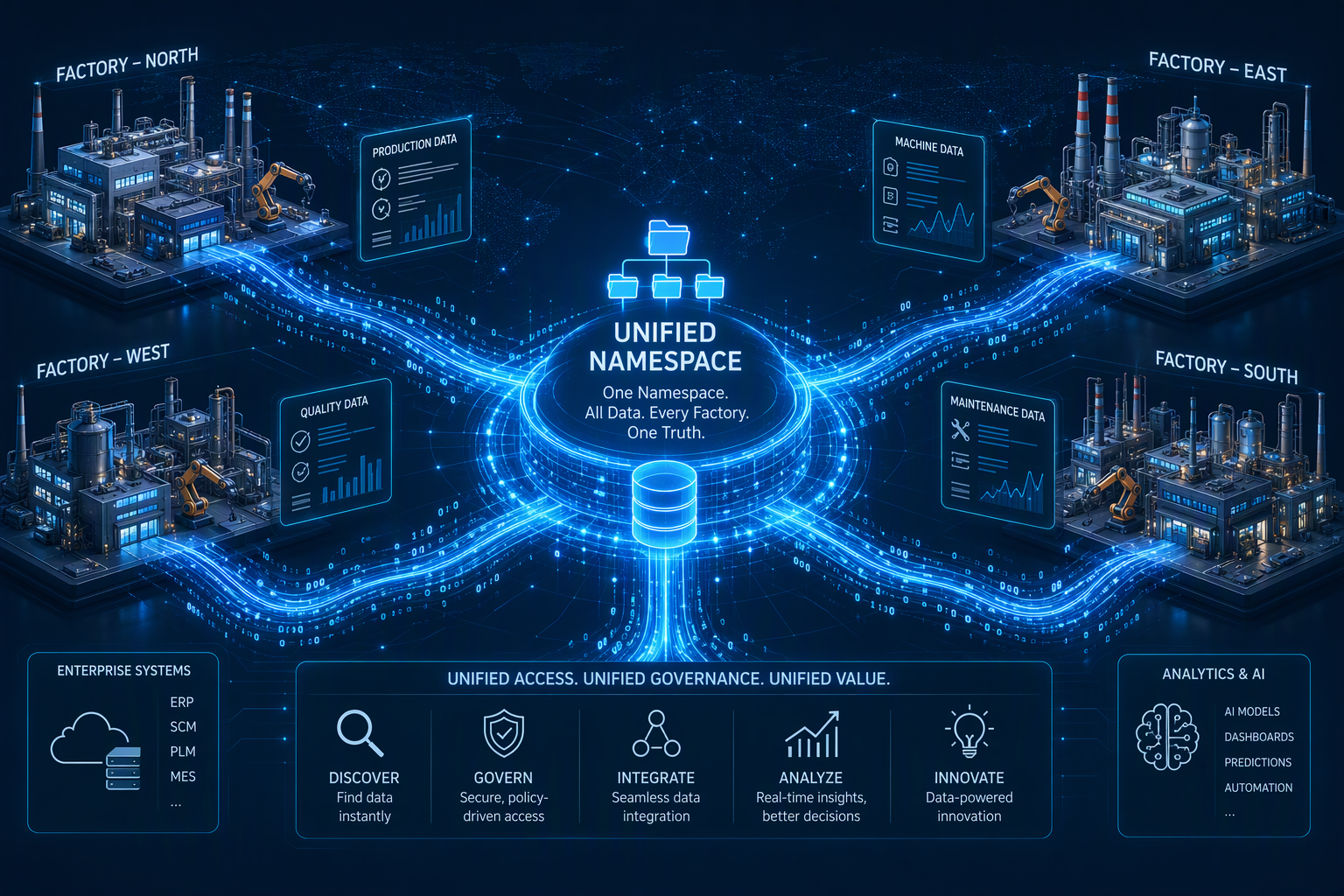
That matters because most plants have many data sources and too many one-off connections. A unified namespace makes industrial data easier to find, understand, and reuse. The next sections break down the core idea, show a factory example, and define key terms you will hear in UNS projects.
Simple Definition and Core Concepts of UNS
Think of a unified namespace as a live map of your operation. It organizes plant information by site, line, machine, and signal so data flow follows a common structure. When a machine state changes, that update is published once and becomes available to many systems.
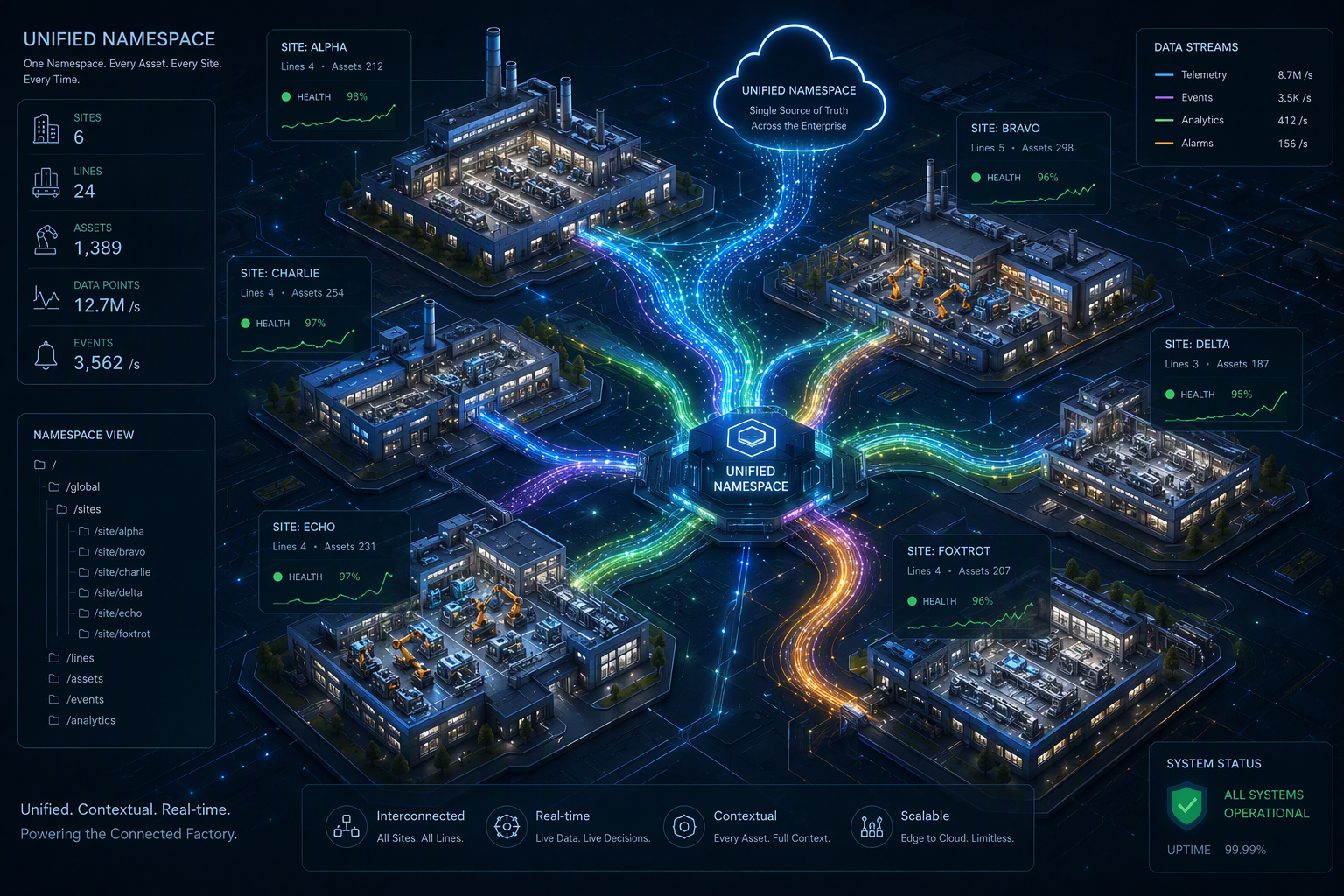
In day-to-day use, UNS acts like a single source of truth for current operational data. That does not mean it replaces every application you already own. It means your SCADA systems, MES, ERP systems, and analytics tools can all work from the same source of truth for real time events.
Just as important, a unified namespace separates data producers from data consumers. A PLC or sensor does not need to know who will use the information later. It simply publishes data into the namespace, and subscribers pull what they need without creating more brittle integrations.
Real-World Manufacturing Example of a Unified Namespace
Picture a packaging line on the factory floor. Machines generate temperature, vibration, status, throughput, and quality signals. In a traditional setup, each new dashboard or application needs its own connection. In a unified namespace, that same machine data is published once, then reused across the plant.
Here is what smart manufacturing looks like in practice when data integration is built around a UNS:
- A maintenance application subscribes to vibration and alarm data to flag early equipment issues.
- A production dashboard subscribes to throughput and downtime events for line visibility.
- An ERP-related workflow subscribes to production counts for business reporting.
As a result, teams stop recreating the same data pipeline over and over. You gain better reuse, quicker access, and fewer custom links to maintain. That is why a unified namespace is so useful in a smart factory setting.
KeyTerms: industrial connectivity in manufacturing, data integration, controls engineering
Understanding industrial connectivity in manufacturing is essential for modern operations. Leveraging a unified namespace facilitates seamless data integration, enabling controls engineers to access real-time information across all manufacturing systems. This architecture breaks down data silos, allowing data producers and consumers to interact effortlessly. Empowered Automation, a trusted Chicago-area systems integrator, helps implement robust data management strategies, ensuring reliable data flow on the factory floor. By standardizing data formats, teams can streamline processes, enhance operational efficiency, and optimize quality control.
Why Unified Namespace Matters in Modern Manufacturing
Modern manufacturing runs on more systems, more sensors, and more expectations for speed. A unified namespace matters because it creates one shared way to access and organize data without multiplying integrations. That improves operational efficiency and gives teams faster visibility into what is happening now.
For Industry 4.0, that shared structure is a big deal. It supports connected operations, easier data reuse, and a stronger base for analytics, AI, and smart manufacturing programs. The following sections show why UNS is often treated as the backbone of that effort.
UNS as the Foundation for Industry 4.0
Industry 4.0 depends on timely, connected information. If data is trapped inside separate applications, every new initiative turns into another integration project. A unified namespace changes that by creating a shared data ecosystem where systems publish and subscribe to real time events instead of relying on direct one-to-one links.
At the center of many UNS designs is an MQTT broker. It handles publish-subscribe messaging so producers can send updates once and consumers can receive only what they need. That keeps the architecture looser, easier to extend, and better suited for enterprise growth.
This is why a unified namespace is important for Industry 4.0 initiatives. It gives you a practical digital backbone for real time visibility, predictive maintenance, analytics, and intelligent automation. When new tools arrive, they can plug into the namespace instead of forcing you to rebuild the entire data path.
Improving Data Flow Across Systems
Many plants struggle because manufacturing data lives in separate applications with different formats and different owners. A unified namespace improves data flow by giving each system a shared way to publish updates and consume what it needs. That reduces duplicated pipelines and makes data access more direct.
You see the biggest gains when multiple groups need the same real time information:
- Operators and supervisors can view line status and alarms without waiting for manual updates.
- Maintenance teams can subscribe to asset health signals for faster issue detection.
- Enterprise applications can consume production counts and KPI data through the same structure.
That creates more seamless data access across systems. Instead of moving data through a chain of fragile handoffs, you publish once and reuse many times. For teams trying to improve uptime and response speed, that is a very practical win.
Empowered Automation’s Approach to UNS for Manufacturing Operations
For most manufacturers, UNS is not a theory exercise. It has to work with the equipment, applications, and operational technology already on the floor. That is why the right approach focuses on practical structure, usable naming, and staged rollout rather than trying to replace everything at once.
As a Chicago-area systems integrator, Empowered Automation can be discussed naturally here because this kind of work depends on plant-level execution. In real projects, that means supporting manufacturing operations with a unified namespace that fits existing systems while reducing dependence on one-off custom integrations.
A practical approach usually includes:
- Starting with key assets, lines, or pain points instead of the whole enterprise at once.
- Aligning IT and operational technology teams on naming, access, and governance.
Designing custom integrations only where needed, while shifting more traffic into the shared namespace.
Traditional Data Management vs. Unified Namespace
Traditional architectures usually connect systems directly. That may work for a while, but as more applications are added, data management gets harder. You end up with data silos, duplicate logic, and a growing list of integrations that only a few people understand.
A unified namespace takes a different path. Instead of many direct connections, it creates one shared real time layer for publishing and subscribing to operational data. The next sections compare the two approaches and show why UNS scales more cleanly.
Challenges with Layered Architectures and Point-to-Point Integrations
Layered architectures and direct application links are common in older plants. Each new system gets another connection, another transform, and another maintenance task. Over time, point-to-point integrations create tight coupling. If one application changes, several others may break with it.
That setup also makes data integration slower and more expensive. Teams often deal with inconsistent definitions, latency problems, and limited flexibility when they try to add analytics, AI, or reporting tools. What starts as a quick fix can turn into a web of fragile point connections.
| Traditional Setup Issue | Plant Impact |
|---|---|
| Direct one-to-one links between systems | More engineering effort for every added application |
| Tight coupling in layered architectures | Small changes ripple across multiple systems |
| Duplicate pipelines and transformations | Conflicting values and poor trust in data |
| High maintenance burden | More support time and harder troubleshooting |
| Limited scalability | Slower digital transformation and delayed projects |
How UNS Solves Common Manufacturing Data Problems
A unified namespace solves common manufacturing data problems by changing how information moves. Instead of creating a custom path for every application, systems publish data into a common structure. Consumers subscribe to relevant topics, so the same event can support many uses without being recreated.
That approach helps reduce several long-standing issues:
- Data silos shrink because information is shared through one common layer.
- Data integrity improves because events are published once and reused consistently.
- New applications are easier to connect because they subscribe instead of requiring new direct links.
For a plant team, the benefit is practical. You spend less time chasing mismatched values or manually collecting updates from different systems. You gain a cleaner way to organize manufacturing data and a more dependable foundation for reporting, monitoring, and maintenance workflows.
Comparing Data Accessibility and Scalability
Data accessibility is one of the clearest differences between older designs and a UNS. In a traditional setup, access depends on which systems happen to be connected and how those links were built. In a unified namespace, approved users and applications can subscribe to the operational data they need from a shared industrial data architecture.
Scalability improves for the same reason:
- New enterprise systems can subscribe without forcing new direct machine connections.
- Existing data streams can support dashboards, analytics tools, and maintenance use cases at the same time.
- Growth happens through the namespace rather than through more custom wiring between systems.
That does not mean every challenge disappears. You still need structure, naming, and governance. But if your goal is scalable manufacturing operations, a unified namespace gives you a much cleaner way to extend access across plant and enterprise systems.
Components of a Unified Namespace Architecture
A unified namespace architecture is built from a few core pieces that work together. You need data producers that publish events, data consumers that subscribe, a shared data model, and a topic structure that tells everyone where information belongs. In many cases, an MQTT broker sits in the middle to distribute messages.
The value comes from how these parts fit together. When the model is clear and the structure is consistent, plant data becomes easier to scale, govern, and use. Let’s look at each component in practical plant-floor terms.
Data Producers and Consumers in Manufacturing Environments
Every UNS starts with data producers and data consumers. In manufacturing environments, producers are the sources that generate events. Consumers are the systems or tools that need those updates. This sounds simple, but defining both sides clearly is a big step toward a usable architecture.
Common producers and consumers include:
- Data producers such as PLCs, sensors, machines, and edge gateways publishing process data and status.
- Data consumers such as MES, dashboards, analytics tools, and maintenance applications subscribing to events.
- Shared services such as brokers and APIs helping move information between legacy and modern systems.
The key is decoupling. Producers do not need to know every destination for their data. Consumers do not need direct access to every device. That separation keeps the system more flexible and helps your plant add new applications without rebuilding old connections.
Hierarchical Topic Structures for Organizing Plant Data
A good topic structure mirrors the way your plant is actually organized. Most teams use a hierarchical structure based on site, area, line, machine, and signal. That makes manufacturing data easier to browse and helps engineers know where to publish and where to subscribe.
Here is why a clear MQTT topic structure matters:
- It groups related data so users can find the right signal without guessing.
- It supports reuse because one topic can serve many approved consumers.
- It reduces confusion when new equipment or applications are added later.
For example, an MQTT topic might follow a pattern like FactoryA/Line1/Machine3/Temperature. That simple hierarchy creates order. When your data model and topic structure match the physical production environment, the namespace becomes much easier to maintain and expand.
Semantic Contextualization Across Multiple Systems
Getting data into a namespace is only part of the job. It also needs meaning. Semantic contextualization is the process of adding business and equipment context so a value is not just a number, but a number tied to the right asset, line, state, or event.
This is where data standardization and a strong data model matter. Different systems often use different data formats, naming styles, and assumptions. A unified namespace helps normalize those differences so the same signal can be understood across SCADA, MES, maintenance, and enterprise tools.
That is also why UNS connects closely with Industrial DataOps thinking. Both focus on making industrial data usable, reliable, and governed across multiple systems. In practice, the namespace becomes the shared operational layer, while DataOps practices help maintain quality, consistency, and trust as usage grows.
Integrating Manufacturing Systems Using UNS
Integrating manufacturing systems usually gets messy when every application needs a separate connection. A unified namespace simplifies data integration by giving those systems one shared place to publish and consume events. You still may need some custom integrations, but far fewer than in a fully point-to-point design.
That makes life easier for controls engineers, operations leaders, and IT teams alike. The next sections show how MES, SCADA, ERP, and IIoT systems fit into a UNS and what that looks like on the factory floor.
MES, SCADA, ERP, and IIoT Integration Scenarios
A unified namespace plays a practical role in MES integration because it creates a shared event layer between plant systems and business applications. Instead of building separate links from each machine to each platform, MES, SCADA, ERP systems, and IIoT tools can all exchange operational data through the same structure.
Typical integration scenarios include:
- MES subscribing to machine states and production counts for execution systems and reporting.
- SCADA publishing alarms, status, and supervisory control events into the namespace.
- ERP systems subscribing to counts, orders, or performance signals for business workflows.
- IIoT devices publishing sensor data for monitoring and analytics.
This approach reduces repeated integration work and makes data more reusable. It also helps preserve context across systems. When MES needs production events and ERP needs output summaries, both can work from the same shared namespace rather than from isolated, duplicated pipelines.
Practical Use Cases of UNS on the Factory Floor
On the factory floor, the best UNS use cases are the ones that solve everyday operating problems. If your teams need faster decisions, less manual collection, and better response to issues, a namespace gives you a shared real time stream to work from.
Common use cases include:
- Predictive maintenance by subscribing to vibration, alarms, and asset health signals.
- Quality control by sharing inspection results, process values, and production context.
- Line performance visibility through downtime, throughput, and machine state events.
These use cases work because the same data can serve several teams at once. Maintenance, production, and management do not each need a separate pipeline. They subscribe to the information they need and act sooner, with less duplication and less delay.
Linking industrial connectivity in manufacturing for seamless data access
A unified namespace does not replace connectivity. It builds on it. Industrial connectivity in manufacturing is what gets data out of machines, controllers, sensors, and applications. The namespace then organizes that flow so approved users and systems have more seamless data access.
In many plants, an MQTT broker is a key part of that design:
- Machines and applications publish changes into the broker as events occur.
- Subscribers receive only the topics they need, which improves data flow.
- The architecture stays flexible because producers and consumers are loosely connected.
If you are trying to connect plant-floor data with business systems, this matters a lot. Good connectivity gets signals moving. A well-designed unified namespace turns those moving signals into a structured, reusable information layer for the whole operation.
Implementation and Scaling Strategies
UNS implementation works best when you treat it as a staged architecture effort, not a massive rip-and-replace project. Most manufacturers get better results by starting with a small scope, proving value, and then extending the model to more assets, lines, and enterprise applications.
That approach supports scalable operations while keeping risk lower. It also gives you time to refine naming, security, and data governance. The next sections cover common deployment issues and the best practices that help plants scale with fewer surprises.
Overcoming Common UNS Deployment Challenges
Manufacturers often face deployment challenges when they first implement a unified namespace. Existing manufacturing systems may use different naming rules, different protocols, and different assumptions about ownership. If those issues are ignored, the namespace can become confusing instead of useful.
You can reduce that risk by addressing common trouble spots early:
- Define naming and asset hierarchy standards before large-scale publishing begins.
- Review data integrity so duplicate or conflicting values do not enter the shared model.
- Align teams on how systems will publish, subscribe, and govern the growing data ecosystem.
Another challenge is trying to do too much at once. Plants usually get better outcomes by starting with a focused area, then expanding gradually. That makes it easier to test the model, train users, and correct problems before the UNS spreads across the site.
Best Practices for Flexible, Scalable Operations with UNS
The best practices for UNS are practical and proven. Start with asset hierarchy. Define consistent naming. Build incrementally. Align IT and OT. Design for both scalability and security. These steps help you create a flexible architecture that supports growth without creating fresh confusion.
A few habits make a big difference:
- Standardize naming and topic structures so data access stays predictable.
- Expand in phases so each step supports scalable operations without disrupting production.
- Plan security and permissions early so the right users get the right data.
When you follow those practices, the namespace becomes easier to trust and easier to extend. New applications can subscribe faster, teams can find the right information sooner, and your plant is better prepared for analytics, automation, and future digital initiatives.
Conclusion
In conclusion, adopting a Unified Namespace (UNS) in manufacturing not only streamlines data management but also enhances operational efficiency. By breaking down silos and ensuring seamless communication across systems, you empower your organization to leverage real-time data for better decision-making. The shift from traditional data management to a more integrated approach fosters innovation and supports the transition into Industry 4.0. As you consider implementing UNS, remember that the benefits extend beyond mere connectivity; they establish a foundation for scalable and flexible operations. For more insights on industrial connectivity in manufacturing, explore our comprehensive guide. If you’re ready to transform your manufacturing operations, reach out to Empowered Automation today!
You might also like