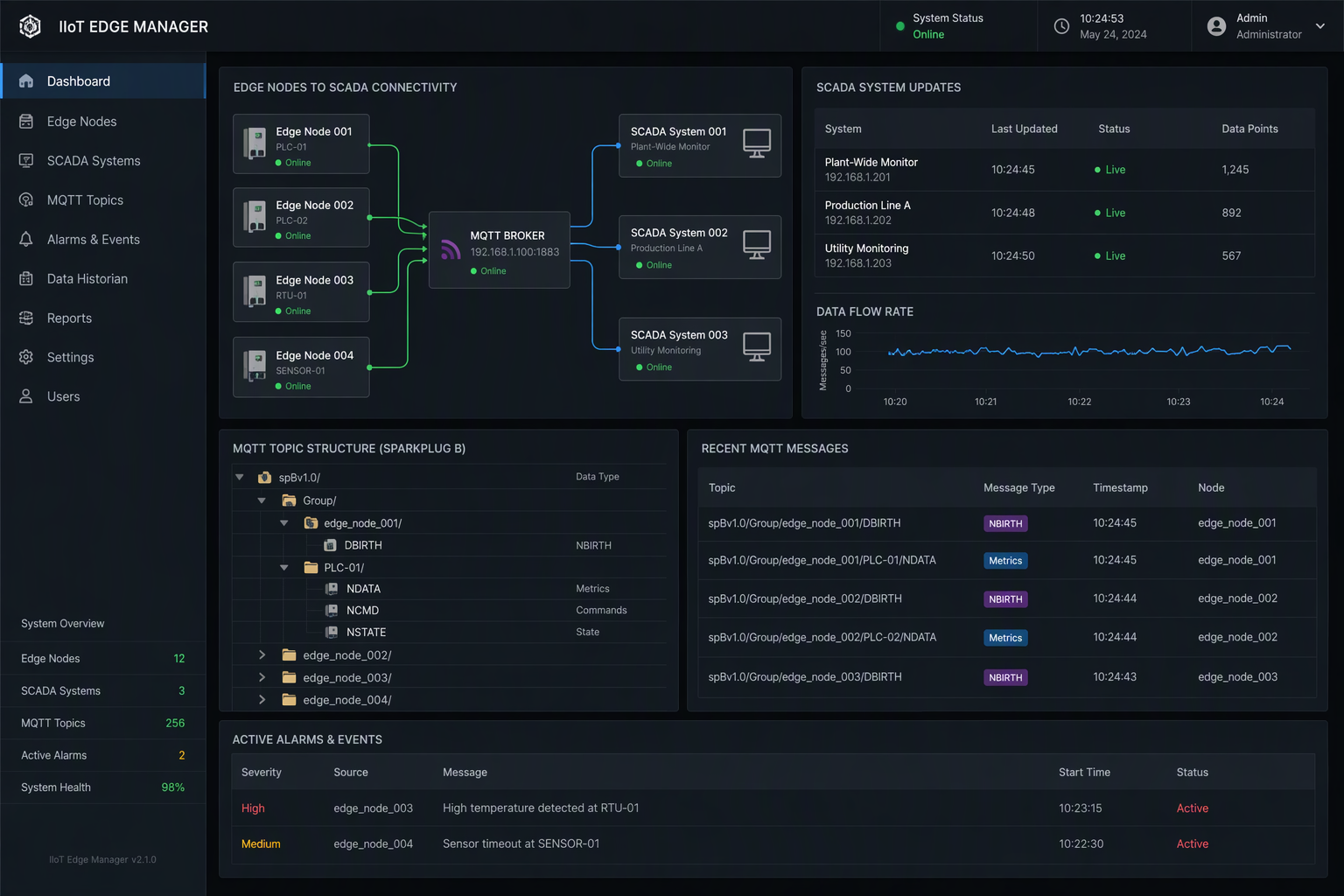
When to Use MQTT in Industrial Automation (and When to Avoid It)
When to Use MQTT in Industrial Automation (and When to Avoid It)

Key Highlights
- MQTT protocol fits industrial automation when you need real time machine data from many devices.
- It works well for predictive maintenance, remote asset monitoring, and plant-wide dashboards.
- Quality of service levels let you match message delivery to the importance of the data.
- MQTT shines when bandwidth is limited or connections drop in industrial environments.
- Avoid it for low latency, deterministic control and critical control commands.
- For many plants, MQTT and OPC UA work best together, not as replacements.
Introduction
If you are sorting through communication options for industrial automation, MQTT protocol is worth a close look. It improves data exchange by letting devices publish information once and share it with many systems through a broker. That can simplify dashboards, historians, alerts, and cloud connections. Still, MQTT is not the answer to every plant problem. Some jobs need tighter control behavior or richer structure. This guide explains when MQTT helps, when it does not, and how to make a practical choice.
Understanding MQTT in Industrial Automation
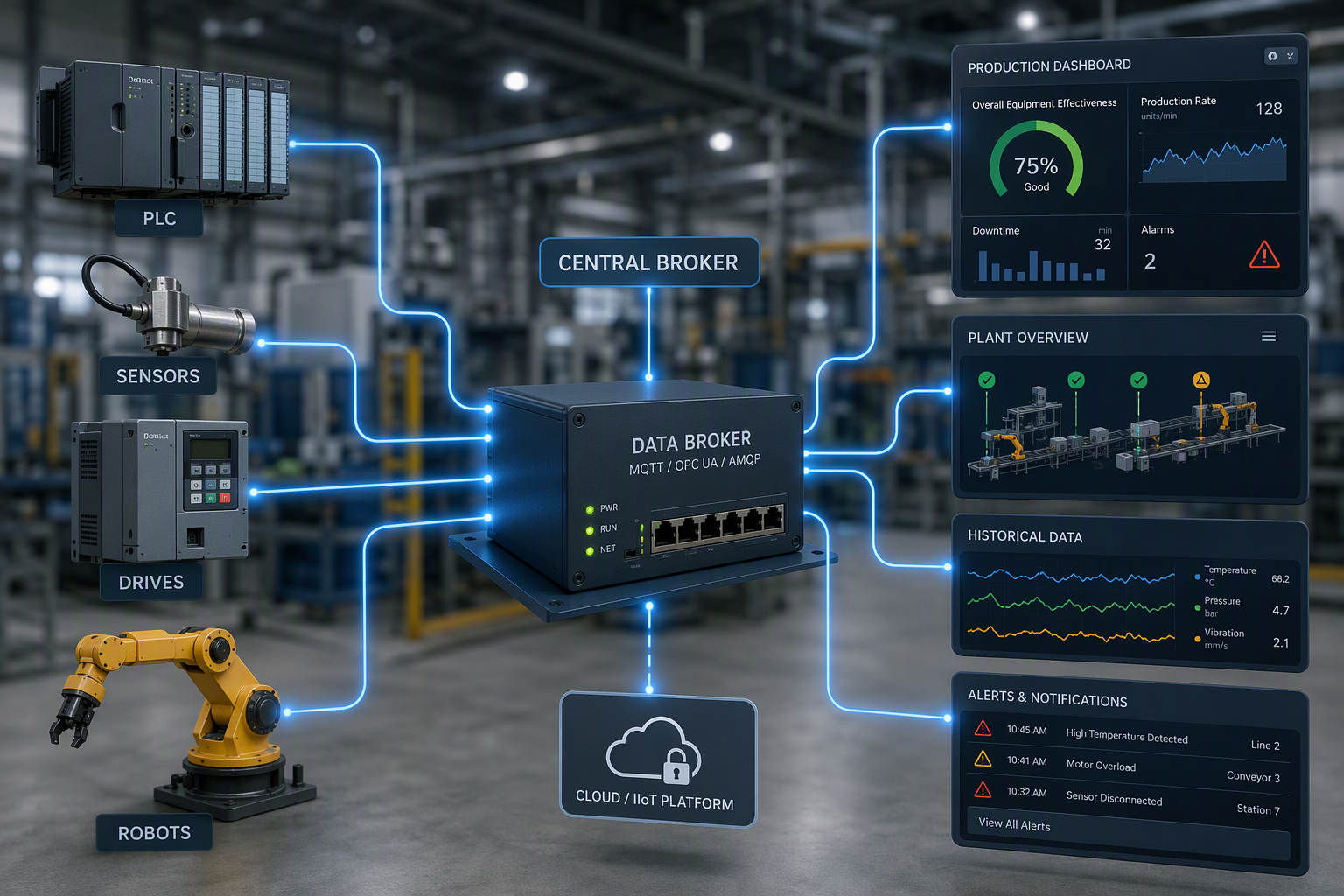
MQTT started as a telemetry transport method for oil pipelines where links were unreliable and bandwidth was expensive. That background matters because many industrial systems face the same conditions today, especially in industrial iot projects.
Instead of point-to-point polling, devices publish data to an MQTT broker and other systems subscribe to what they need. Compared with more traditional communication methods in manufacturing, that approach reduces tight dependencies between devices and data consumers. On the plant floor, that can make expansion much easier.
What is MQTT and How Does It Work on the Plant Floor?
One reason engineers like MQTT is its lightweight nature. The protocol uses very small headers, so devices do not waste bandwidth or processing power. That matters when you have many endpoints sending frequent updates from machines, utilities, or remote equipment.
Just as important, MQTT gives you practical reliability tools. You can choose the quality of service that fits each message and decide which specific topics deserve stronger delivery guarantees. That flexibility helps when some data is informational and other data really matters.
Key features that stand out in industrial environments include:
- Quality of service levels for different message importance
- Persistent sessions so offline subscribers can receive missed messages later
- TLS encryption for secure traffic across plant and cloud networks
- Retained messages so new subscribers get the latest value quickly
Key Features of MQTT Relevant to Industrial Environments
One reason engineers like MQTT is its lightweight nature. The protocol uses very small headers, so devices do not waste bandwidth or processing power. That matters when you have many endpoints sending frequent updates from machines, utilities, or remote equipment.
Just as important, MQTT gives you practical reliability tools. You can choose the quality of service that fits each message and decide which specific topics deserve stronger delivery guarantees. That flexibility helps when some data is informational and other data really matters.
Key features that stand out in industrial environments include:
- Quality of service levels for different message importance
- Persistent sessions so offline subscribers can receive missed messages later
- TLS encryption for secure traffic across plant and cloud networks
- Retained messages so new subscribers get the latest value quickly
Typical Scenarios Where MQTT Excels in Industrial Automation
The best MQTT use cases share a common pattern: lots of data, many listeners, and a need for simple scaling. In industrial iot work, that often means machine monitoring, production counts, alarm distribution, and cloud reporting.
It also fits remote asset applications where you need real time visibility over cellular or satellite links. If your plant wants one publish point and several downstream consumers, MQTT often makes sense. The next sections break down where that value shows up most clearly.
Real-Time Data Streaming and Monitoring
When a line is running, you want a live view of what is happening without polling every device over and over. MQTT supports real time streaming of machine data by pushing updates as events happen. That is a better fit for many industrial operations than constant request-response traffic.
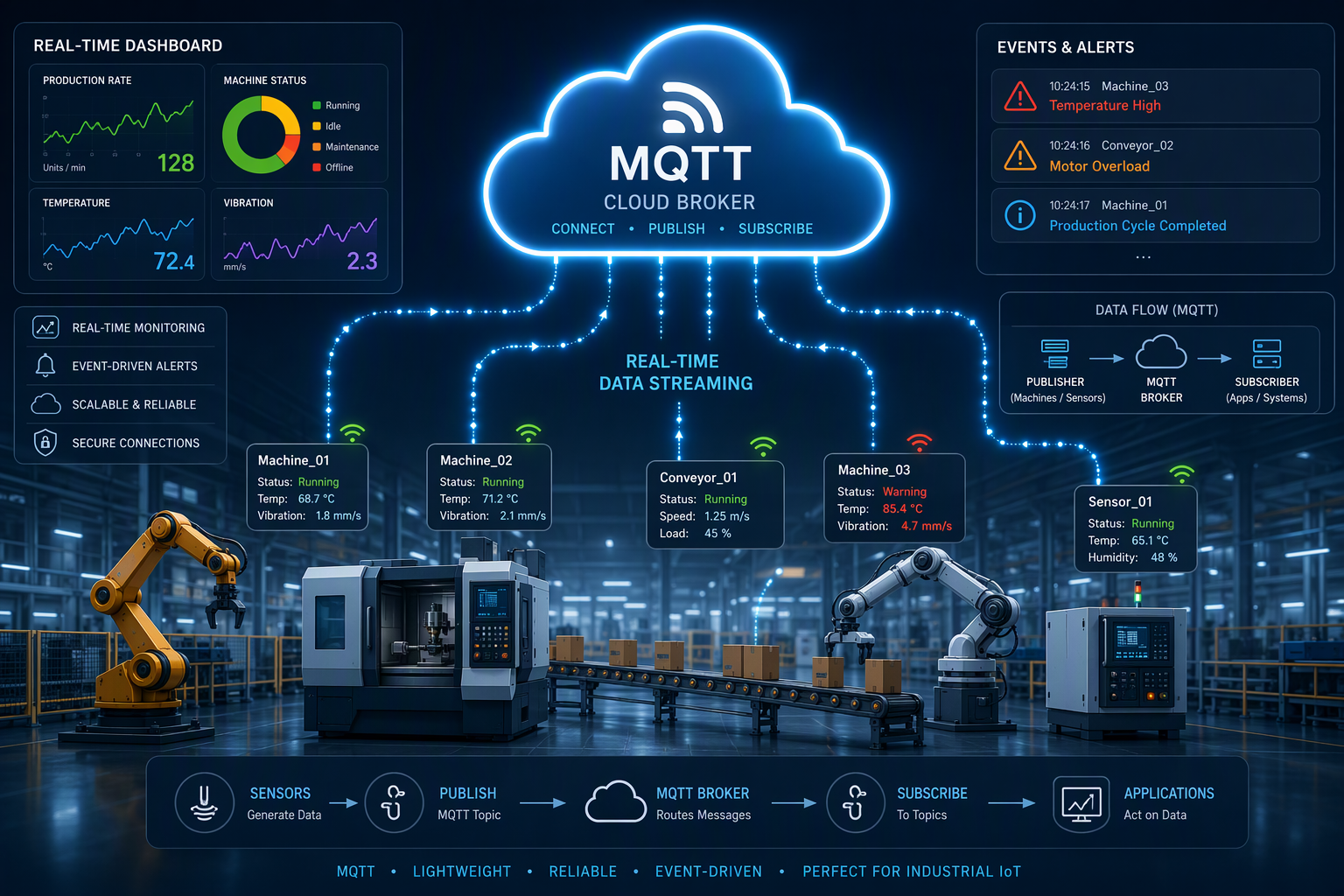
On the plant side, this can mean cycle times, fault codes, temperatures, and production status moving through well-defined mqtt topics. Since MQTT was built for telemetry transport, it handles high-frequency updates efficiently, even when the network is not perfect.
Typical monitoring examples include:
- Assembly stations publishing cycle counts and error states
- Energy meters sending frequent usage values to dashboards
- Condition sensors feeding live health data to maintenance screens
Remote Asset Management and Distributed Systems
Some of the strongest MQTT fits are outside the main plant network. It was originally created for oil pipelines, so remote asset communication is in its DNA. That makes it useful for distributed systems such as substations, water sites, or equipment spread across a wide service area.
In these cases, intermittent connectivity and bandwidth usage are real constraints. MQTT works well because it keeps message overhead low and allows applications to stay connected without heavy traffic. You get useful updates without overwhelming the network.
Common remote examples include:
- Wind, water, or utility sites reporting status over cellular links
- Remote process equipment sending alarms and health data centrally
- Edge systems forwarding selected data to enterprise control systems
Key Benefits of Using MQTT for Industrial Data Communication
For plant teams, the biggest MQTT protocol benefits are simple: reliable communication, low bandwidth use, and easy distribution of data to many applications. It is a practical transport layer for modern industrial data exchange.
You also gain options for high availability and better fault handling when the system is designed well. Quality settings, retained values, and connection monitoring help keep information flowing. That matters when your operators, managers, and analytics tools all need the same plant data at once.
Lightweight Protocol Advantages for Plant Networks
Plant networks get crowded fast. Add sensors, gateways, HMIs, historians, and cloud connectors, and traffic builds up. MQTT helps because of its lightweight nature. With a very small header, it moves frequent updates without the overhead you would see in heavier protocols.
That supports efficient data exchange across many devices. One publisher sends data once, and the broker routes it where needed. You avoid extra point-to-point connections and reduce repeated requests. Even though the name includes message queue, the real advantage is publish-subscribe routing.
Practical network benefits include:
- Lower bandwidth use for high-frequency signals
- Simpler sharing of one data source with many subscribers
- Better fit for small devices and constrained links
Reliable Message Delivery and High Availability
Reliability is where MQTT becomes more than just a convenient protocol. Quality of service lets you choose how hard the system works to deliver a message. For routine values, you can keep traffic light. For important events, you can require stronger delivery behavior.
High availability also improves when you use features built for failure handling. A device can register a last will message so the broker alerts subscribers if that device drops unexpectedly. Persistent sessions allow queued messages to reach clients after reconnecting, which helps during short outages.
Useful reliability tools include:
- Quality of service levels 0, 1, and 2
- Last will messages for unexpected disconnect detection
- Persistent sessions for missed message recovery
Choosing Between MQTT and Other Protocols in Industrial Settings
In real industrial settings, the decision is rarely MQTT protocol versus everything else. More often, it is a protocol comparison based on where the data starts, where it needs to go, and how much structure you need during data exchange.
MQTT is usually the better choice for broad distribution, cloud links, and many subscribers. OPC UA often fits machine-level connectivity and structured information better. In many plants, the right answer is using both, with each protocol handling the job it does best.
Comparing OPC UA vs MQTT for Plant Data Collection (link: https://www.empoweredautomation.com/opc-ua-vs-mqtt-for-plant-data-collection-how-to-choose/)
If you are choosing between opc ua and mqtt protocol, think about purpose first. OPC UA is more feature-rich and gives you built-in structure for plant data. MQTT is simpler and lighter, making it strong for broad data exchange across many systems and cloud-connected architectures.
A practical way to think about it is this: OPC UA often works well close to equipment, while MQTT works well for moving information outward to dashboards, analytics, and enterprise tools. For a deeper breakdown, see OPC UA vs MQTT for plant data collection: https://www.empoweredautomation.com/opc-ua-vs-mqtt-for-plant-data-collection-how-to-choose/
| Factor | OPC UA | MQTT |
|---|---|---|
| Main strength | Structured industrial data and semantics | Lightweight publish-subscribe transport layer |
| Best fit | Machine and controller integration | Broad distribution to many consumers |
| Data model | Rich and standardized | Application-defined unless extended |
| Common role | Collect from PLCs and SCADA | Send data to brokers, cloud, and apps |
Practical Decision Criteria for Engineers and Managers
Engineers and managers should start with one question: what problem are you solving? If the goal is to share plant data with many data consumers, MQTT is often a strong fit. If the goal is direct machine integration with rich context or tight command handling, another layer may be better.

It also helps to separate monitoring from control. MQTT is excellent for events, status, and streaming values on specific topics. It is usually not the first pick for sensitive control commands where predictable timing matters. That is a big distinction in operational technology.
Before choosing, check these points:
- How many data consumers need the same information?
- Are you moving data, or issuing time-critical control commands?
- Do you need simple transport, or rich built-in structure?
Common Use Cases for MQTT in Industrial IoT Applications
Across industrial iot projects, MQTT shows up where plants need fast, scalable movement of iot data. Two of the most common use cases are predictive maintenance and production performance monitoring.
That makes sense from a plant-floor view. Both need data from many sources, frequent updates, and the ability to feed dashboards, historians, and machine learning tools at the same time. The following examples show how that plays out in day-to-day operations.
Predictive Maintenance and Condition Monitoring
Predictive maintenance is one of the clearest MQTT wins. A plant can collect vibration, acoustic, and thermal signals from many assets and send them through organized mqtt topics. That creates a steady flow of data for condition monitoring without building custom links to every application.
From there, maintenance dashboards, historians, and machine learning systems can subscribe to the same streams. A temperature sensor on a motor, for example, can feed local alarms and long-term analytics at once. That improves visibility and helps teams spot failure patterns earlier.
Typical signals used here include:
- Temperature sensor readings from motors and bearings
- Vibration values from rotating equipment
- Health events from edge analytics or inspection devices
Production Line Efficiency and Downtime Reduction
MQTT also helps on the production line when you need one current view of performance. Stations can publish status, rates, faults, and production counts in real time. Supervisors and engineers then see the same picture without separate polling setups for each application.
This approach supports downtime reduction because problems surface faster. If a filler, conveyor, or robot cell slows down, that event can move instantly to dashboards and alerts. Many plants pair this with a unified namespace approach so applications pull from one consistent source of truth.
Common line metrics include:
- Production counts by station or line
- Fault and micro-stop events
- Cycle time and throughput trends
Limitations and Situations Where MQTT Should Be Avoided
MQTT is a transport layer protocol, not a cure-all. You should avoid it as the main method for jobs that demand low latency and deterministic control. If your process depends on tightly timed responses, safety behavior, or direct motion coordination, MQTT is usually the wrong primary choice. It was built for efficient messaging, not guaranteed control timing.
You should also think twice when the project requires strict security policies beyond basic broker controls or deep, standardized structure from the start. MQTT can use TLS encryption and authentication, but it does not provide rich semantics by itself. If your application depends on complex data modeling, native object structure, or formal industrial standards, MQTT may need a companion technology.
Low-Latency, Deterministic Control Requirements
Here is the simple rule: do not use MQTT as your main path for deterministic control. If a machine sequence depends on exact timing, you want the logic close to the equipment in programmable logic controllers and established control systems. MQTT was not designed to guarantee that kind of response.
Compared with traditional control communications in manufacturing, MQTT is better at sharing data than executing tightly timed actions. It handles events and status well. It does not replace field-level networks or controller-native methods for motion, interlocks, or hard real-time logic.
Avoid MQTT as the primary layer for:
- Safety-related actions and emergency behavior
- Motion or sequencing that needs repeatable timing
- Direct PLC-to-PLC control coordination
Scenarios Demanding Complex Data Modeling or Strict Security Standards
Some projects need more than lightweight transport. If you must represent equipment with detailed relationships, object models, and standardized context, MQTT alone may feel too open-ended. Complex data modeling usually has to be added by your application or by a specification layered on top.
Security is another point to check carefully. MQTT supports tls encryption, password authentication, client certificates, and access control lists, which is useful. Still, your plant may require security standards, user management, and segmentation rules that call for a broader architecture, not just a broker.
Look closely when you need:
- Formal structure for equipment and process information
- Tight topic permissions through access control lists
- Security standards beyond basic broker authentication controls
Considerations Before Implementing MQTT in Automation Projects
Before you roll out MQTT, look at the plant as it really is, not as you wish it were. Your mqtt infrastructure has to handle network outages, security, naming standards, and support needs from day one.
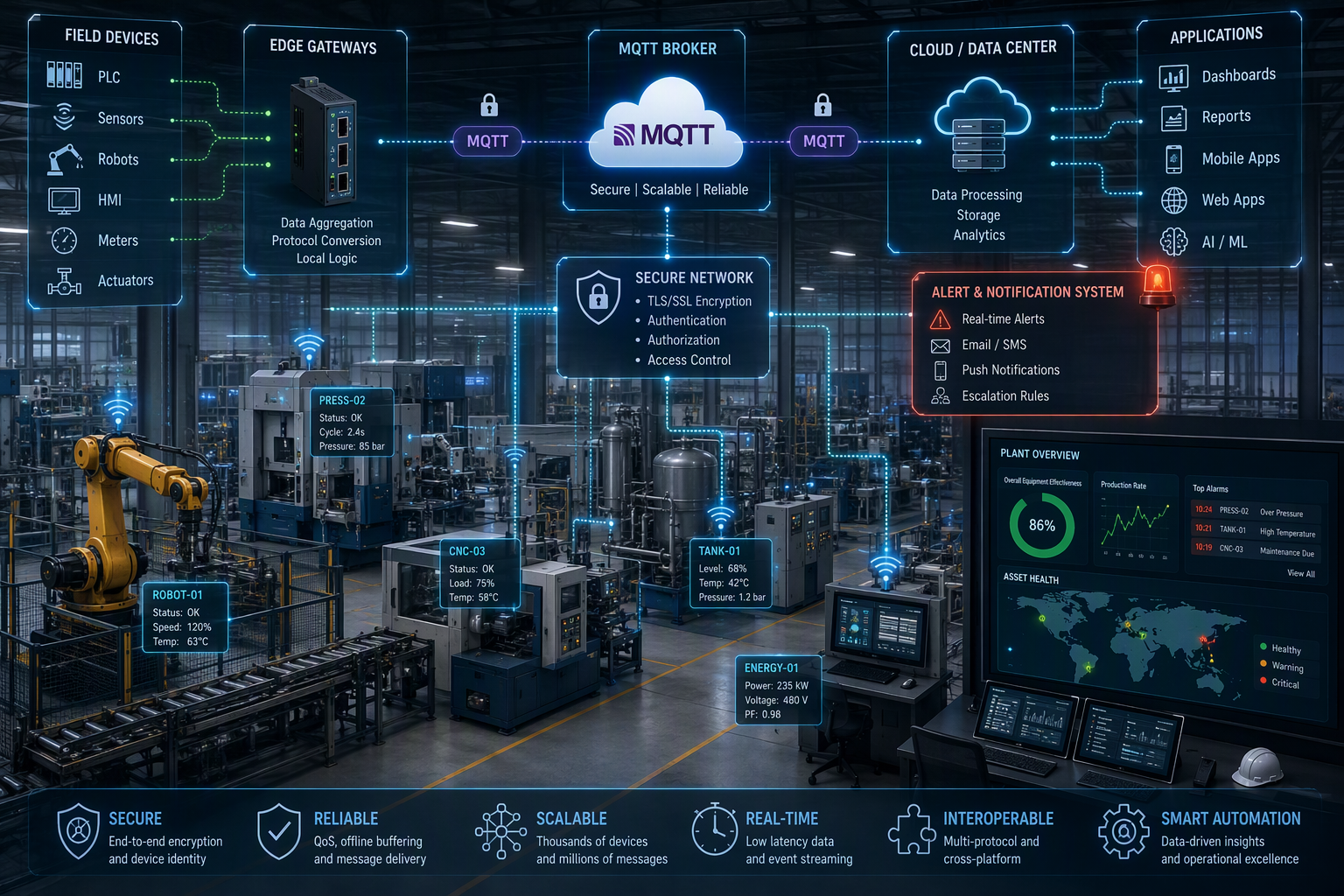
You also need a realistic plan for legacy equipment and integration with existing industrial systems. Many good projects fail because the plant network, gateways, or team responsibilities were not ready. The next two sections cover those practical checks before deployment starts.
Ensuring Network Infrastructure Readiness
Start with the basics. Your network infrastructure has to support always-on connections, expected client counts, and the traffic pattern created by many publishers and subscribers. MQTT is efficient, but plants still need stable switching, segmentation, and monitoring if they want dependable results.
Next, map bandwidth usage before launch. Know which devices publish frequently, which messages need retention, and which data should stay local at the edge. If you are connecting outside the plant, consider how managed platforms such as Azure IoT Hub or Google Cloud IoT services fit your support model.
Practical readiness checks include:
- Measure expected client counts and publish rates
- Confirm segmentation between plant and enterprise networks
- Test outage recovery and reconnect behavior before go-live
Integrating MQTT into Legacy Plant Systems
Most plants do not start with a blank sheet. They have legacy equipment, an existing scada system, and years of custom industrial systems already in place. That means MQTT projects usually begin with gateways or edge software that collect data from current assets and republish it in a cleaner form.
This is where integration discipline matters. Topic naming, payload consistency, and source ownership should be defined early. Many teams use MQTT to support a unified namespace strategy, but that only works if the data is trustworthy and organized the same way across the site.
Good integration steps include:
- Bridge existing PLC and SCADA data into MQTT carefully
- Standardize names, units, and update rates
- Add MQTT where it improves visibility without breaking current operations
Steps to Deploy MQTT in Industrial Automation—A Practical Guide
A good MQTT deployment starts small and grows on purpose. First, define the business need. Maybe you want better machine visibility, remote asset reporting, or easier data sharing with analytics. Then choose where the mqtt broker will live, which mqtt clients will publish and subscribe, and how messages should be organized. Keep the first phase limited enough to test performance, failure handling, and operator support.
After that, build for scalability and security before expanding plant-wide. Decide which messages need stronger delivery, which data stays on-site, and which flows to cloud or enterprise systems. Use authentication, encryption, and topic permissions from the beginning. If the pilot works, roll out by area or line instead of changing the whole facility at once.
Selecting MQTT Brokers and Clients
Broker and client selection should match your architecture, not the other way around. For a local plant system, a central mqtt broker on-premises may be the right starting point. For enterprise or cloud-heavy work, managed platforms can reduce support effort.
Client choice matters just as much. Your mqtt clients may be PLC gateways, edge computers, SCADA connectors, dashboards, or analytics applications. If you want more structure in the data model, Sparkplug B can help standardize payloads and state handling across devices and applications.
When evaluating tools, consider:
- Whether the broker must run on-premises or in AWS IoT Core
- Which devices or software can act as stable MQTT clients
- Whether Sparkplug B would improve consistency and interoperability
Best Practices for Topic Structure, Security, and Scalability
Strong MQTT projects are usually simple at the start because the rules were clear. Build mqtt topics around plant, area, asset, and signal so people can understand them quickly. Keep naming consistent and avoid mixing multiple meanings into one topic path.
Security should not be bolted on later. Use tls encryption, authenticate each client, and apply access control lists so devices only publish or subscribe where they should. If you expect growth, design for a scalable architecture early instead of rebuilding after the pilot succeeds.
Best practices to follow:
- Standardize topic paths and naming conventions
- Use TLS encryption and unique client credentials
- Apply access control lists by role or device type
- Use persistent sessions only where missed data matters
Empowered Automation Experience with MQTT (Chicago Area)
For plants in and around Chicago, Empowered Automation can help turn MQTT from a buzzword into a working system. As a Chicago-area systems integrator, the team sees where MQTT fits real industrial applications and where another approach is smarter. That matters because smart factory projects succeed when the architecture matches plant realities, not just IT goals.
In practical use cases, that often means bridging existing controls, SCADA, and edge systems into a cleaner data flow without forcing a full rip-and-replace. In industrial environments, the best result is usually a balanced design: keep time-critical logic local, and use MQTT where it improves visibility, sharing, and scalability.
Example Projects Using MQTT in Midwest Plants
The original MQTT story started with oil pipelines, and that same logic shows up in Midwest plants today. The strongest projects usually involve many endpoints, several data consumers, and a need to move information efficiently from the factory floor to dashboards or cloud tools.
In a smart factory setting, think of packaging lines, utility systems, or maintenance monitoring where iot devices publish values once and multiple applications subscribe. Some plants also use edge-to-cloud patterns, forwarding selected data to Google Cloud or another enterprise platform for broader reporting.
Examples that fit well include:
- Line status and production monitoring across several cells
- Condition data from motors, pumps, or utilities
- Edge systems sending selected plant metrics to Google Cloud
Lessons Learned and Integration Tips
Most lessons come back to scope and discipline. Start with one or two use cases that clearly matter to operations. If the project helps maintenance, supervisors, and engineering at the same time, it is much easier to justify and support.
The next lesson is integration quality. Bad tag naming, unclear ownership, and inconsistent update rates will hurt MQTT just as much as any other system. Good best practices make iiot data usable for dashboards, alerts, historians, and other data consumers without extra cleanup work later.
Helpful tips include:
- Begin with a small area and one clear business need
- Standardize names and payloads before wider rollout
- Keep plant-floor control separate from broad data distribution
Conclusion
In summary, understanding when to use MQTT in industrial automation can greatly enhance efficiency and communication on the plant floor. By leveraging its lightweight protocol for real-time data streaming and remote management, you can address various challenges faced in modern manufacturing environments. However, it's equally important to recognize scenarios where MQTT may not be suitable, such as applications requiring strict security or low-latency responses. With a clear strategy and the right infrastructure in place, implementing MQTT can lead to significant improvements in operational performance. If you're interested in exploring how MQTT can fit into your automation projects, consider checking our experience at Empowered Automation, where we specialize in optimizing industrial systems in the Chicago area.
Frequently Asked Questions
How does MQTT help improve reliability in industrial automation?
MQTT protocol improves reliability in industrial automation by letting you choose quality of service based on message importance. It also supports retained values, persistent sessions, and disconnect alerts. That gives plant teams a practical way to maintain real time visibility even when devices or networks are not perfect.
Can MQTT handle high availability for critical plant operations?
MQTT can support high availability in industrial environments when the mqtt broker is designed and maintained correctly. Persistent sessions, reconnect handling, and careful broker deployment help protect data exchange during short outages. Still, for critical plant operations, MQTT is better for data flow than for tightly timed control actions.
What should engineers consider before choosing MQTT for their facility?
Engineers should look at the real plant need first. In industrial settings, MQTT works best as a transport layer for scalable data sharing, not deterministic control. Review mqtt infrastructure, network stability, legacy integration, topic standards, security, and how many systems will need the same data before making the call.
You might also like