Industrial Automation Industry Market Size: Data and Projections
Industrial Automation Industry Market Size: Data and Projections
Key Highlights
- Industrial automation uses advanced systems to improve the manufacturing process with less manual effort.
- Core tools include programmable logic controllers, SCADA systems, sensors, and robotics.
- Market growth is tied to smart factories, machine learning, and stronger data analysis needs.
- U.S. demand is rising as advanced manufacturing invests in automation solutions.
- Fixed, programmable, flexible, and integrated systems support different production needs.
- Better product quality, safety, uptime, and efficiency remain the biggest business gains.
Introduction
Industrial automation has become a practical part of the modern manufacturing process, not a distant idea. It helps companies use machines, software, and industrial equipment control tools to handle repetitive work with greater speed and consistency. That shift matters because businesses want stronger product quality, lower waste, and better output. As more industries adopt industrial automation, market size and long-term projections have become important for leaders who want to understand where growth is heading next.
Industrial Automation Industry Statistics: Market Size and Growth Data
Overview of the Industrial Automation Industry
At its core, industrial automation is the use of machines, machine tools, software, and a control system to perform tasks in a manufacturing process with reduced human intervention. It began with simple mechanization and now includes connected, intelligent tools that support production, monitoring, and decision-making.
In practice, industrial automation works by linking sensors, equipment, and programmable logic controllers at the field level, so machines can respond to conditions automatically. That setup helps companies improve speed, quality, and consistency while limiting manual adjustments. To understand the industry better, it helps to look at its basic definition and the systems behind it.
Definition and Fundamentals of Industrial Automation
Industrial automation means using advanced technology to run industrial tasks that human workers once handled directly since the industrial revolution. You see it in material handling, assembly, monitoring, and final product delivery. The goal is simple: improve output, reduce errors, and make the manufacturing process more consistent.
The way it works is also straightforward. A control system receives feedback from sensors and other devices, then adjusts machine behavior based on programmed rules. This lets equipment react to changing conditions with less human intervention. In many facilities, machines can keep operating around the clock while maintaining a steady production rate.
Over time, the main types of industrial automation have expanded from simple mechanization to more adaptable systems. Today, companies rely on fixed, programmable, flexible, and integrated approaches. Each one fits a different production need, depending on volume, variety, and how much change a facility expects.
Core Components and Systems in Automation
Most automation systems depend on a mix of hardware and software working together. These tools manage machine actions, collect operating data, and support process decisions. In many industrial settings, the system is built to react quickly and consistently through pre-set control logic.
Common technologies include the following:
- Programmable logic controllers that run machine sequences and respond to inputs
- SCADA systems that support supervisory control, monitoring, and data acquisition
- Industrial networks in a distributed control system for coordinating larger, more complex industrial process operations
- Sensors, drives, and industrial computers that connect equipment behavior to automation systems
Together, these components help facilities control production steps with greater precision. They can be integrated into existing production lines or used in stand-alone setups. From CNC equipment to robots and industrial sensors, these are some of the clearest examples of automation technologies used in industry today.
Industrial Automation Market Size in the United States
The United States is a major player in industrial automation because its advanced manufacturing base continues to invest in automation solutions. Demand is tied to productivity, quality improvement, and the need to address labor pressure across factories, warehouses, and supply chain operations.
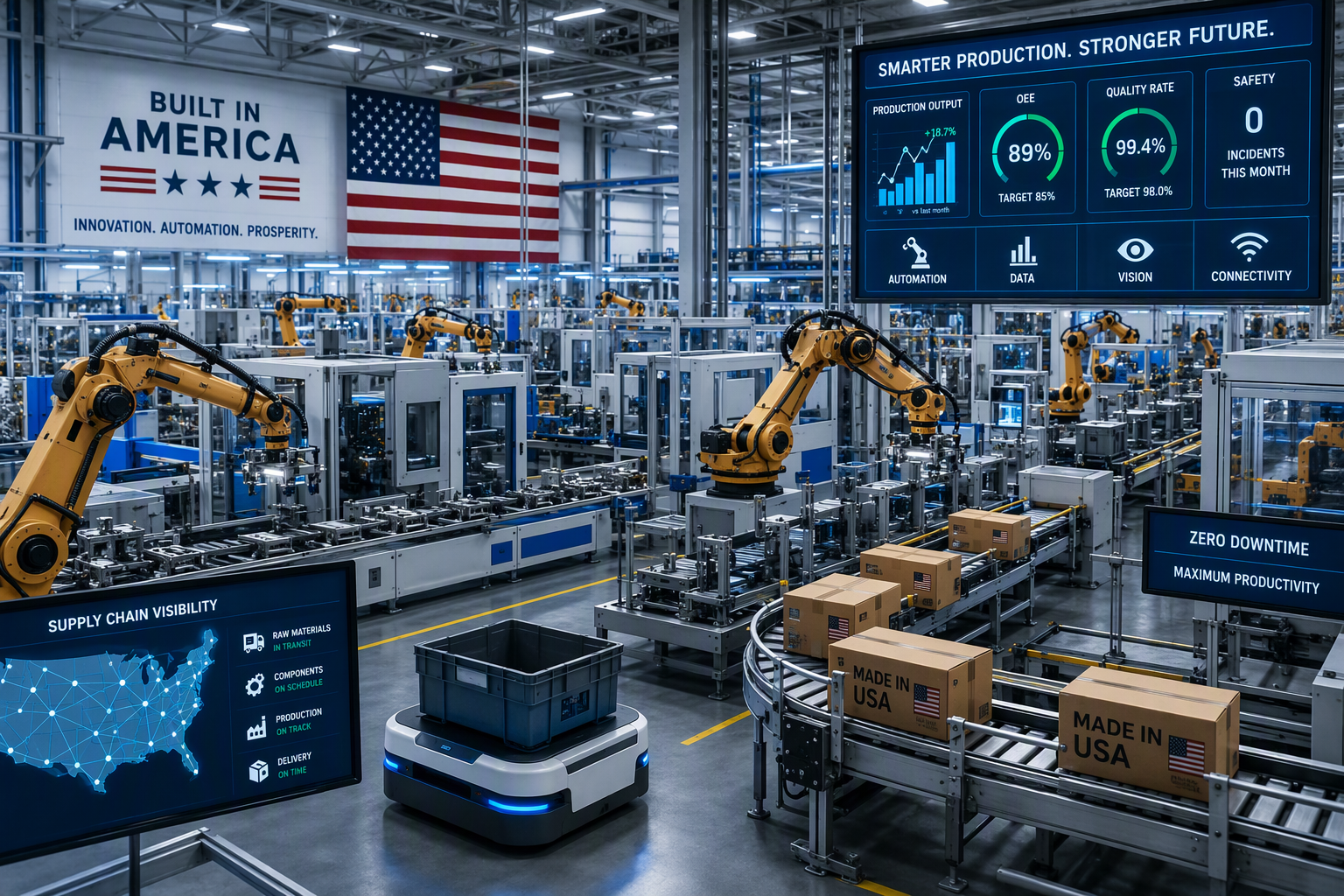
While the compiled information focuses more heavily on global figures than a standalone U.S. number, the growth outlook remains positive. U.S. companies are adopting industrial automation to strengthen output, lower waste, and improve competitiveness. That makes market size analysis especially useful when reviewing current valuation and segment activity.
Current Market Valuation and Key Growth Statistics
Recent figures show strong momentum for the industrial automation market size. The global market was estimated at $196.6 billion in 2021 and increased to $213.49 billion in 2022, reflecting growth of 8.59%. Longer-term projections in the compiled information point to $395.09 billion by 2029, supported by Industry 4.0 and the rise of connected automation technology.
That growth is driven by how businesses now use real time monitoring, data analysis, and smarter tools across the manufacturing process. Companies want better throughput, lower downtime, and stronger quality control, so spending continues to rise.
| Year/Period |
Market Figure |
|---|---|
| 2021 |
Global industrial automation market estimated at $196.6 billion |
| 2022 |
Global market grew to $213.49 billion |
| 2021 to 2022 growth |
8.59% growth rate |
| 2029 projection |
Market expected to reach $395.09 billion |
| Forecast driver |
Industry 4.0, IoT adoption, and broader automation technology use |
Market Segment Analysis (By Application, Technology, End-User)
Industrial automation serves many applications because no single setup fits every industrial process. Some companies need high-volume production, while others need flexibility for different products or changing customer demand. That is why market segmentation often reflects both technology choice and operating environment.
Key segment views include:
- Application: assembly, material handling, monitoring, and final product movement
- Technology: fixed systems, programmable automation, flexible automation, and integrated automation
- End-user: automotive, aerospace, food and beverage, pharmaceuticals, logistics, mining, and consumer goods
- Process needs: mass production, batch production, or more adaptable production lines
Current trends shaping the market include stronger use of connected automation systems, higher demand for flexibility, and broader adoption in sectors facing quality and labor challenges. Segment growth depends on whether the end-user values speed, customization, lower human input, or a more integrated operation.
Global Industrial Automation Industry Market Comparison
The global market for industrial automation is expanding because industries everywhere want faster output, tighter quality control, and lower operating risk. Market segmentation varies by region, but the same themes appear often: connected systems, smarter factories, and stronger productivity needs.
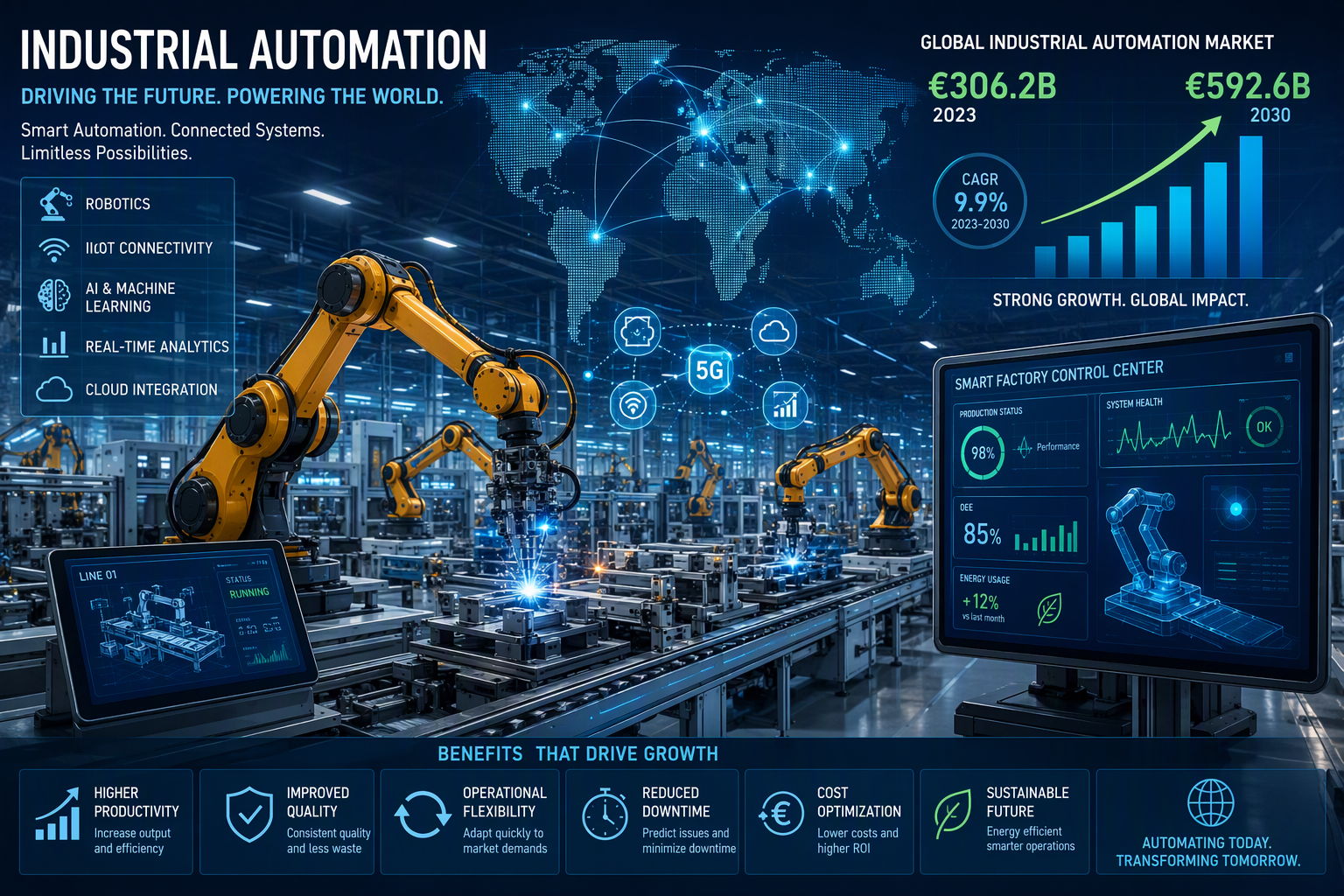
Regional growth also reflects local industry mix. Areas with strong automotive manufacturing, electronics, logistics, and process industries tend to invest more quickly. Looking at major markets and country-level adoption patterns gives a clearer view of where industrial automation is advancing most rapidly.
Major Markets and Regional Growth Patterns
Major markets are typically the regions with strong manufacturing, logistics, and industrial infrastructure. Regional growth is supported by the need to improve supply chain performance, reduce downtime, and increase quality consistency. Early adopters are often the ones setting new process standards.
Growth patterns are especially visible in industries such as:
- Automotive and aerospace production
- Food and beverage processing
- Pharmaceuticals and chemicals
- Logistics and supply chain operations
These sectors push demand for automation solutions because they depend on repeatable processes and steady output. The compiled information does not break out exact regional numbers by continent, but it clearly shows a global market moving upward as more businesses modernize operations and invest in connected production tools.
Leading Countries in Industrial Automation Adoption
Countries with large manufacturing bases tend to lead in industrial automation adoption. The compiled information points to broad uptake across industries rather than a ranked country list, but it does show that companies investing early are gaining an advantage and helping define new standards.
In practical terms, market leaders are usually nations with strong automotive manufacturing, electronics assembly, logistics networks, and industrial technology investment. These environments support smart factories, connected equipment, and wider use of data-driven production systems. Adoption rate rises when quality demands and labor pressures are high.
The sectors most impacted are the ones that depend on precision, speed, and repeatable output. That includes automotive, food processing, pharmaceuticals, aerospace, mining, and supply chain operations. As these sectors grow, leading countries continue to scale automation to stay competitive.
Growth Drivers in the Industrial Automation Market
Several growth drivers are pushing the market forward. Companies want faster output, better safety, and stronger consistency, but they also need ways to respond to labor shortages and changing demand. That makes automation systems more attractive across a wide range of production settings.
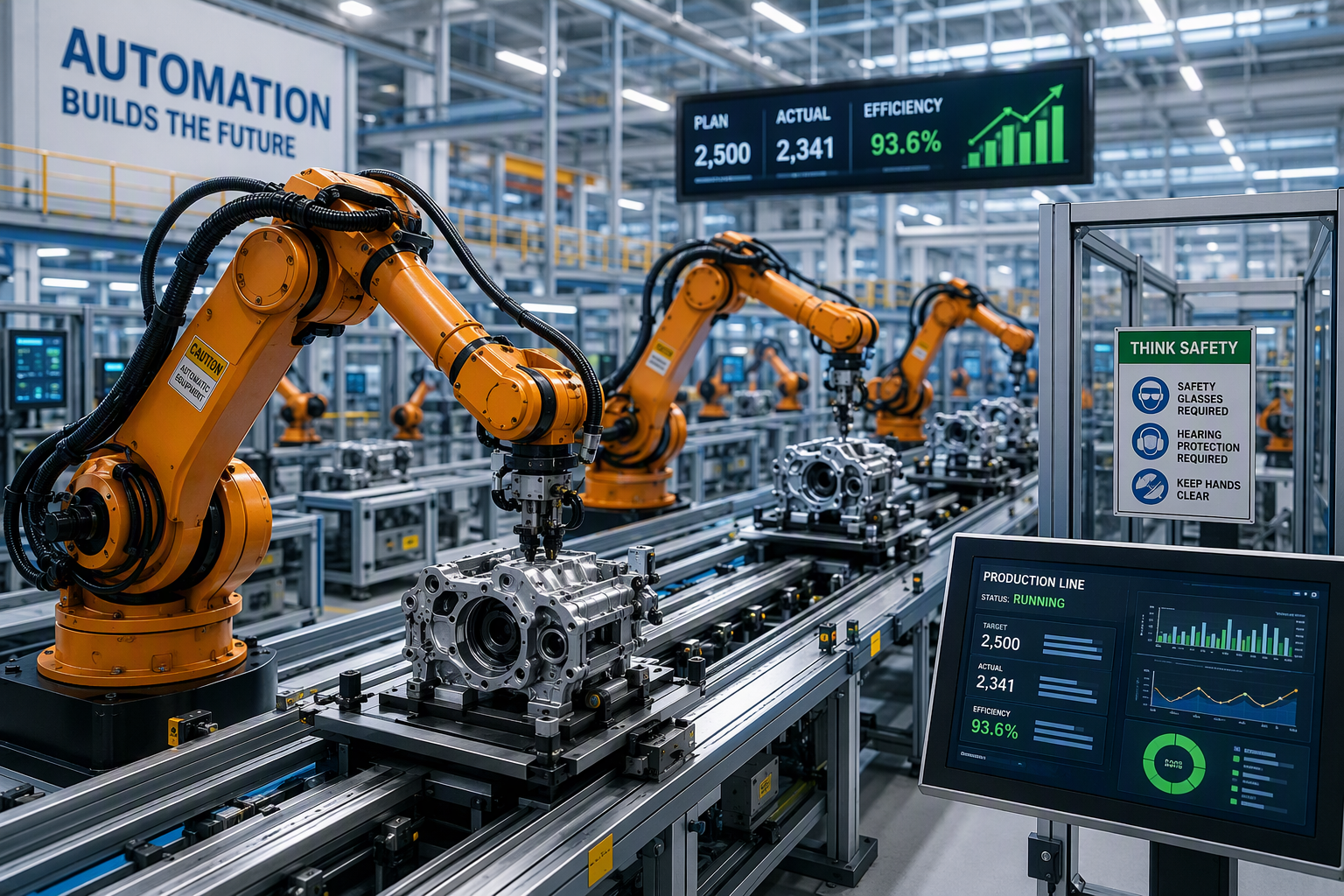
New technology is a big part of this shift. Machine learning and artificial intelligence are giving the manufacturing process more adaptability, better monitoring, and stronger decision support. The next two sections explain how robotics and IIoT are changing the pace of market evolution.
Advances in Robotics and Artificial Intelligence
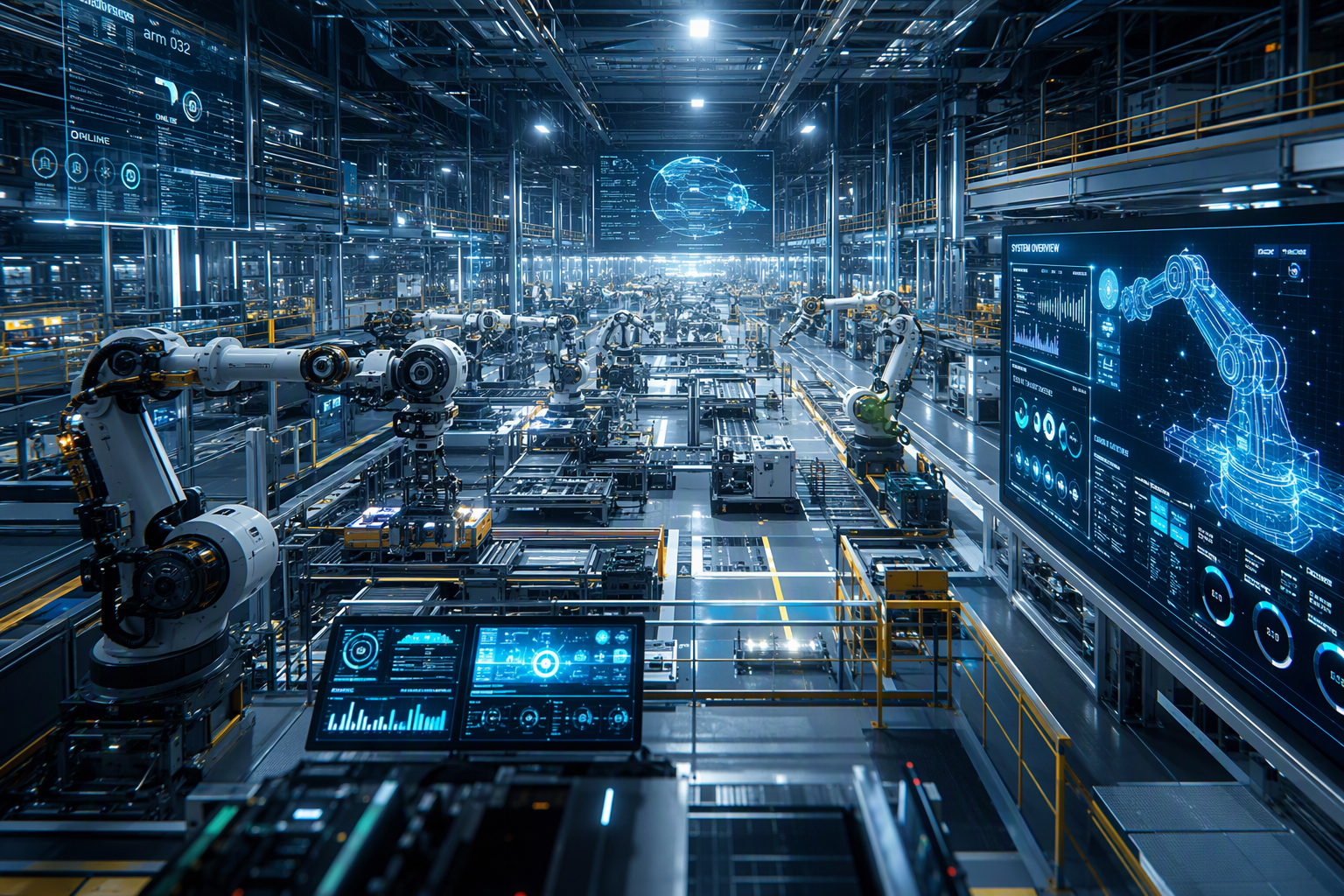
Robotics has moved far beyond basic repetitive motion. Today’s systems can support material handling, assembly work, and tasks that are dangerous or involve extreme temperatures and physically demanding conditions. This makes automation technology more useful in settings where safety, consistency, and uptime matter most.
Artificial intelligence and machine learning are adding another layer of value. These tools help machines learn from data, adapt to conditions, and improve decisions over time. In the compiled information, AI is tied to equipment health monitoring, production optimization, and object detection in autonomous industrial vehicles.
One of the most practical results is predictive maintenance. Instead of waiting for failure, businesses can use industrial automation solutions and data patterns to identify problems earlier. That helps reduce downtime, protect output, and keep production moving. In short, robotics and artificial intelligence are making industrial automation more responsive and more capable.
Expansion of Industrial Internet of Things (IIoT)
The expansion of industrial iot is one of the clearest technology trends in automation. Through the internet of things, machines, sensors, and software can exchange information across the factory floor. That gives operators and systems better visibility into production conditions and equipment behavior.
A key benefit is real time data acquisition. When machines continuously report status, temperature, movement, or output levels, companies can react faster and optimize operations. The compiled information links this connected model to Industry 4.0 and the growing use of digital tools across industrial settings.
While edge computing is listed as an important term in the outline, the compiled information mainly emphasizes connected monitoring and on-site system response rather than technical detail. Even so, the broader takeaway is clear: IIoT helps industrial automation become more aware, more efficient, and easier to manage.
Industrial Automation Projections and Forecasts
Market projections point to steady expansion as companies keep modernizing production. The strongest signals come from rising investment in connected systems, robotics, and software-driven control. These forecasts matter because they help businesses align spending with likely demand and operating needs.
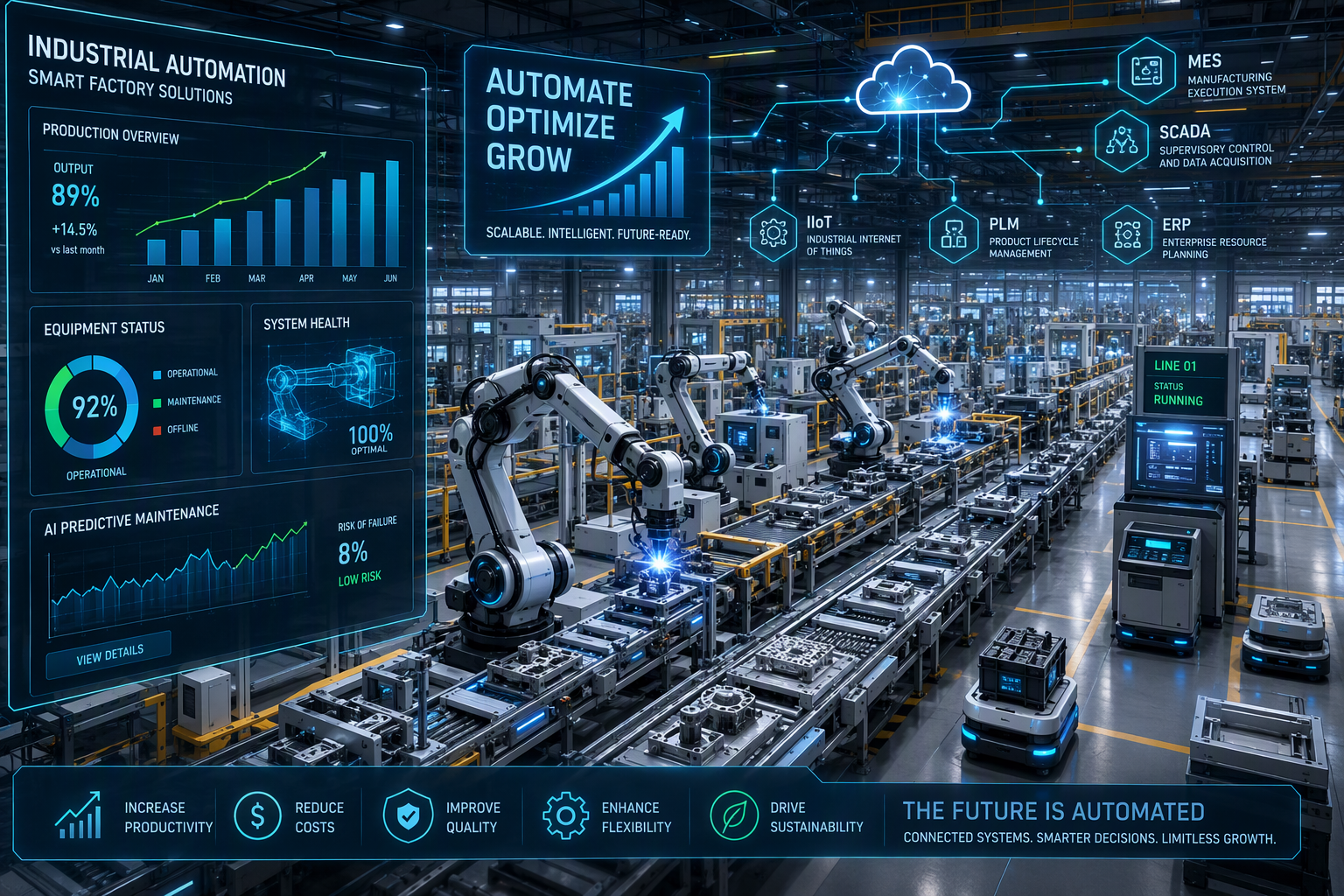
The growth outlook in the compiled information is clear: industrial automation is expected to reach $395.09 billion by 2029. That forecast, supported by data analysis and technology adoption trends, sets the stage for a closer look at 2025, 2030, and the factors shaping future market direction.
Growth Outlook for 2025, 2030, and Beyond
The growth outlook for the automation market remains strong because businesses continue to pursue efficiency, quality, and safer operations. Based on the compiled information, the market is moving from $213.49 billion in 2022 toward $395.09 billion by 2029. That suggests continued momentum through 2025 and into 2030.
Why does this matter to you? Because market size growth usually reflects deeper changes in how factories operate. More companies are using intelligent systems, connected equipment, and data analysis to improve performance and reduce interruptions across production.
Beyond 2030, future trends are likely to keep favoring smarter, more integrated facilities. The compiled information highlights AI, machine learning, IoT, robotics, digital twins, and service-based automation models as important signals. Together, these trends support a market that is becoming broader, more flexible, and more data-driven.
Factors Influencing Future Market Trends
Future market trends depend on both opportunity and pressure. On one side, companies want higher output and more flexible operations. On the other, they face labor shortages, uptime risks, and the need to stay competitive in a changing supply chain environment.
Important influences include:
- Technology trends such as AI, robotics, digital twins, and connected monitoring
- Demand for automation solutions that can scale without large upfront capital through service models
- Supply chain needs that favor faster material movement and less disruption
- Greater attention to energy management and efficient resource use
The key challenges today include the upfront cost of automation, the need for skilled maintenance support, and limits in automating irregular or non-repeatable tasks. Even with those barriers, the compiled information suggests that long-term demand remains favorable because the operational gains are hard to ignore.
Types of Industrial Automation Systems
There are several types of industrial automation, including various types of automation that match different production goals. The main types are fixed, programmable, flexible, and integrated systems. They differ in speed, adaptability, and how easily a company can change output when demand shifts.
Choosing the right control system depends on product mix, production volume, and how often processes need adjustment. Some automation systems are best for repetitive work, while others support frequent changes. The next sections break down how each approach works in real operating conditions.
Fixed Automation Systems
Fixed automation is the oldest and most established approach. It uses specialized equipment to carry out a specific set of repetitive tasks at high speed. Because the machinery is designed for one purpose, it is common in mass production environments where output must stay constant.
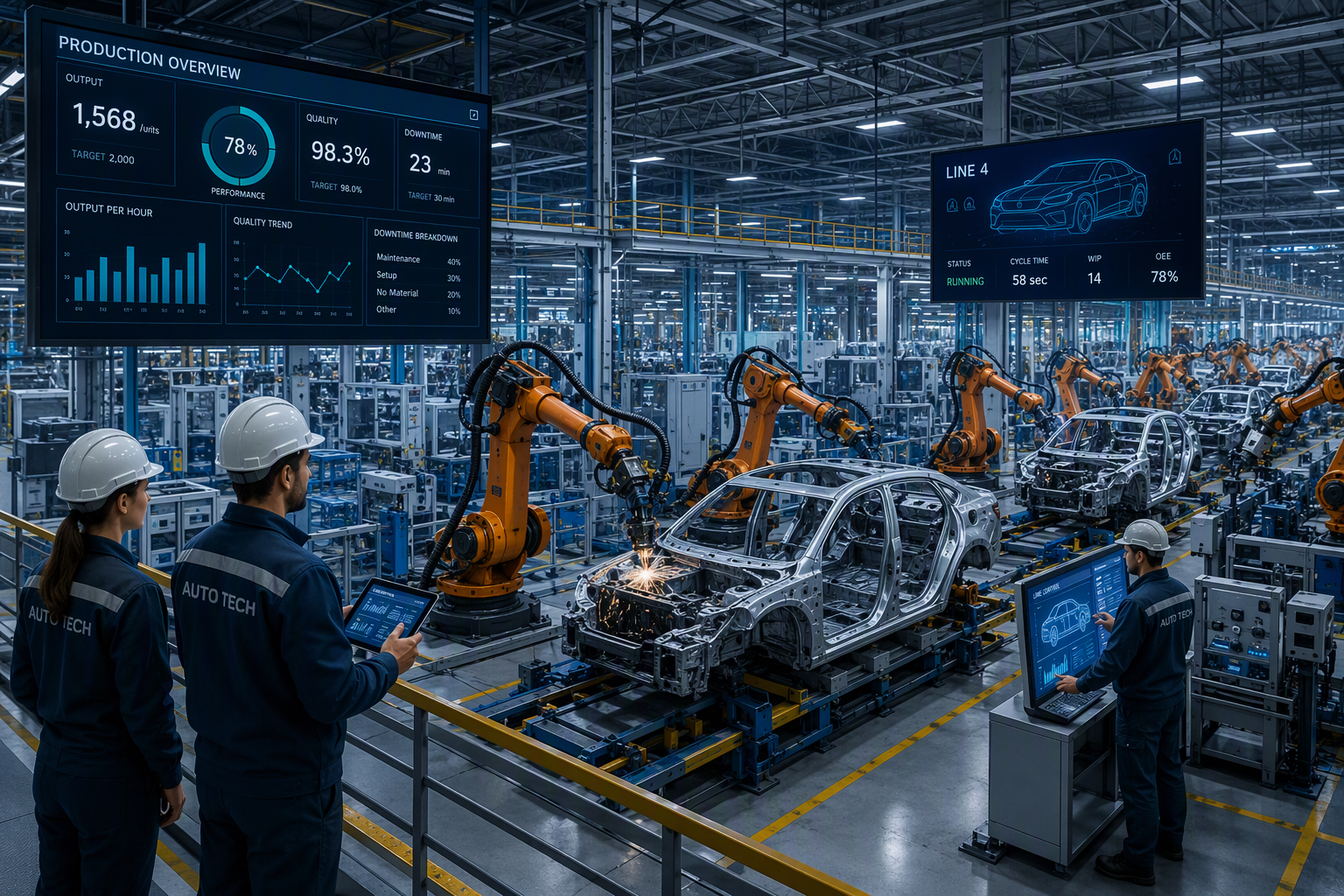
A classic example is the assembly line. In automotive production, a vehicle moves from one stage to the next, and each machine performs its assigned step, such as welding or painting. This makes the production process highly efficient when the same task repeats again and again.
The tradeoff is flexibility. Fixed automation is not ideal for batch production or frequent product changes because it cannot be easily reprogrammed. Still, when a facility needs stable, high-volume performance with minimal variation, fixed automation remains one of the most effective options.
Programmable Automation Systems
Programmable automation gives companies more flexibility than fixed systems. Instead of being locked into one sequence forever, machines can be reprogrammed to handle different tasks. This type of automation makes the model useful when production needs change from one run to another.
It is especially well suited for batch production. A manufacturer can adjust software instructions, update control logic, and switch the system to produce a new item. CNC machines are one of the best-known examples because they can make different parts simply by changing the program.
Programmable logic controllers play a major role here. They help manage machine actions, monitor equipment status, and respond to changing conditions in the production environment. , particularly in industrial environments. For companies that need moderate variety without giving up structured process control, programmable automation is a strong fit.
Flexible and Integrated Automation Solutions
Flexible automation is built for change. It allows equipment to adapt quickly when facilities need to produce different products or alter workflows. This is useful in operations where customer demand shifts often and rigid production lines would slow the business down.
Integrated automation goes a step further by combining several systems into one coordinated industrial process. It can link robots, conveyors, software, and other tools so they work as a unified operation. Common examples include:
- Cobots working alongside employees
- AGVs and AMRs moving materials through facilities
- Adaptive production lines that support quick changeovers
- Smart factories and computer-integrated manufacturing systems
These automation solutions help companies balance speed with adaptability. Flexible automation supports frequent reconfiguration, while integrated automation creates a broader framework for coordination. If your operation deals with variety, movement, and connected decision-making, these systems offer a practical path forward.
Key Technologies Shaping Industrial Automation
Industrial automation depends on a growing set of technologies that make production smarter and more responsive. Core examples include SCADA, robotics, sensors, CNC equipment, and intelligent software that improves monitoring and machine performance.
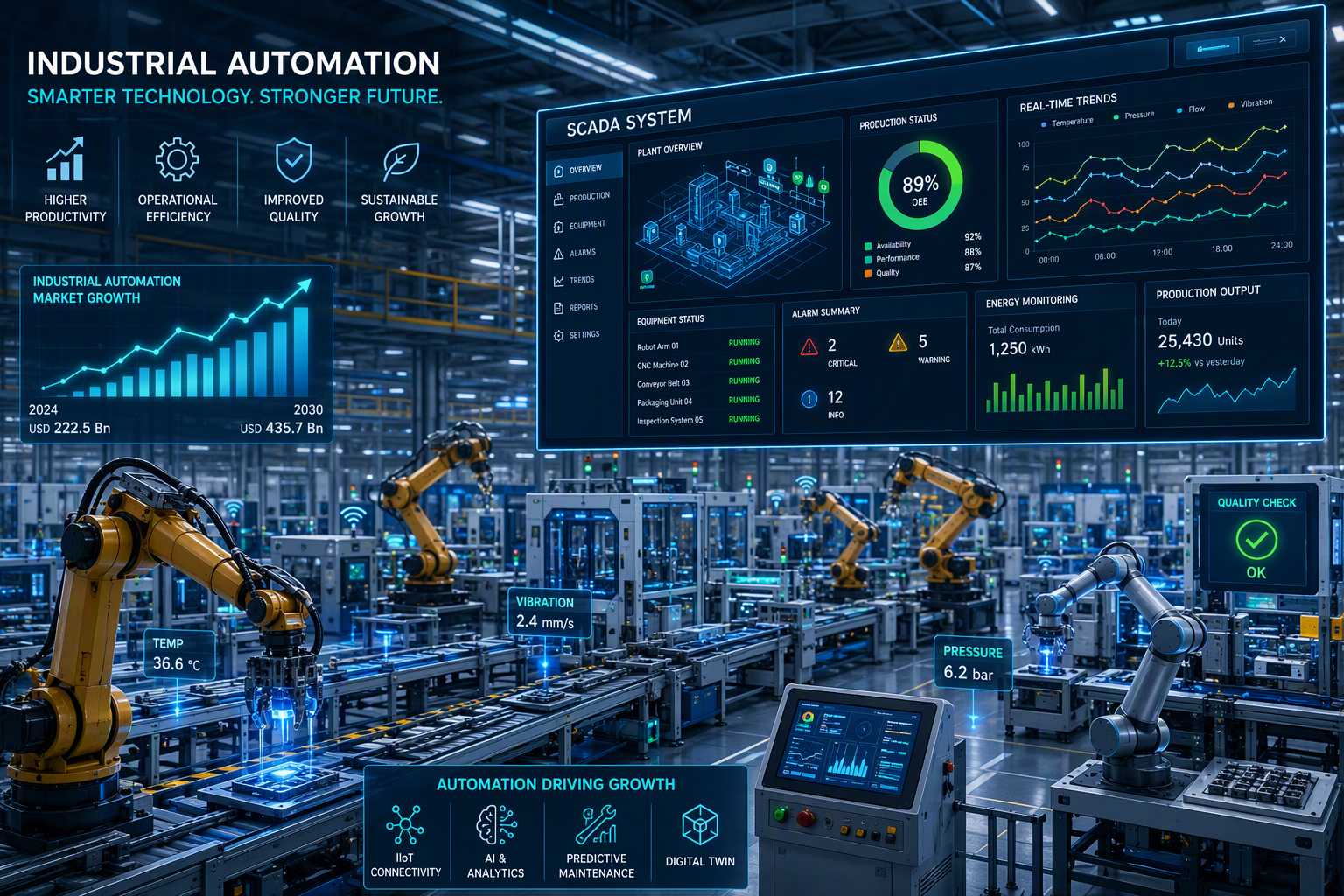
Newer automation technology is also expanding what factories can do. Machine learning supports better decisions, while predictive maintenance helps reduce equipment failure before it disrupts output. The sections below focus on SCADA and the rising role of edge-style intelligence in day-to-day automation environments.
Supervisory Control and Data Acquisition (SCADA)
SCADA systems are a central part of many automation setups because they provide supervisory control and visibility across equipment and processes. They help operators monitor performance, track alarms, and understand what is happening at different points in a facility.
A major strength of SCADA is data acquisition. These systems gather information from devices and present it in ways that support faster decisions. In practical terms, that means better oversight of process control, improved response to changes, and a clearer picture of how equipment is performing.
Within an automation structure, SCADA supports the higher control level by connecting data from machines, sensors, and field devices. It does not replace all local controls, but it gives businesses a broader operating view. That makes SCADA one of the most useful technologies in modern industrial automation.
Machine Learning and Edge AI in Automation
Machine learning is changing automation by helping systems improve from experience instead of only following fixed instructions. In industrial settings, that means software can spot patterns, support equipment monitoring, and improve decisions tied to quality, movement, and uptime.
Artificial intelligence adds even more value when machines must respond quickly in real time. The compiled information describes AI use in production optimization, maintenance prediction, and autonomous vehicle perception, including object detection and classification in dynamic environments.
The outline highlights edge computing, and while the compiled information does not explain it directly, the same real-world theme appears: faster local response and smarter automation solutions close to the operation itself. Put simply, machine learning and AI are helping factories become more adaptive, efficient, and capable of handling complex tasks.
Sectors Most Impacted by Industrial Automation
Industrial automation affects many industrial sectors, but some feel the change more strongly because they rely on precision, volume, and repeatable output. The main types of systems are especially useful in industries where delays, defects, or manual handling create high costs.
Automotive manufacturing is one of the clearest examples, but it is far from the only one. Food, pharmaceuticals, aerospace, logistics, mining, and energy-related operations also see strong automation impact. The next sections highlight where adoption brings the most noticeable gains.
Automotive and Aerospace Manufacturing
Automotive manufacturing has long been one of the biggest users of automation systems. Repetitive assembly line work, welding, painting, and material movement are well suited to machines that can maintain accuracy at high speed. This makes automation a natural fit for vehicle production.
Aerospace also benefits because quality, consistency, and safety standards are strict. In both sectors, automation improves production flow and supports stronger supply chain coordination. Important gains include:
- Better repeatability on assembly line tasks
- Faster handling of parts and materials
- Lower error rates in precision work
- Safer operation in demanding production environments
These industries benefit the most from automation because downtime and defects are costly. Whether the focus is vehicle output or aerospace component quality, the same principle applies: more control, less inconsistency, and stronger throughput across operations.
Food & Beverage, Pharmaceuticals, and Energy
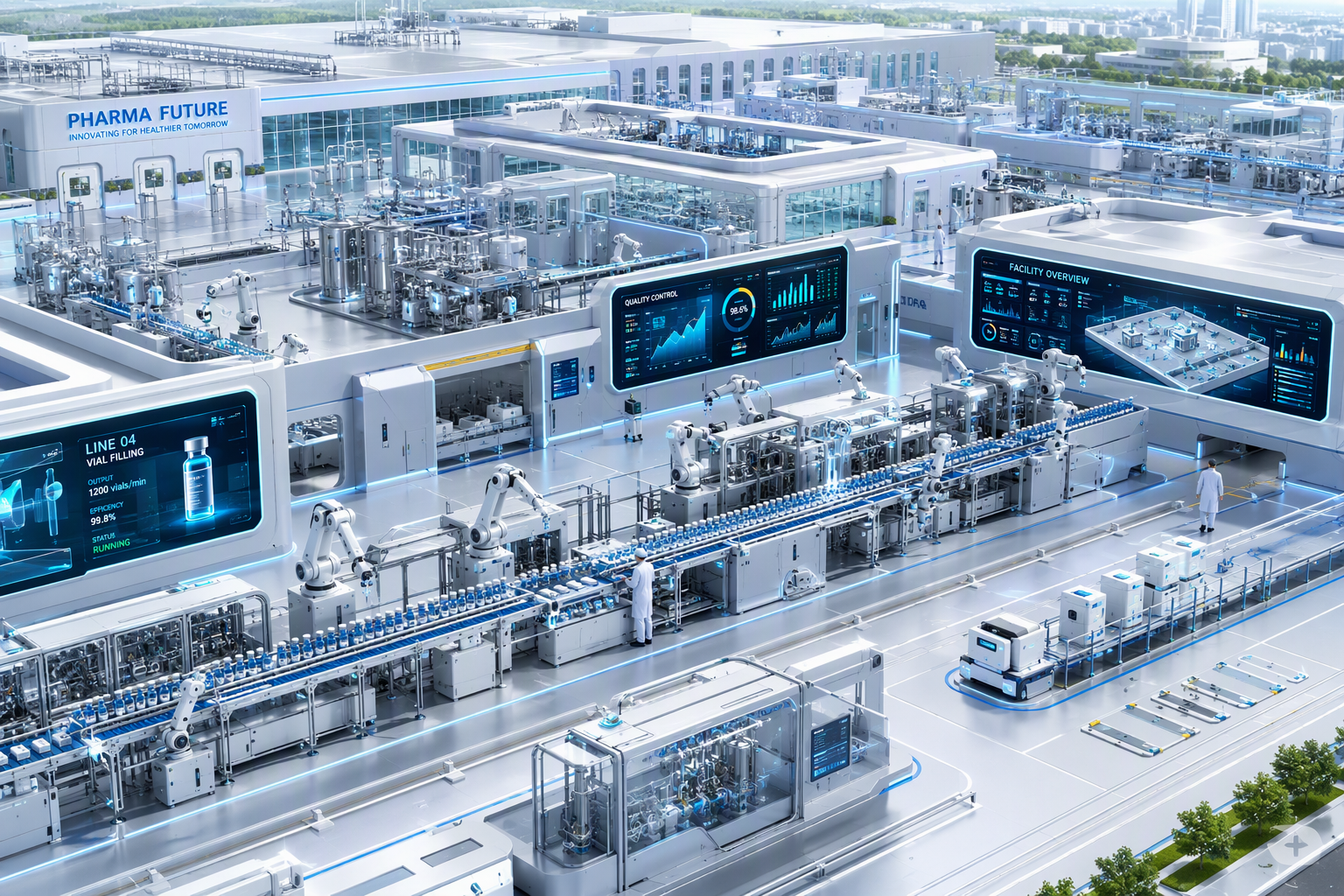
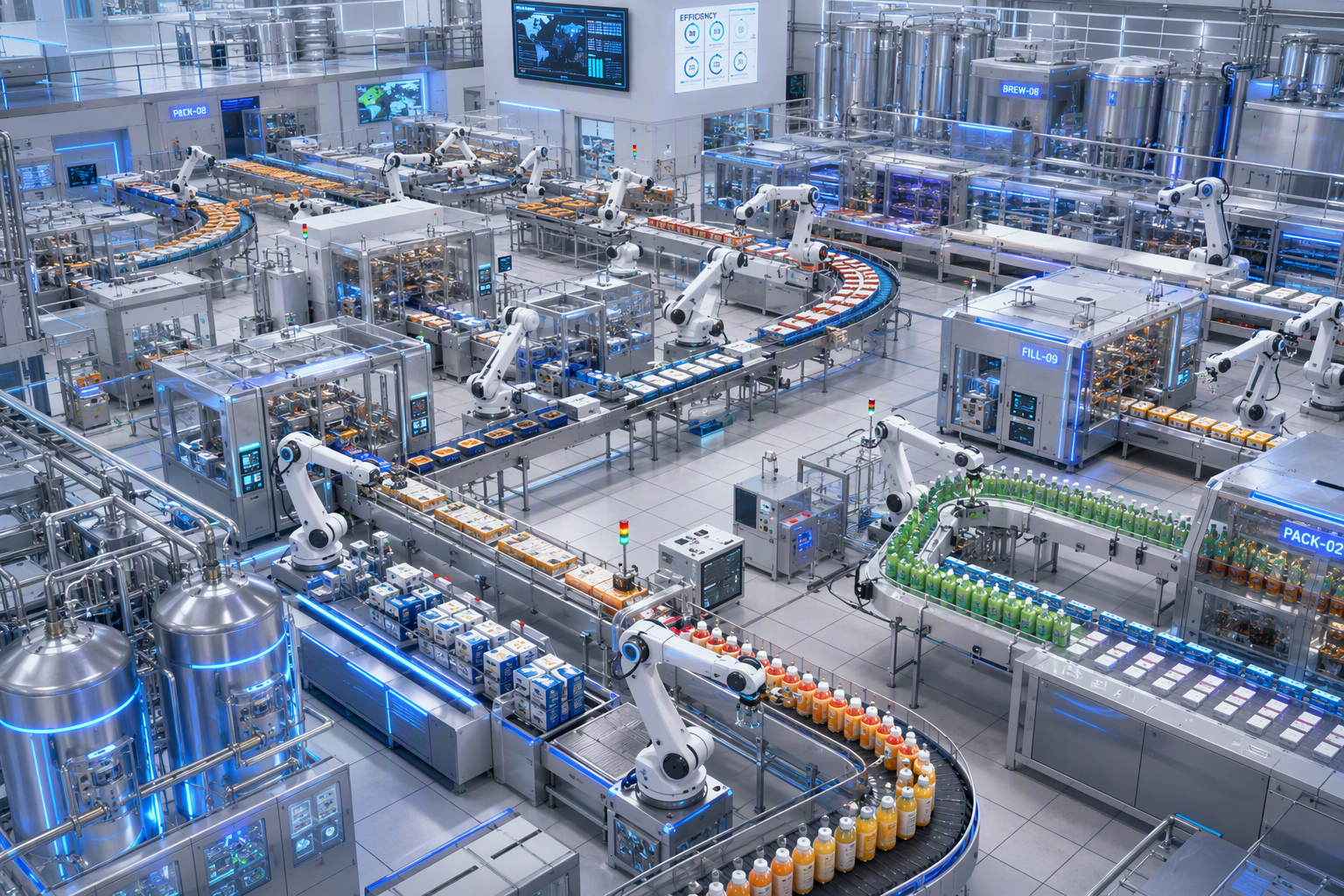
Food and beverage processing is a major automation user because consistency and cleanliness matter every day. Automated systems help facilities control mixing, packaging, movement, and timing while reducing variation across runs. That supports better quality control and steadier output.
Pharmaceuticals also depend on precise process control. Small errors can create serious problems, so automation helps standardize production and reduce unwanted variation. In energy-related operations, automation supports monitoring, system reliability, and more efficient energy use across equipment and facilities.
These sectors gain value in several ways:
- More consistent quality control
- Better tracking of production conditions
- Improved process control across complex steps
- Smarter use of materials and energy use
For these industries, automation is not just about speed. It is about dependable output, safer operations, and tighter control where precision matters most.
Main Benefits of Adopting Industrial Automation
The main benefits of industrial automation come down to performance and consistency. Businesses use it to handle repetitive tasks with minimal human intervention, increase efficiency, and lower the risk of error. That matters in any setting where uptime and stable output affect profit.
It also improves product quality by making processes more repeatable. On top of that, automation can support safer work conditions, better resource use, and lower labor pressure. The next sections focus on two of the biggest gains: productivity and quality-driven resource improvement.
Improved Operational Efficiency and Productivity
Industrial automation improves operational efficiency by taking over repetitive, time-consuming work that slows human teams down. Machines can run continuously, maintain a constant pace, and support process control with fewer interruptions. That helps facilities increase throughput while keeping output more stable.
It also boosts productivity because systems can react to changes in real time. Instead of depending on manual checks for every adjustment, equipment can respond automatically to operating conditions. This reduces delays and keeps the line moving.
Practical productivity gains often include:
- Faster completion of repetitive work
- More stable output with minimal human intervention
- Lower error rates caused by fatigue or boredom
- Better response to real time changes in operating conditions
The compiled information even notes a 33% efficiency increase in one warehouse use case involving an autonomous vehicle compared with an electric pallet jack.
Enhanced Quality Control and Resource Utilization
Another major advantage is stronger quality control. In manual environments, fatigue and inconsistency can create variation in output. Automation systems standardize the manufacturing process, helping companies produce the same result more reliably from one unit to the next.
Better resource utilization is just as important. Automation helps manage raw materials, labor, and energy more efficiently, which lowers waste and supports long-term cost control. Machines can work with a level of precision that helps businesses avoid unnecessary overuse of inputs.
The compiled information also points to continuous monitoring and rapid correction when processes drift away from standard settings. While machine vision is listed as an important term in the outline, the broader message stays the same: automated operations improve consistency, support quality control, and make better use of resources.
Conclusion
In summary, the industrial automation industry is on a remarkable growth trajectory, driven by technological advancements and an increasing demand for efficiency across various sectors. With the integration of intelligent systems and the Industrial Internet of Things, companies are not only improving their operational productivity but also ensuring high-quality standards. Understanding market dynamics, key drivers, and future projections can provide valuable insights for businesses looking to leverage automation for success. As you navigate this evolving landscape, consider how these trends may impact your industry and explore opportunities for growth. If you're interested in learning more about how industrial automation can transform your operations, don't hesitate to reach out for a consultation.a See our indus trial automation in industry statistics guide
Title: The Future of Industrial Automation
As the industrial automation industry evolves, its significance extends beyond mere productivity gains. Companies are increasingly recognizing that resource utilization is as crucial as operational efficiency. By optimizing the management of raw materials, labor, and energy, automation not only reduces waste but also reinforces long-term cost control strategies. The precision offered by automated systems minimizes the risk of overuse of inputs—a critical factor in today’s environmentally-conscious market.
This shift towards sustainable practices is leading to innovative solutions that align corporate goals with ecological responsibility. Furthermore, the integration of advanced technologies such as machine learning and artificial intelligence empowers businesses to predict maintenance needs, reducing downtime and fostering continuous improvement.
As we look ahead, the Future of Industrial Automation indicates a landscape where agility and adaptability are paramount. Companies that embrace digital transformation will not only outperform their competitors but also contribute positively to the world around them. Emphasizing smart manufacturing, businesses can pivot quickly in response to market demands while maintaining resilience against disruptions.
Continuous monitoring emerges as a pivotal aspect of this evolution. Rapid corrections can be made when processes deviate from established standards, ensuring optimal performance at all times.
Frequently Asked Questions
How large is the U.S. industrial automation market?
The compiled information does not give a separate U.S. industrial automation market size figure, but it shows a strong growth outlook driven by advanced manufacturing and rising use of automation solutions. U.S. demand is tied to improving the manufacturing process, increasing quality, and staying competitive.
What are the latest technology trends in industrial automation?
The latest automation technology trends include machine learning, artificial intelligence, industrial iot, robotics, and digital twins. These tools support smart factories by improving monitoring, helping machines adapt to changing conditions, and enabling better maintenance, productivity, and decision-making across industrial operations.
Which industries benefit the most from automation?
Industries that benefit most from industrial automation include automotive manufacturing, food & beverage, pharmaceuticals, aerospace, and logistics. These sectors rely on automation systems for consistent output, safer operations, better quality control, and faster handling of repetitive or precision-driven production tasks.
You might also like