Industrial Automation Industry Applications Across Manufacturing
Industrial Automation Industry Applications Across Manufacturing
Key Highlights
- Industrial automation uses automation systems to improve the manufacturing process with less human intervention.
- It now supports smart factories through robotics, AI, machine learning, and connected control systems.
- Common applications span automotive, food and beverage, pharmaceutical, electronics, utilities, and water treatment.
- Manufacturers adopt it to raise productivity, improve quality, reduce downtime, and strengthen safety.
- The market keeps growing as companies seek competitive advantage and better operational performance.
- Key challenges include labor shortages, workforce training needs, and keeping up with fast-moving innovation.
Introduction
Industrial automation is changing the manufacturing process in practical ways you can see on the factory floor. What once started as simple mechanization now includes robotics, sensors, software, and other automation technology that can handle tasks from material handling to final delivery. For manufacturers, this shift is about more than speed. It is about better quality, stronger safety, and more reliable output. As adoption expands across industries, industrial automation is becoming a core part of modern production.
Industrial Automation Solutions
Overview of the Industrial Automation Industry
At its core, industrial automation is the use of advanced machines, sensors, and software to improve the manufacturing process while reducing human intervention. The automation industry helps businesses streamline production, improve safety, and control quality more consistently.
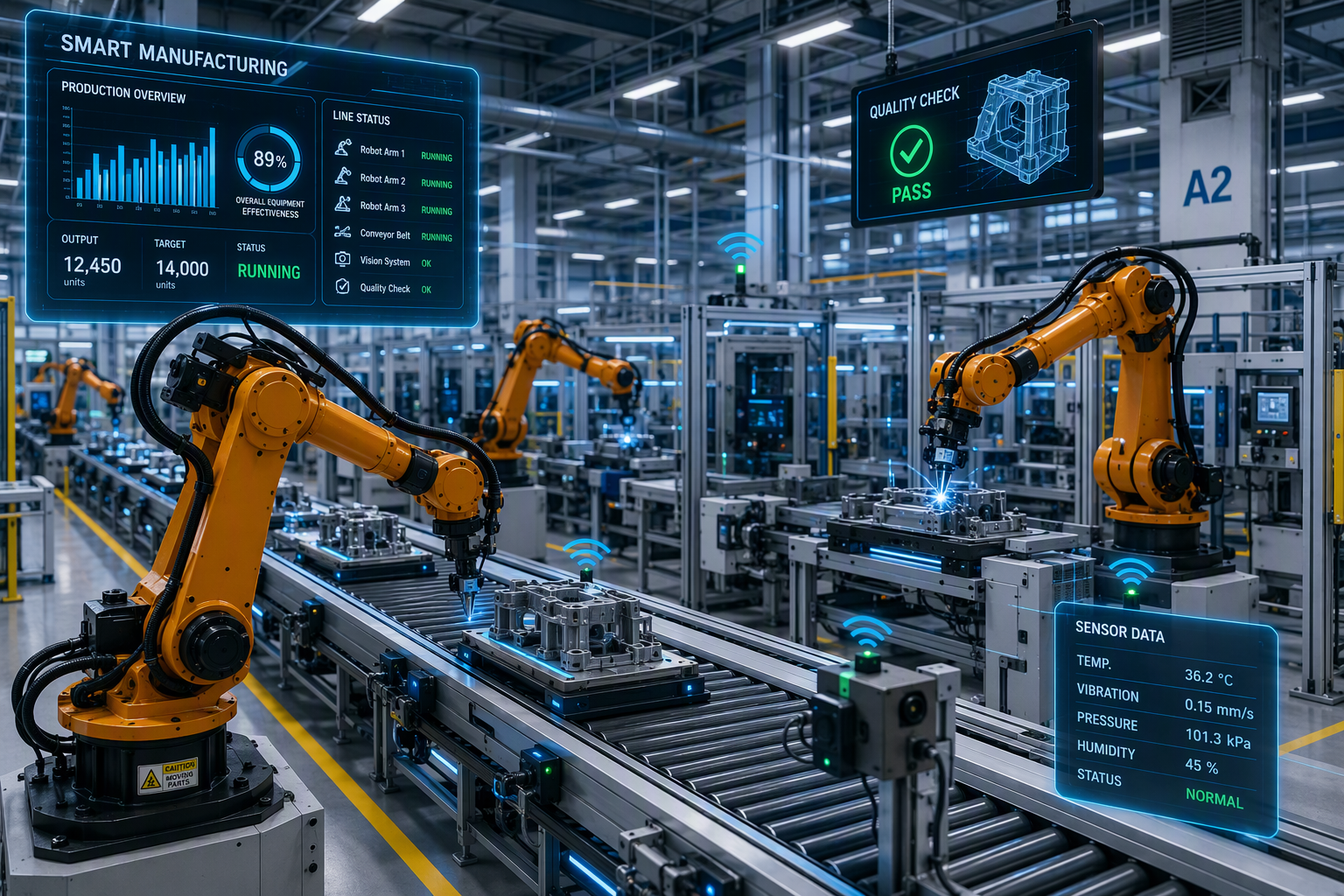
That broad role explains why industrial automation now reaches far beyond one factory type. It supports supply chains, assembly operations, and process-driven facilities across many sectors. To understand its impact, it helps to start with a clear definition, then look at how these systems work and where the market is heading.
Defining Industrial Automation in Modern Manufacturing
Industrial automation is the use of advanced technology and machinery to carry out tasks in the manufacturing process with less human intervention. In simple terms, it connects machines, sensors, and software so work can move faster and more consistently.
In modern manufacturing, these automation systems do more than repeat one motion. They monitor conditions, react to feedback, and apply control logic to keep production on track. That makes it possible to improve product quality while reducing variation caused by fatigue or manual mistakes.
You can think of industrial automation as a way to make production more controlled and predictable. It helps manufacturers optimize processes, improve safety, and lower costs. That is why it has become such an important part of how factories operate today.
How Industrial Automation Works: Key Concepts
Industrial automation works by combining a control system with machines, sensors, and software that guide production activities. These systems watch what is happening, compare it to set rules, and make adjustments when needed. That keeps operations stable and responsive.
On many production lines, programmable logic controllers handle the control logic behind equipment actions. They help manage machine tools, conveyors, and other devices. Industrial robots often take on repetitive tasks such as welding, movement, or handling parts at consistent speed.
Human operators still play an important role. They supervise systems, review performance, and step in for exceptions or higher-value work. The result is a production environment where machines handle routine execution while people focus on oversight, quality decisions, and continuous improvement in product quality.
Linking to Pillar Page About the Industrial Automation Industry
If you want a broader view before focusing on manufacturing applications, it helps to start with a resource about the industrial automation industry: https://www.empoweredautomation.com/industrial-automation-sector-navigating-recent-changes. It gives helpful context on how the automation industry is changing and why that matters.
That wider perspective is useful because industrial automation solutions rarely sit in isolation. They connect equipment, software, and data across operations. As businesses evaluate automation solutions, they often compare the types of industrial automation that best fit their production goals.
You may also want to explore how the industrial internet of things supports connected operations and smarter decisions. This article focuses on manufacturing use cases, but the pillar page can help you see how those use cases fit into the larger direction of today’s industrial automation landscape.
Industrial Automation Market Size and Growth Outlook in the United States
The industrial automation market size shows strong momentum. Compiled industry figures estimate the global market at $196.6 billion in 2021 and $213.49 billion in 2022, with continued expansion expected. Longer-term projections place the market at $395.09 billion by 2029, reflecting steady demand for automation technology.
For companies in the United States, that growth signals more than trend activity. It shows that manufacturers are investing in automation systems to improve resilience, efficiency, and competitive advantage in fast-changing production environments.
| Market Measure |
Reported Figure |
|---|---|
| Global industrial automation market, 2021 |
$196.6 billion |
| Global industrial automation market, 2022 |
$213.49 billion |
| Growth rate from 2021 to 2022 |
8.59% |
| Projected market by 2029 |
$395.09 billion |
| Expected CAGR to 2029 |
9.8% |
Types of Industrial Automation Systems
Manufacturers use several types of industrial automation to match different production needs. Some automation systems are built for one fixed task, while others support changeovers, customization, or broader plant-wide coordination. The right choice depends on volume, product variety, and process demands.
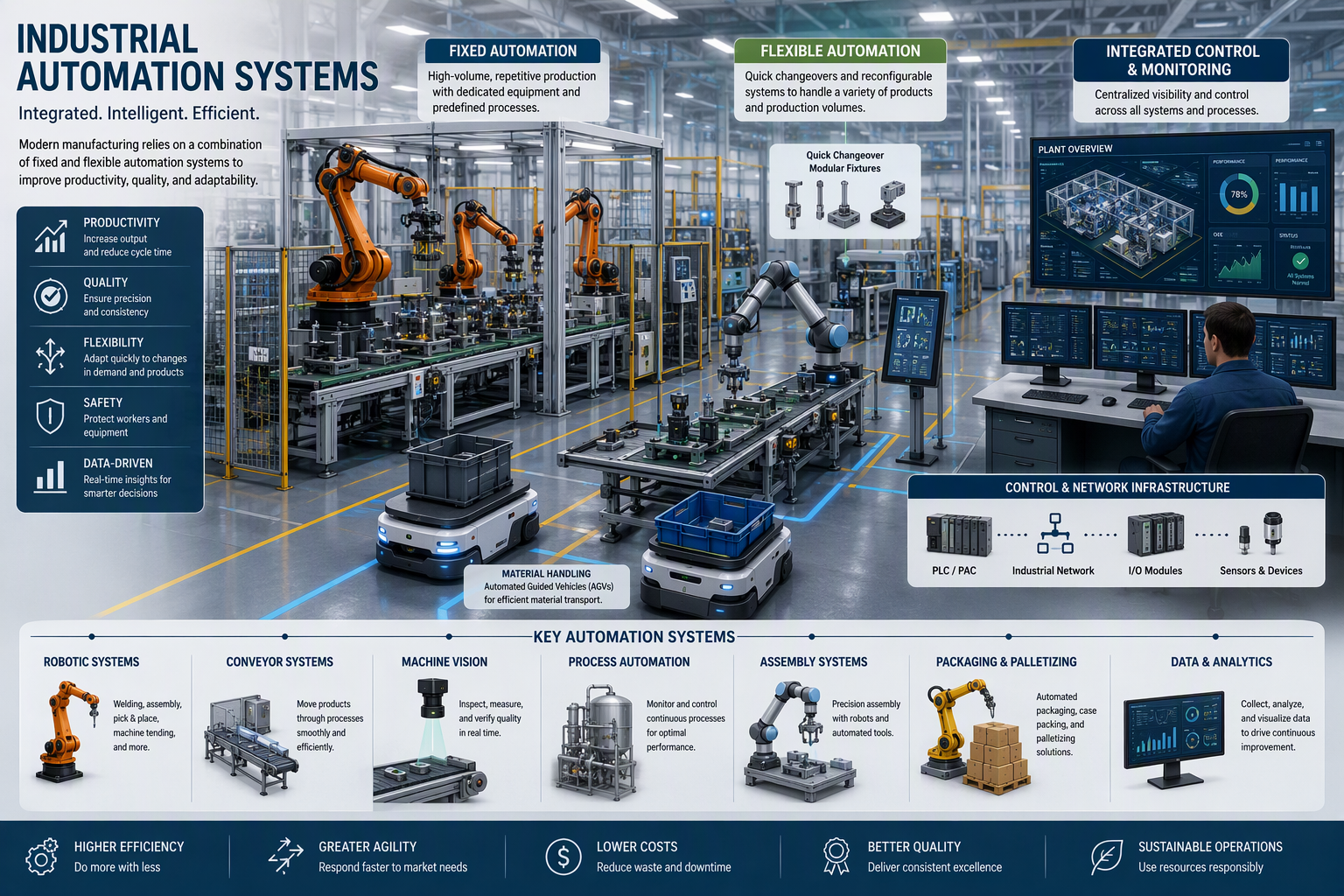
In practice, these automation solutions shape how a control system supports speed, flexibility, and reliability. The main categories give you a useful framework for comparing capabilities, so let’s look at each one and where it fits best.
Fixed Automation Systems for High-Volume Production
Fixed automation is the oldest and most established type of automation. It relies on specialized equipment designed to perform a specific set of actions again and again. This approach grew out of simple mechanization and remains highly effective where the process rarely changes.
Because the equipment is dedicated to one job, fixed automation is ideal for repetitive tasks in high-volume production. You often see it on an assembly line where the same steps happen in the same order at high speed. That consistency supports output and predictable cycle times.
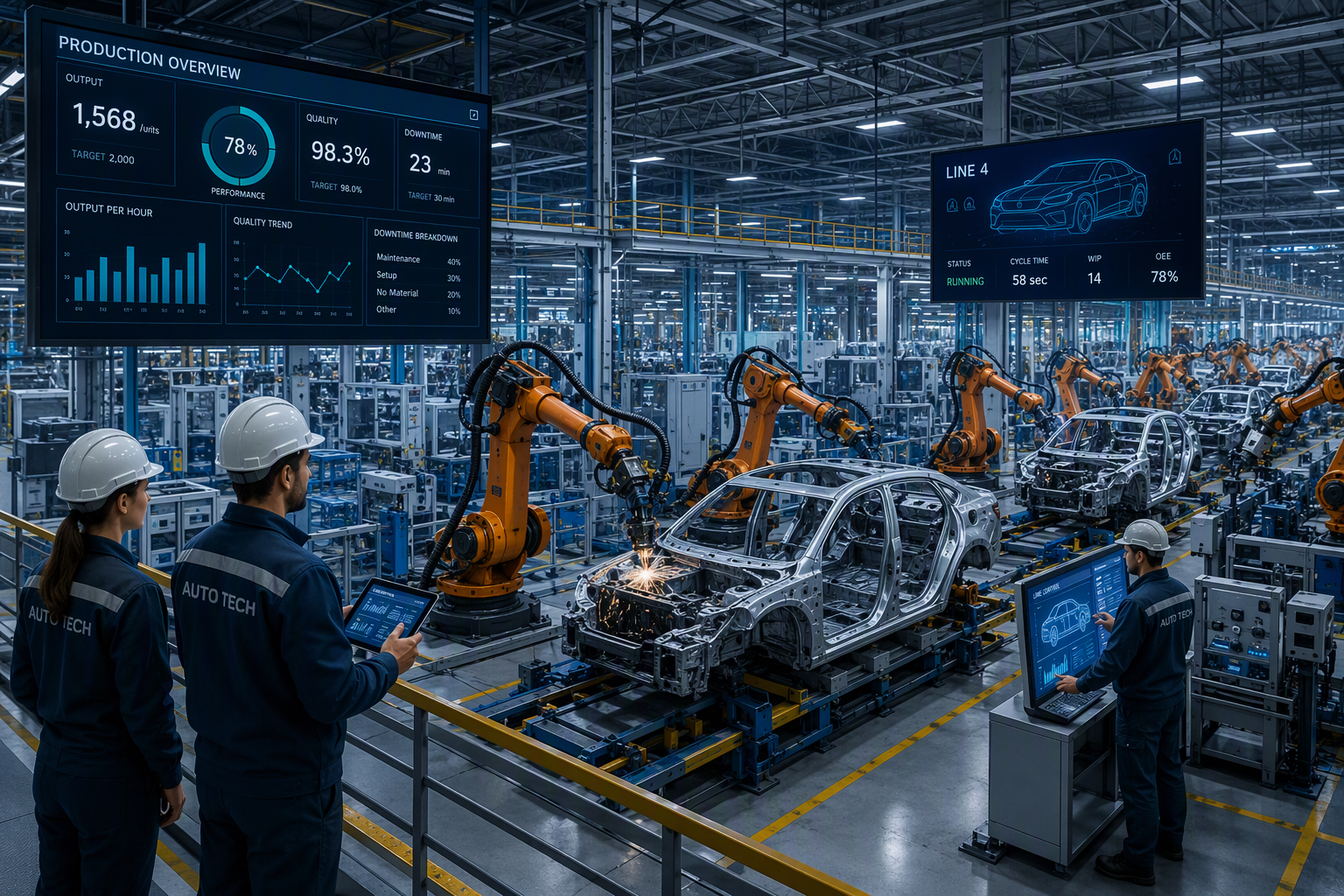
Automotive manufacturing is a clear example. As a vehicle moves along the line, each machine completes one defined task, such as welding or painting. The strength of fixed automation is efficiency, but the tradeoff is limited flexibility once the system is built.
Programmable Automation Systems in Flexible Manufacturing
Programmable automation gives manufacturers more room to adjust operations. Instead of building a machine for only one output, companies use computer-controlled equipment that can be programmed for different tasks. That makes it useful when products or production steps change from time to time.
PLCs are central to programmable automation because they manage control logic and help equipment respond to changing conditions. This setup fits batch production especially well, where manufacturers need to switch between runs without rebuilding the full system from scratch.
CNC machines are a familiar example. By changing software instructions, the same equipment can produce different parts. While it is not as instantly adaptable as flexible automation, programmable automation offers a practical balance between control, efficiency, and product variation.
Flexible Automation Systems Supporting Mass Customization
Flexible automation takes adaptability further. These systems are designed to handle different products with less disruption, making them a strong fit for operations where change is frequent. If your production lines need to respond quickly, this type of automation technology becomes especially valuable.
Unlike setups that depend only on reprogramming software, flexible automation may also involve hardware that can be reconfigured quickly. That helps manufacturers support mass customization without long delays between product changes or workflow adjustments.
Examples include cobots, AMRs, AGVs, and adaptive assembly lines. In these environments, equipment can adjust to layout shifts, changing tasks, and new production needs. The benefit is clear: you get more responsiveness without giving up the efficiency gains automation brings.
Integrated Automation in Smart Factories
Integrated automation brings multiple systems together into one coordinated environment. Rather than treating each machine or work cell separately, it connects fixed, programmable, and flexible automation into a unified control system. That broader coordination is what makes it so powerful.
In smart factories, integrated automation links software, machines, conveyors, robots, and field devices so each part of production can work as one system. This connected structure helps teams manage complex tasks with better visibility and fewer gaps between operations.
The industrial iot strengthens this model by allowing data to move across equipment and systems. As a result, manufacturers can monitor activity, coordinate actions, and improve decisions across the plant. That is why integrated automation is a core building block for modern smart factories.
Essential Technologies Powering Industrial Automation
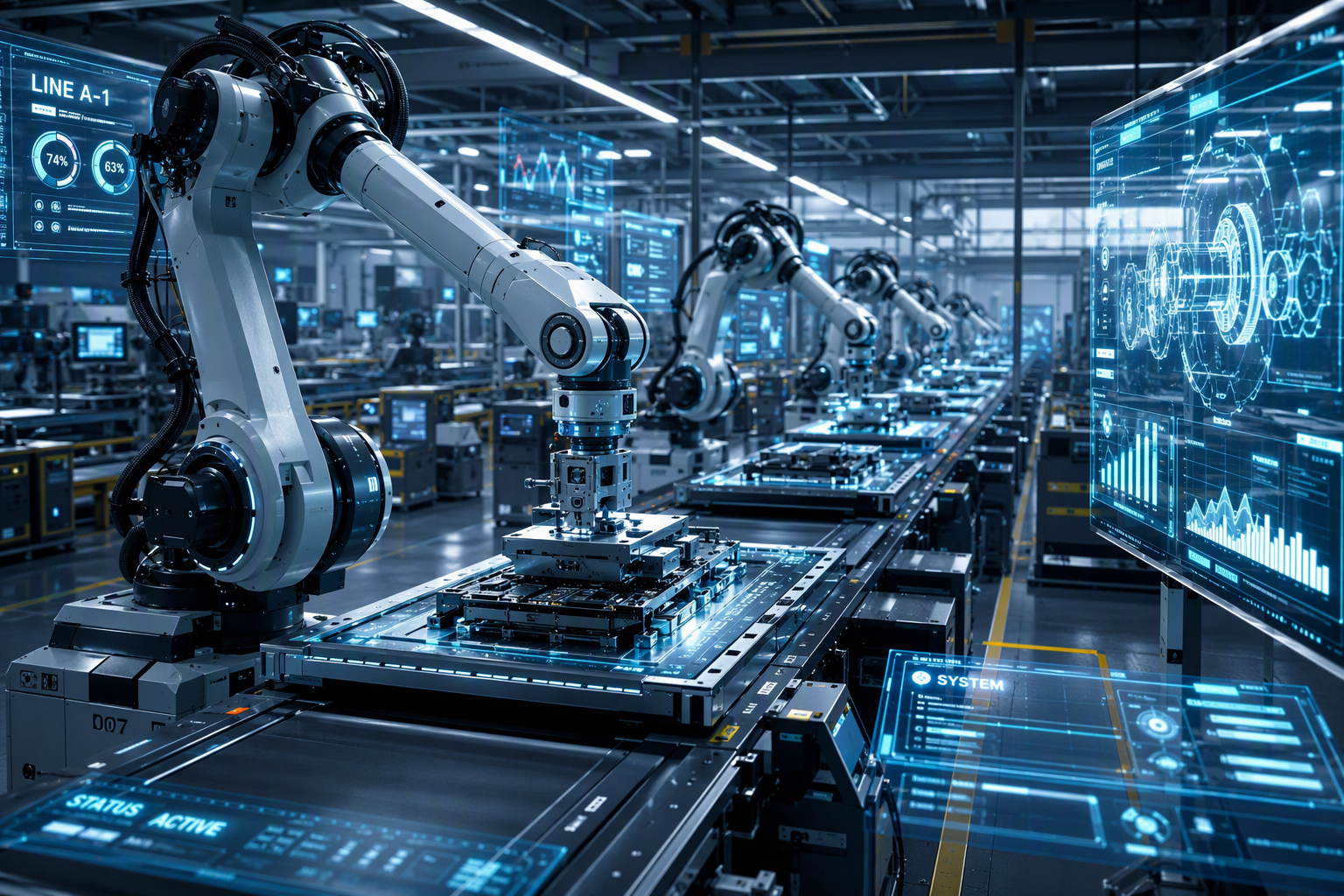
Today’s industrial automation depends on a mix of hardware, software, and connectivity. Core automation technology includes industrial robots, PLCs, SCADA platforms, machine vision, and edge-based tools that help plants monitor and manage production more effectively.
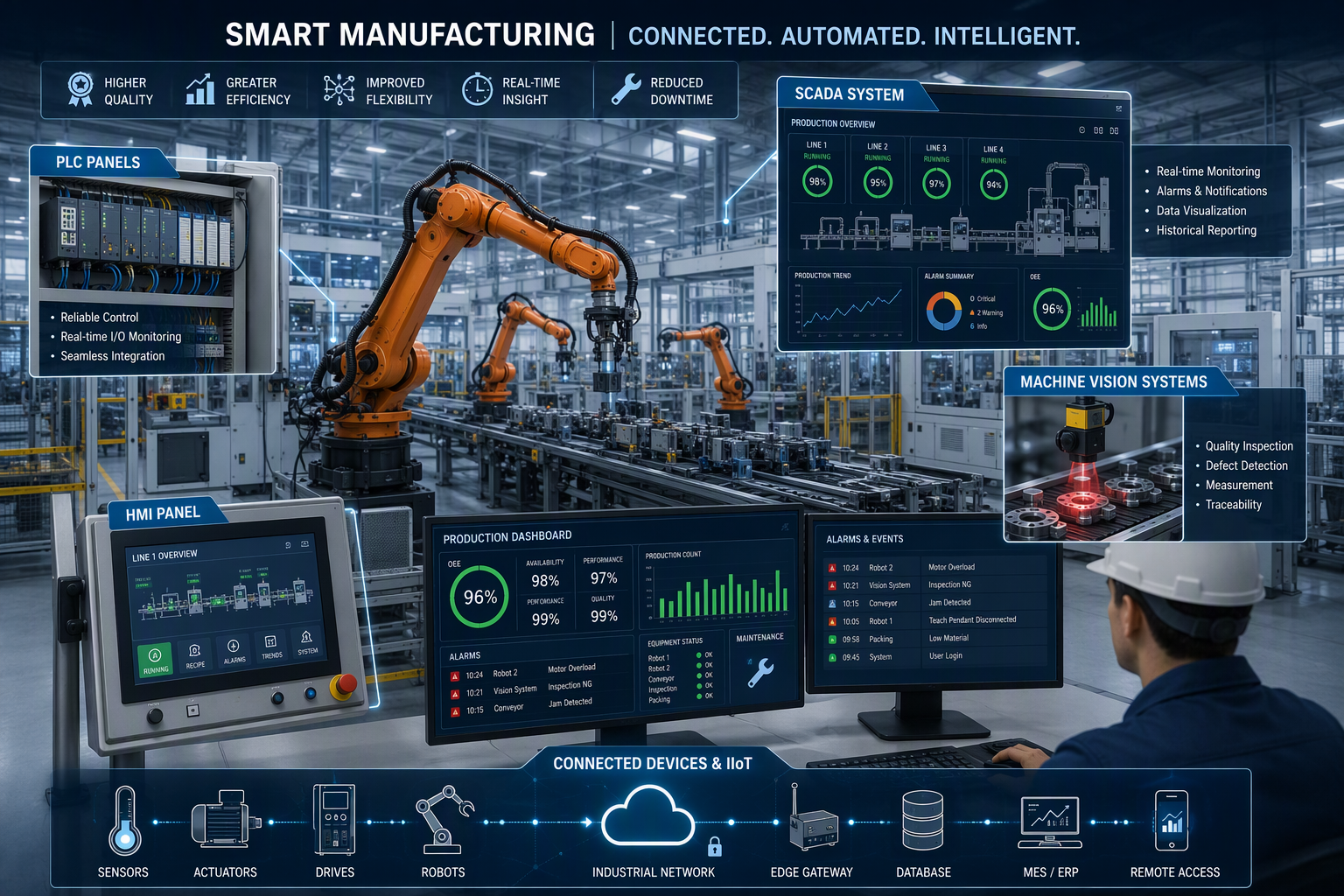
What ties these systems together is their ability to process information, react quickly, and support better decisions. With help from machine learning, artificial intelligence, and industrial networks, manufacturers can automate more tasks and gain deeper control over operations. The following technologies show how that happens.
Robotics in Manufacturing: Industrial Robots Explained
Industrial robots are one of the most visible examples of automation in manufacturing. They are designed to perform specific tasks with speed and consistency, often in areas where precision matters or work must continue for long periods without interruption.
You will commonly find industrial robots handling repetitive tasks such as welding, moving parts, or supporting material handling workflows. In these roles, they help automation systems maintain a steady pace while reducing the strain placed on human labor.
That does not mean people disappear from the process. Instead, robots take on routine or physically demanding work while employees focus on oversight, troubleshooting, and higher-value responsibilities. This balance helps plants raise output while improving consistency and reducing fatigue-related errors.
PLCs and Industrial Control Systems
Programmable logic controllers are a foundation of modern automation. These devices are built to monitor inputs, apply control logic, and trigger actions in equipment across the production process. They are reliable, fast, and well suited to industrial conditions.
Inside industrial control systems, PLCs help manage process control by coordinating how machines respond to changing signals. They can start or stop equipment, monitor component status, and react when production conditions shift. That makes them essential in both discrete and process manufacturing.
Their value comes from flexibility and clear execution. A manufacturer can adjust instructions to support different tasks without rebuilding the full system. For that reason, PLCs remain central to many automation strategies, especially where consistency and responsive control matter most.
SCADA and Real-Time Monitoring Solutions
SCADA systems help manufacturers and industrial operators see what is happening across equipment and facilities in real time. They combine supervisory control with data acquisition so teams can monitor operations, detect issues, and respond faster when conditions change.
In industrial environments, this visibility matters because production problems can spread quickly. SCADA systems collect information from equipment, organize it for operators, and support more informed decisions. That makes them especially useful in process-heavy settings where many assets must work together.
The strength of SCADA is not just monitoring. It also supports better control by giving teams a clearer picture of system behavior as it happens. When you need faster awareness and stronger operational oversight, real-time monitoring tools become a critical part of automation.
Machine Vision and Quality Inspection
Machine vision helps manufacturers inspect products with speed and consistency. Instead of relying only on manual checks, plants use visual systems to support quality inspection and spot issues that might be missed during fast-moving production.
This improves quality control because inspections happen more consistently across batches and shifts. Better data analysis also helps teams track patterns, correct process drift, and protect product quality before defects move further down the line.
Common advantages include:
- Faster quality inspection during continuous production
- More consistent quality control across repeated runs
- Better product quality through earlier issue detection
For manufacturers trying to reduce variation, machine vision adds a reliable layer of automated checking that supports both accuracy and throughput.
Edge Computing and Predictive Maintenance
Edge computing helps process information closer to where equipment is operating. Instead of sending everything elsewhere first, manufacturers can handle certain data analysis near the control level. That supports faster responses and better operational awareness.
This matters even more as the industrial internet of things connects more machines and devices. With more data coming from the floor, companies need practical ways to use that information quickly. Edge-based tools help turn raw operating data into timely action.
One key result is predictive maintenance. By monitoring equipment behavior and spotting warning signs early, automation tools can reduce unexpected failures and limit downtime. For manufacturers, that means better reliability, fewer disruptions, and maintenance that is guided by actual equipment condition.
Key Benefits of Adopting Industrial Automation
Why do manufacturers invest in industrial automation? The answer usually comes down to measurable gains in productivity, consistency, safety, and cost control. Automation technology helps plants complete work faster while reducing common issues tied to manual steps and process variation.
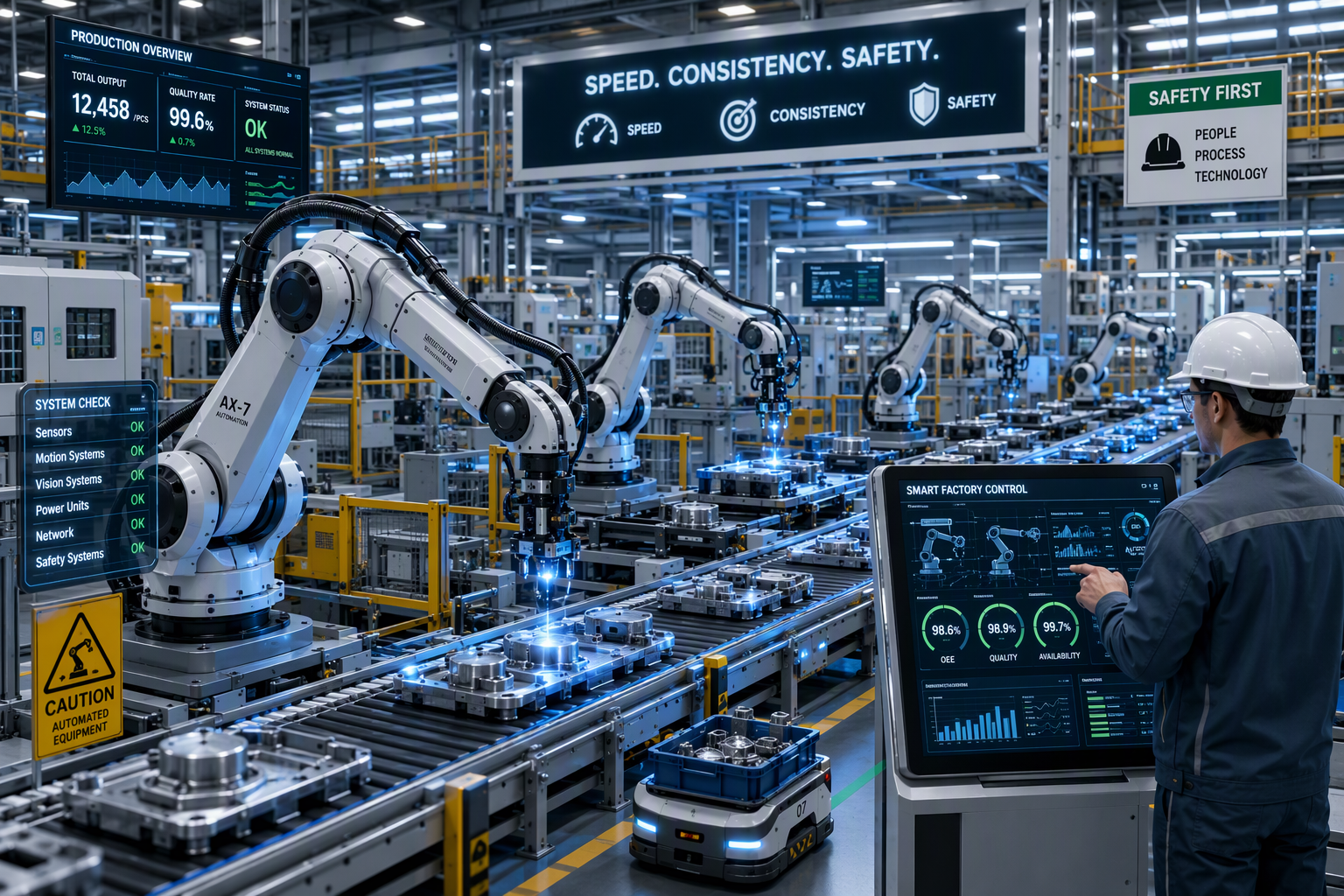
It also supports stronger operational efficiency across the full production flow. From lower manufacturing costs to better product quality, the benefits extend well beyond one machine or work cell. The sections below break down the most important advantages you can expect.
Boosting Productivity and Throughput
One of the clearest benefits of automation is higher productivity. When automation systems take over repetitive tasks, production can move faster and more steadily. That helps manufacturers increase output without relying on the same level of manual effort for every step.
On busy production lines, even small delays can reduce throughput. Automated equipment helps limit those slowdowns by maintaining a consistent pace and reducing avoidable errors linked to boredom, fatigue, or repetition. That creates a more predictable operating rhythm.
The impact can be substantial. Compiled research referenced a 33% increase in efficiency when an autonomous vehicle was used instead of an electric pallet jack in a warehouse setting. While each facility is different, the broader point is clear: automation can unlock real gains in throughput.
Improving Operational Efficiency
Operational efficiency improves when systems can do more with the same or fewer resources. Automation technology helps manufacturers coordinate equipment, reduce wasted motion, and keep production moving with better process control from one stage to the next.
This is especially important where manual labor creates variability or delays. Automated systems can manage routine actions with greater consistency, while supervisory control tools help teams monitor status and adjust operations quickly when conditions shift.
The result is a production environment that uses time, labor, and materials more effectively. Manufacturers can improve flow, reduce waste, and make better use of equipment capacity. Over time, these gains strengthen profitability and help operations stay responsive under pressure.
Enhancing Quality and Consistency
Quality matters in every manufacturing setting, and automation helps protect it. Automated equipment performs tasks with steady precision, which reduces variation caused by fatigue, distraction, or inconsistent manual execution. That alone can make product quality much more dependable.
A strong control system also allows manufacturers to monitor processes continuously and respond quickly when output begins to drift. Instead of discovering a problem late, teams can correct issues earlier and avoid larger quality losses.
Machine vision adds another layer by supporting faster quality inspection across high-speed operations. Combined with broader quality control practices, these tools help plants produce the same standard over and over again. For manufacturers, that consistency is one of automation’s biggest long-term advantages.
Reducing Manufacturing Costs
Industrial automation can lower manufacturing costs in several ways. It helps reduce waste, use raw materials more efficiently, and limit expensive errors that interrupt the production process. Over time, these improvements can have a direct effect on margins.
Many automation solutions also reduce the amount of routine human labor needed for repetitive or physically demanding work. That does not remove the need for people, but it can help companies deploy workers where they add more value while controlling labor-related expenses.
The supply chain benefits as well when internal operations become more reliable. Better production flow means fewer delays, stronger output planning, and less disruption caused by downtime or rework. In one cited case, automation contributed to a 64% reduction in labor costs compared with a manual alternative.
Supporting Safer and Ergonomic Workplaces
Safety is one of the strongest reasons to automate. In many facilities, workers face repetitive tasks, moving vehicles, heavy loads, and other risks that can lead to injury. Automation helps create safer workplaces by moving people away from the most hazardous activities.
This is especially useful for dangerous tasks or environments that are physically demanding. Machines can take on work in areas with high heat, constant motion, or intensive lifting, while human operators focus on supervision, coordination, and exceptions.
There is also an ergonomic benefit. When automation reduces the physical strain of repeated motion or heavy handling, employees may experience less fatigue and stress. That supports better working conditions and can improve retention as well as day-to-day safety performance.
Industrial Automation Industry Applications Across Manufacturing Sectors
Industrial automation delivers value across various industries because no two production environments work exactly the same way. Some sectors need speed and volume, while others need strict quality standards, tight process control, or fast adaptation to changing demand.
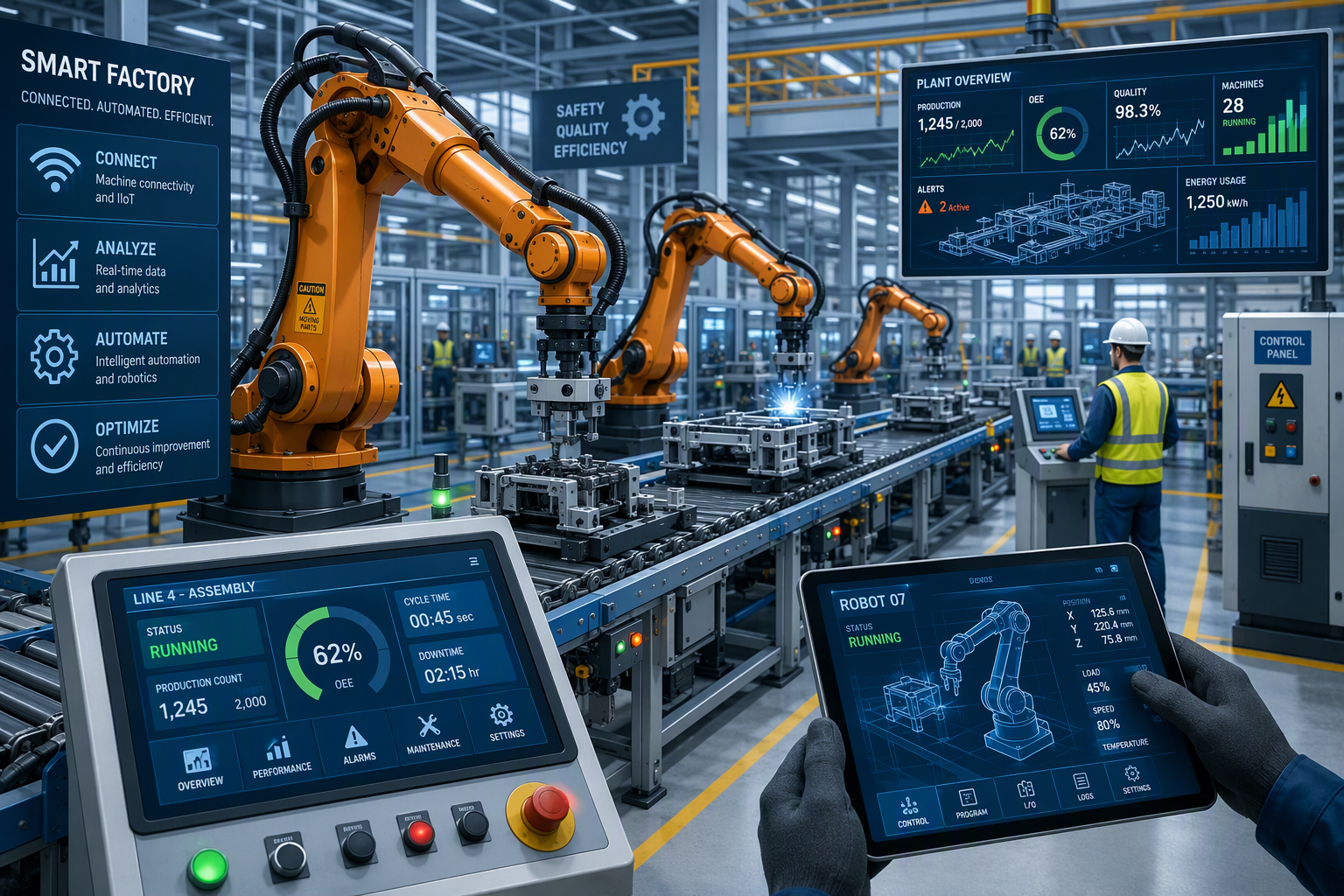
That is why real-world use cases matter. They show how automation supports the manufacturing process in sector-specific ways, from assembly operations to process plants and utilities. The following examples highlight where industrial automation is making a strong impact today.
Automotive Manufacturing
Automotive manufacturing has long been one of the most visible users of automation. It is a strong fit because vehicle production depends on repeatable steps, high volume, and tightly coordinated movement across the assembly line.
Industrial robots support tasks such as welding and painting, where consistency and speed matter. Automation technology also improves material handling by moving parts and vehicles through different production stages with fewer delays and less manual effort.
Because each stage has a defined role, automotive plants can gain a great deal from fixed and integrated automation. If you want a closer look at this sector, review the child guide here: https://www.empoweredautomation.com/industrial-automation-industry-applications-in-automotive-manufacturing. Planned URLs should be verified on publish.
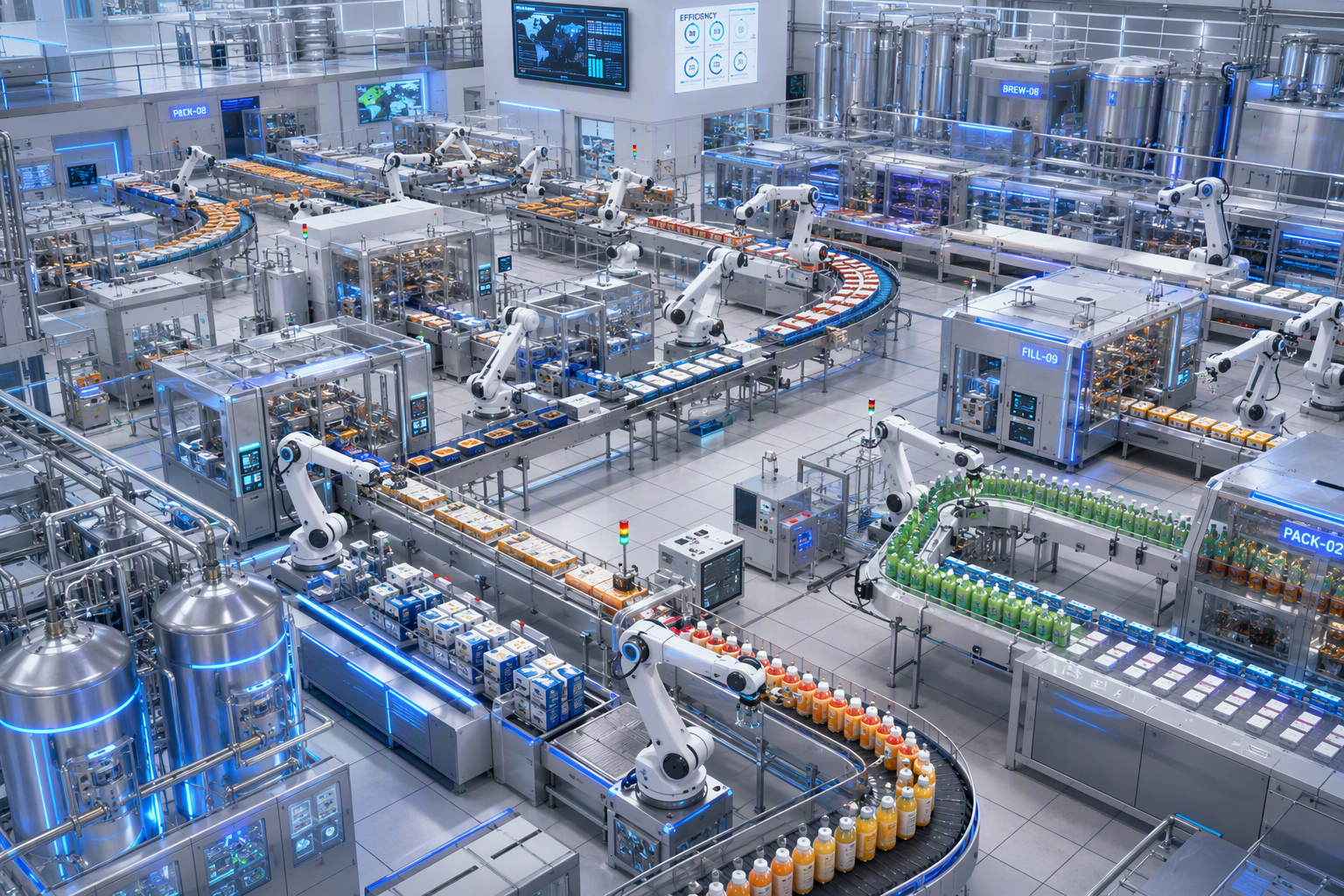
Food and Beverage Processing
Food and beverage operations benefit from automation because they often combine repeatable workflows with strict consistency demands. In these environments, manufacturers need dependable process control and smooth movement between production stages.
Automation solutions help manage batch production, monitor conditions, and support quality checks throughout processing. That is important when products must meet uniform standards across repeated runs, even as output volumes remain high.
For manufacturers in this space, automation supports efficiency while improving reliability in day-to-day operations. If this sector is most relevant to you, the dedicated guide offers a deeper view: https://www.empoweredautomation.com/how-the-industrial-automation-industry-serves-food-and-beverage. Planned URLs should be verified on publish.
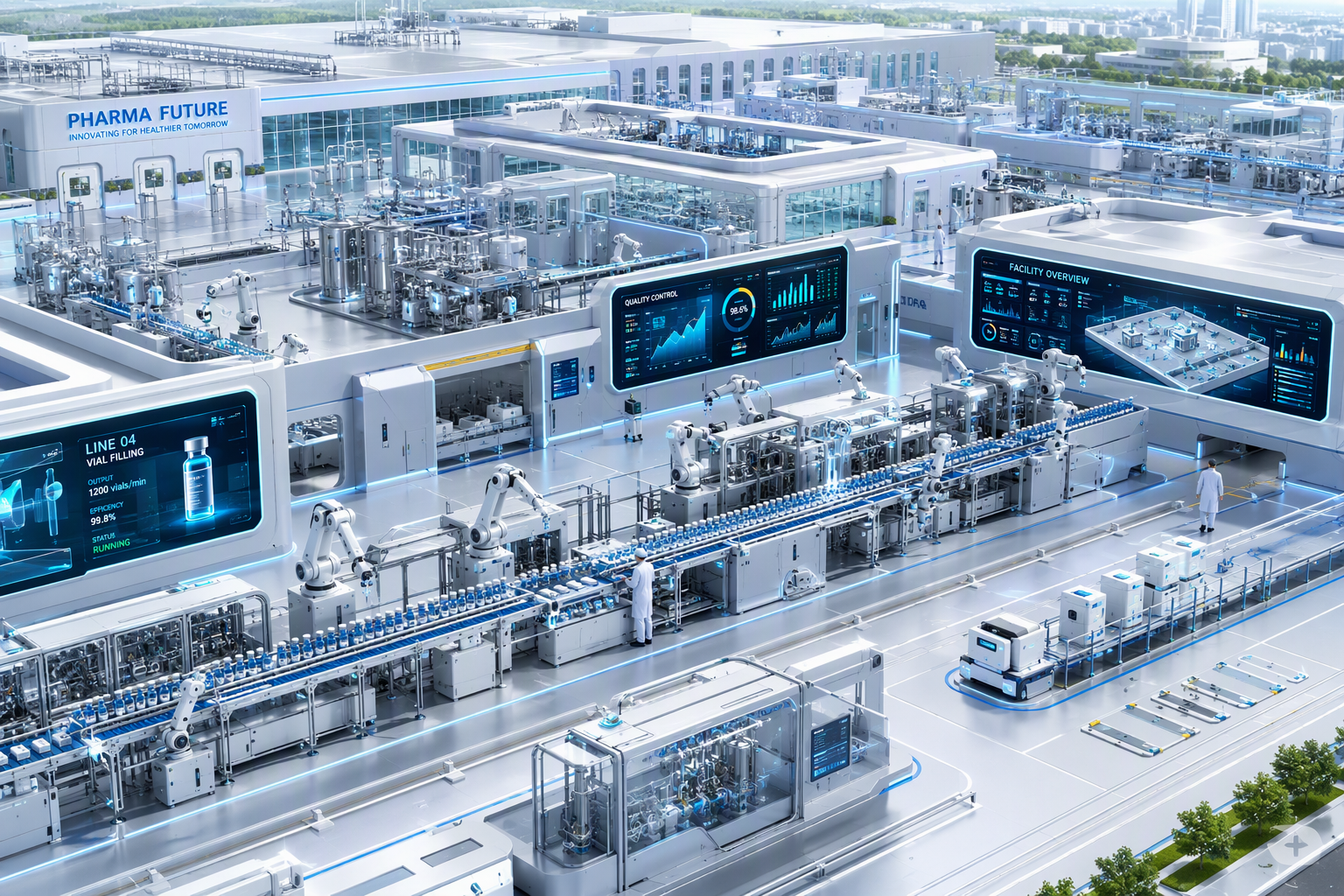
Pharmaceutical Manufacturing
Pharmaceutical manufacturing depends heavily on precision and consistency. Even small deviations can affect product quality, so automation systems play a major role in helping facilities maintain stable, repeatable operations.
Quality control is especially important here. Automated processes help reduce variation, while connected systems support closer monitoring and faster response when conditions move outside expected limits. That makes automation valuable across both production and inspection activities.
The sector also benefits from digital twins, which can simulate and optimize industrial processes before changes are made in the real world. For a sector-specific overview, visit: https://www.empoweredautomation.com/industrial-automation-industry-use-cases-in-pharmaceutical-manufacturing. Planned URLs should be verified on publish.
Oil, Gas, and Chemical Industries
The oil and gas sector and the chemical industry rely on stable, continuous operations. In these settings, process control is essential because changes in flow, temperature, or system status can affect safety, output, and product consistency.
SCADA systems are valuable here because they provide visibility across large, complex operations. A distributed control system can also help coordinate many process points at once, giving operators stronger oversight and more responsive control.
These industries show why automation is not only about speed. It is also about managing risk, maintaining reliability, and keeping tightly connected processes within target conditions. For process-driven sectors, automation often becomes a core operational requirement.
Electronics and Semiconductor Manufacturing
Electronics manufacturing and semiconductor production demand precision, repeatability, and close control over output quality. In these environments, even small inconsistencies can create major downstream issues, so automation technology has clear value.
Machine tools and automated systems help manufacturers maintain steady execution across delicate or highly detailed operations. This supports both efficiency and quality control, especially where product specifications must remain consistent from unit to unit.
These sectors also benefit from programmable and integrated automation because equipment often needs to operate with exact instructions and tight coordination. When quality expectations are high and errors are costly, automation becomes a practical way to protect output and reduce process variation.
Energy and Utilities Sector
The energy sector and utilities depend on reliable system performance over long periods. Automation helps these operations maintain process control, monitor asset behavior, and respond more effectively when operating conditions change.
Industrial control systems are central in these environments because they coordinate equipment and support consistent operation across connected assets. That visibility is important when uptime and service continuity directly affect customers and infrastructure.
Predictive maintenance adds another advantage. By tracking equipment health and identifying problems early, automation tools can reduce unexpected failures and improve planning. For utilities and energy operators, that means better reliability, smarter maintenance timing, and more stable service delivery.
Water Treatment and Distribution
Water treatment operations need dependable monitoring and control because service quality depends on stable, ongoing performance. Automation systems help plants manage treatment steps and keep operations aligned with target conditions throughout the day.
In distribution networks, real time visibility becomes especially important. Teams need to know what is happening across equipment and system points quickly, not after a delay. That is where SCADA systems provide strong operational support.
By combining monitoring, control, and faster response, automation helps water treatment and distribution operators maintain reliability across essential services. It is a good example of how automation supports not just manufacturing, but also wider industrial infrastructure that people depend on every day.
Challenges and Trends Shaping the Industrial Automation Industry
Industrial automation continues to grow, but adoption is not without challenges. Companies must keep pace with advanced technologies, evaluate where automation fits best, and manage the operational change that comes with new systems and workflows.
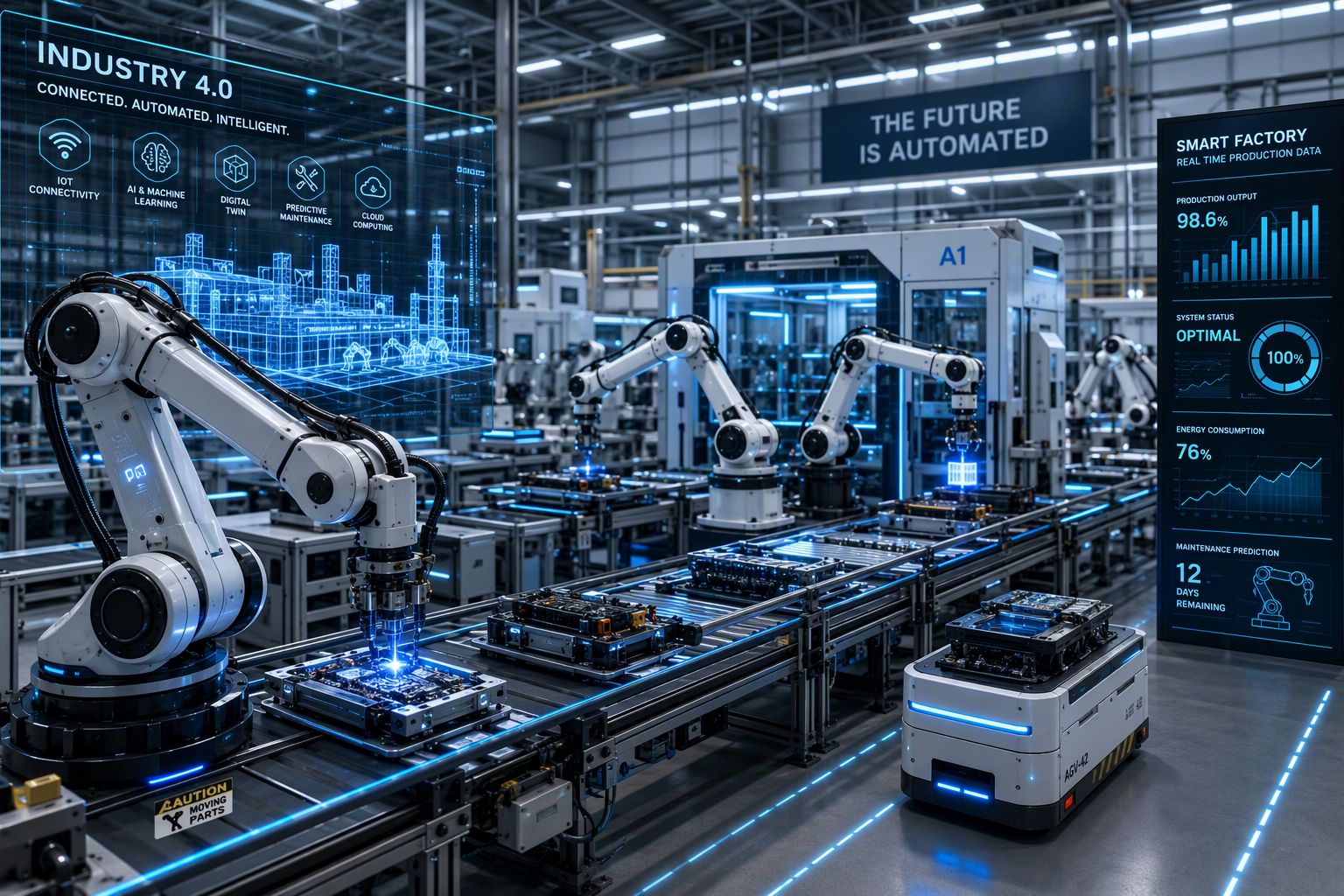
At the same time, the automation industry is being pushed forward by industry innovation and real business pressure. Labor shortages, rising expectations, and connected digital tools are changing what manufacturers need from automation. The next sections look at the biggest trends and the workforce issues shaping this shift.
Evolving Technologies and Industry Innovation
The industrial automation industry is evolving through a mix of advanced technologies that expand what machines and systems can do. What began with mechanized repetition now includes smarter decision support, connected equipment, and more adaptive tools.
Artificial intelligence and machine learning are major drivers of this industry innovation. They help systems learn from data, respond to changing conditions, optimize schedules, and predict maintenance needs before failures become more serious. That gives manufacturers more insight and stronger control.
Digital twins are another important trend. These virtual replicas let companies simulate processes and test possible changes before making them in the physical environment. For manufacturers trying to improve performance with lower risk, that kind of planning support is becoming increasingly valuable.
Addressing Workforce Transformation and Skills Gap
One of the biggest challenges in automation today is workforce transformation. As more systems handle routine work, employees need new skills to supervise, manage, and improve those systems. That makes the skills gap a real issue for many manufacturers.
Labor shortages are also pushing companies toward automation. Compiled information notes that shortages rank among the top challenges facing manufacturing and supply chain leaders, with retention concerns affecting a large share of employers. Automation can help relieve some of that pressure.
Still, less human intervention in repetitive work does not remove the need for people. It changes the kind of work people do. That is why training matters. Manufacturers need employees who can operate, support, and improve automated environments, not just work within manual ones.
Conclusion
In summary, the industrial automation industry is a vital component of modern manufacturing, offering numerous applications that enhance productivity and efficiency across various sectors. By adopting different types of automation systems, businesses can streamline operations, reduce costs, and ensure higher quality output. As the industry continues to evolve with new technologies and innovations, staying informed is crucial for maintaining a competitive edge. For a deeper understanding, revisit our comprehensive pillar page on the industrial automation industry. Additionally, explore our child guides that delve into specific applications in automotive manufacturing, food and beverage processing, and pharmaceutical manufacturing. Embrace the future of manufacturing by leveraging the benefits of industrial automation!
You might also like